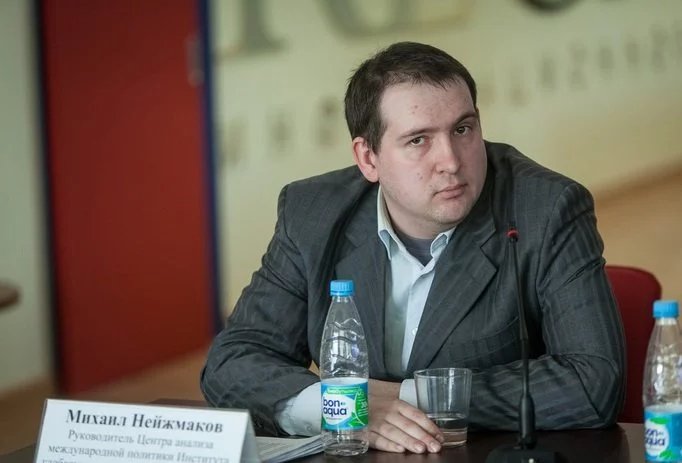
Mikhail Nezhmakov: Summer 2026 may become a key period for Moscow-Baku dialogue – INTERVIEW


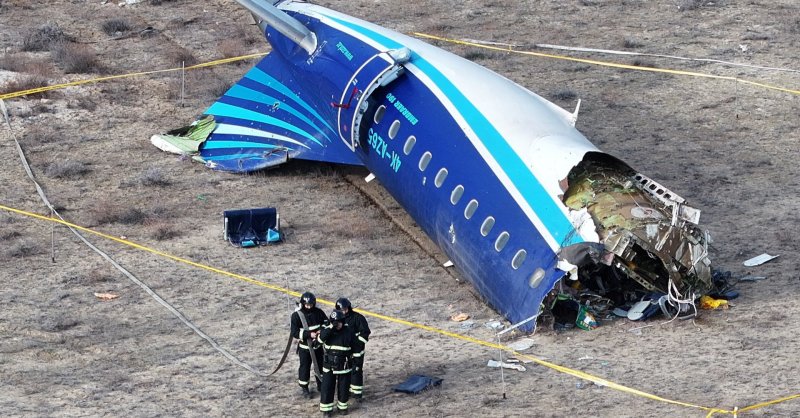
The recent settlement of issues related to the AZAL aircraft tragedy has once again brought Azerbaijani-Russian relations into focus. After a period marked by political tension, cautious rhetoric and uncertainty, both Baku and Moscow now appear to be seeking ways to restore a more pragmatic dialogue.
At the same time, the relationship remains complex. The AZAL issue was one of the most sensitive points in bilateral ties, and its resolution does not automatically signal a full return to previous levels of cooperation. Broader regional dynamics, including developments involving Iran, the South Caucasus, the North–South transport corridor, and upcoming political processes in Armenia, are all likely to shape the next phase of contacts between Azerbaijan and Russia.
Both sides are likely to take steps in the near future to maintain the momentum of mutual contacts. Alexey Overchuk's visit to Baku in April 2026, for example, can be viewed in this context. If such exchanges of visits continue in May 2026 — at least at the level of deputy prime ministers, parliamentary speakers, or foreign ministers — this would be one indicator that the mutual course towards pragmatic engagement is becoming more sustainable.
— What could be the next stage in the Azerbaijani-Russian dialogue? Should we expect an intensification of political contacts, including visits at the level of heads of state?
— The likelihood of Vladimir Putin visiting Azerbaijan in the near future is not very high. One of his upcoming foreign trips may be to Astana to attend a meeting of the Supreme Eurasian Economic Council in May 2026. His possible visit to China in the near term has also been discussed.
A visit by Ilham Aliyev to Russia would most likely take place if the “thaw” in relations becomes sufficiently stable. If talks between the presidents of Russia and Azerbaijan take place in the coming months, they are more likely to be held on the sidelines of international events.
One factor that could lead to more intensive contacts between the two states is greater clarity regarding prospects for at least a temporary resolution of the crisis surrounding Iran. In that case, the situation around the North–South International Transport Corridor would also become more predictable, and its development has traditionally been an important element of the Russian–Azerbaijani dialogue. Preliminarily, there remains a possibility that the United States and Iran could reach at least a temporary compromise by the summer of 2026 — or, if negotiations develop more favourably, perhaps even earlier. If this happens, an additional incentive for contacts between Moscow and Baku may emerge by the summer.
— Can the settlement of the AZAL issue become a basis for restoring the previous dynamic of cooperation between Baku and Moscow, or do serious political risks still remain in the relationship?
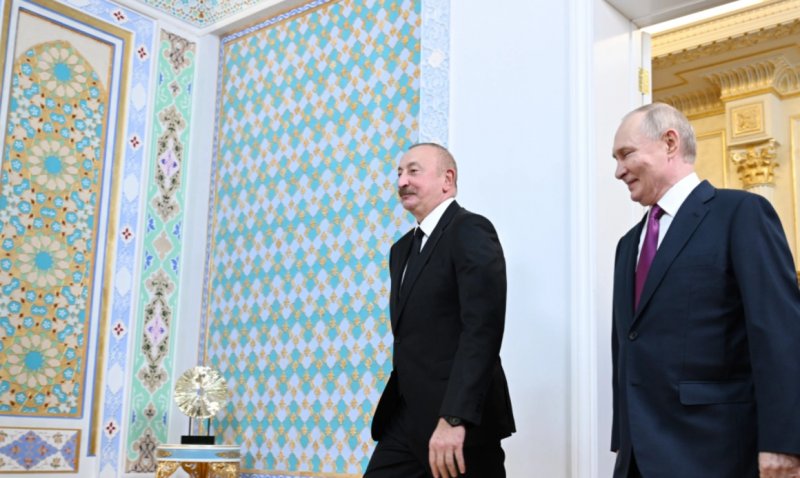
— To assess the dynamics of bilateral relations, it is worth recalling that throughout 2025 there were also several notable signals indicating a mutual desire to reduce tensions. The most significant of these was the talks between Vladimir Putin and Ilham Aliyev in Dushanbe in October 2025. However, none of these events, on their own, marked the beginning of a stable and long-term “thaw”. At the same time, each attempt to build dialogue may have gradually contributed to laying the groundwork for a more durable settlement of differences.
At the same time, mutual tensions remain costly for both sides, diverting attention from other priorities. For example, in recent years Azerbaijan has taken active steps to develop relations with the post-Soviet states of Central Asia.
The key challenge in Moscow–Baku relations is not only disagreement over specific events, but the absence of a stable balance in relations under changing conditions. When such a balance is not established, any new incident can create risks for overall stability.
Additional complexity is created by the evolving international environment, including in the South Caucasus and its wider neighbourhood. One factor that could bring greater clarity is the conclusion of Armenia’s parliamentary campaign in June 2026. It is widely understood that the continuation of Prime Minister Nikol Pashinyan’s government is currently objectively beneficial to Baku, while an opposition victory could strengthen Moscow’s negotiating position. In both scenarios, however, Russia and Azerbaijan may gain additional incentives to coordinate their positions once the electoral cycle is complete.
In other words, the summer of 2026 could emerge as a potentially important period for the continuation of dialogue between Moscow and Baku, when the intensity of contacts may increase.
By Samir Muradov


Similar news