How China strengthens its position in Central Asia and the Caucasus


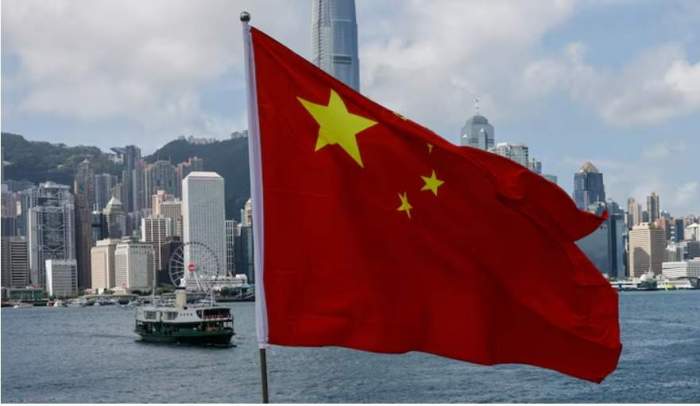
FLIE PHOTO: The Chinese national flag is seen in front of the financial district Central on the Chinese National Day in Hong Kong, China October 1, 2022. REUTERS/Tyrone Siu/file photo Purchase Licensing Rights
Editor's note: Tugrul Keskin is currently a lecturer at Cappadocia University and previously served as a professor and director of the Center for Global Governance at Shanghai University from 2016 to 2021. His current research areas include the modern Chinese state and society, technology/artificial intelligence and international relations, China’s relations with the Middle East and Africa, and U.S. foreign policy and think tanks in the post-Cold War era.
China’s growing influence in Central Asia and the South Caucasus is reshaping the geopolitical landscape of these regions, driven largely by its ambitious Belt and Road Initiative (BRI). Through significant investments in infrastructure, energy, and trade networks, Beijing aims to position itself as a central player in the economic and political affairs of these strategically vital areas. However, its approach is not without challenges, particularly as it navigates complex relations with Islamic movements and addresses local and geopolitical sensitivities.The Belt and Road Initiative has become a cornerstone of China’s strategy in Central Asia and the South Caucasus, aiming to enhance connectivity across Eurasia. Central Asia, with its critical position as a transit hub for overland trade routes, has benefited from extensive Chinese investments. Projects like the China-Kyrgyzstan-Uzbekistan International Highway and renewable energy developments, such as a $47 million wind farm in Kazakhstan, illustrate Beijing's efforts to integrate the region into its broader economic framework. These investments are not only enhancing infrastructure but also diversifying energy sources, a vital step for sustainable development.
In the South Caucasus, China’s involvement in projects such as the Baku-Tbilisi-Kars railway, often referred to as the "Iron Silk Road," and the development of the Port of Baku highlights its ambition to link the region with global markets. These initiatives facilitate trade between China and Europe, offering an alternative to traditional maritime routes. Furthermore, cultural and historical projects, such as archaeological collaborations in Uzbekistan, serve to deepen Beijing's soft power and revive the legacy of the Silk Road.
China’s expanding economic footprint has, in some cases, diminished the traditional influence of other major powers. For instance, Central Asia’s reliance on Russian exports and labor is gradually giving way to Chinese investments in railways, energy, and infrastructure. This shift is evident in trade figures, with China’s trade volume with Central Asia reaching $89 billion in 2023. While this economic pivot fosters growth, it also creates new dependencies, reshaping the region’s alliances and priorities.
In the South Caucasus, similar patterns emerge as China strengthens its ties through trade and infrastructure development. However, balancing these investments with the interests of other regional powers, such as Russia, Turkiye, and the European Union, remains a delicate task.

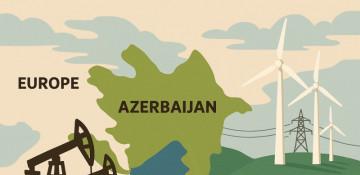
Illustration: Daniel Stolle
While China has made significant strides in economic integration, its relations with Islamic movements in Central Asia and the Caucasus pose a considerable challenge. Beijing’s policies in Xinjiang, where strict measures against Uyghur Muslims are framed as counter-terrorism efforts, have fueled resentment among Muslim populations across the region. This discontent is not only a domestic issue but also a transnational one, as solidarity with Uyghurs strains China’s relations with neighboring states.
Moreover, the region’s deeply rooted Islamic traditions clash with China’s atheistic state ideology, creating a cultural divide that is difficult to bridge. Radical groups, such as the Islamic Movement of Uzbekistan (IMU) or remnants of Al-Qaeda affiliates, see Beijing’s policies as justification for targeting Chinese interests. These tensions could destabilize regional security, undermining the very economic projects that Beijing has worked to establish.
Central Asia and the South Caucasus are arenas of geopolitical competition, with Russia, Turkiye, the United States, and China vying for influence. While Russia and Turkiye leverage their historical and cultural ties to the region, China’s economic-driven approach sometimes clashes with local expectations. In many cases, communities view Chinese investments as exploitative, sparking protests and opposition. Islamic movements often capitalize on these grievances, framing their opposition to China in religious or nationalist terms, which exacerbates tensions.
China’s ability to address these challenges will determine the sustainability of its influence in Central Asia and the South Caucasus. Through the Shanghai Cooperation Organization (SCO), Beijing has promoted security cooperation, while economic development initiatives aim to foster goodwill. However, its domestic policies in Xinjiang, coupled with cultural and religious divides, often undermine these efforts.
For China, the path forward requires a nuanced approach that balances respect for local traditions and sensitivities with its strategic goals. Failure to navigate these complexities risks not only regional instability but also the broader success of the Belt and Road Initiative.
China’s growing presence in Central Asia and the South Caucasus marks a significant shift in the geopolitical dynamics of these regions. Through economic investments and infrastructure projects, Beijing has reshaped connectivity and fostered growth. However, its relations with Islamic movements, cultural divides, and competition with other major powers present formidable challenges. To secure its role as a dominant force in these regions, China must carefully balance its ambitions with the diverse needs and sensitivities of its partners.
(If you possess specialized knowledge and wish to contribute, please reach out to us at opinions@news.az).


Similar news