How the Arctic is changing and what it means for the world: An interview with Robert Newton


By Faiq Mahmudov
The analytical-information portal News.Az continues its series of articles, interviews and videos entitled "COP29 Baku". As part of this series, we will be posting interviews with and videos of prominent climate and environmental experts. Our guest today is Robert Newton. He is an oceanographer specializing in atmosphere/ice/ocean interactions in the Arctic and its peripheral seas. He also works with noble gases, stable isotopes, nutrients and other ‘tracer’ signals to derive provenance and pathways of water masses in ocean. Bob founded and directed the Secondary School Field Research Program (SSFRP), Lamont-Doherty’s internship program for pre-University students. The SSFRP recruits mainly from communities underrepresented/underserved in earth and environmental science; it is the most diverse of Lamont-Doherty’s educational programs. The program centers field- and lab-based research related to the Hudson estuary, New York Harbor, and green spaces in the NYC metropolitan area. Bob teaches in the Sustainability Science masters program.
- At this point, all the significant scientific issues have been settled with sufficient clarity. We need to decarbonize our economies; and the longer we procrastinate, the more drastic the transition away from carbon fuels will be. The scientific community knows this. All of the world’s governments know this. The fossil fuel companies and the managers of the energy-intensive industries know this. More research is always useful; but it is not needed to know that we need to transition. Through the IPCC processes, the nations of the world have accepted the need to decarbonize. The outstanding need now is for an enforceable mechanism to do so. I hope that COP29 in Baku can make progress towards enforcement—a legally binding treaty with significant penalties for non-compliance. That is what needs to come from this COP.

- Your research focuses on the interactions between the atmosphere, ice, and ocean in the Arctic. What changes have you observed in these systems in recent years, and how do they impact the global climate?
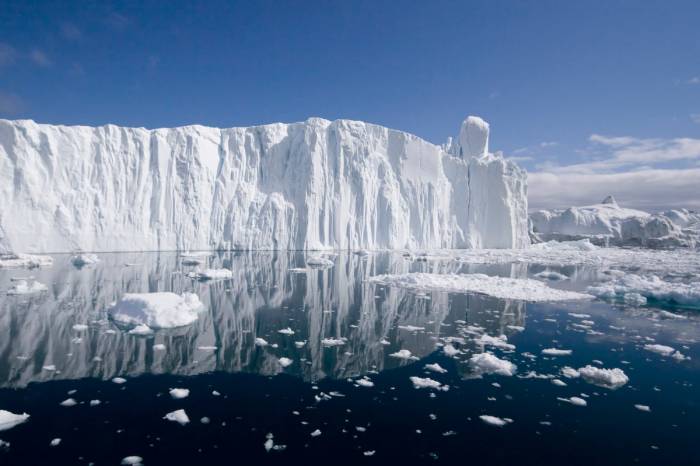
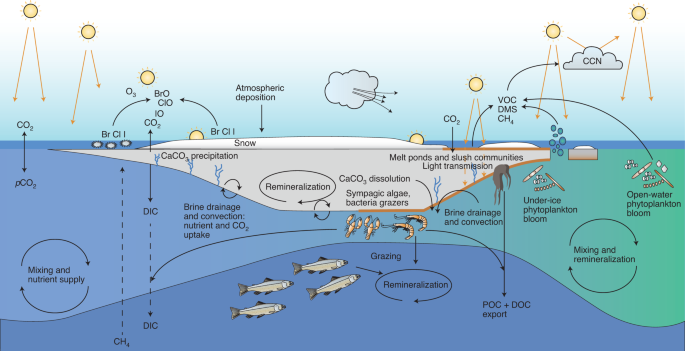
- The most visible change in the Arctic is the retreat and thinning of its sea ice cover. Below the ice, the surface waters are freshening slightly, and below that, there are salty layers of inflow from the North Atlantic and North Pacific Oceans. The inflows are warming as the atmosphere and the global oceans warm. Of these changes, the most immediately impactful is the loss of the ice cover. For animals that are “ice obligate”—those that depend on sea ice to hunt or to den—the impact is likely to be catastrophic. The canonical example is polar bears, whose very existence is threatened. More subtle, but just as important, is the impact on the biochemistry and the micro-ecology as the summer ice retreats farther north. Areas that had been shadowed by permanent ice cover are now exposed to sunlight. Blooms of algae are occurring farther north as a result. The rain of organic matter that normally feeds animals on the continental shelf is now occurring over the deeper ocean basins to the north.
Surface waters that had been relative deserts are now coming to life. Massive forests of diatom strings that hung from sea ice are giving way to open ocean productivity. The changes to the bottom of the food chain are really quite massive. We really don’t know what will follow. On the one hand, some people have predicted that North Pacific and North Atlantic fisheries will move into the Arctic. That may be true in the summer months for fish that can migrate. But the winters will still be dark, with food remaining very scarce. North Atlantic and North Pacific ecologies are not adapted to such a large annual cycle in productivity. So, we are in the midst of a very large real-life experiment. This will be exciting for marine biologists but quite risky for the critters that live in the sea and have to adapt.
- You actively use stable isotopes and noble gases to study water mass pathways. How do these methods help us better understand ocean processes?
- Chemical and isotopic signals can act like dyes, giving different water masses a characteristic fingerprint. In the language of our field, they are “tracers,” and we use them to track where water comes from, what pathways it takes, and where it goes to. For example, I can take a sample of water in the Arctic Ocean, and from its trace chemistry, I can tell what fraction of the sample was recently melted out of sea ice, what fractions came from the Atlantic or Pacific Oceans, and what fraction came from river runoff. Using some recent measurements of rare earths, I can even estimate which rivers dominated the runoff in my sample. In another example, I can look at the ratio of light helium (helium-3) to heavy helium (helium-4) to see whether a sample of water has been impacted by volcanic outgassing along a mid-ocean ridge. These types of studies help us work on some important practical problems related to the climate, for example:
About half of the excess carbon dioxide emitted by industrial processes is absorbed into the ocean. Where does it come into the ocean? Where does it get stored in the ocean? How and where will it outgas? And what are the time-scales of its storage? The Arctic is warming about three times faster than the global average. As it does so, what happens to the melting sea ice, glacial ice, and groundwaters? To what extent do those waters stay in the Arctic and change the behavior of the Arctic Ocean? How will the warming impact marine life?

- Your SSFRP program provides unique opportunities for students from underrepresented communities. What successes have you seen in engaging young people in research, and how does this impact their career paths?
- Nearly all our students come from neighborhood-based schools in working-class communities. The majority are from Black, Latino, and South Asian families. The majority are also young women. We do not filter on prior academic performance. Rather, we focus recruitment on students who want to do science and who are attracted to the natural world outside, and who are not bothered by physical work in the field or long hours in the lab. Our students have a wonderful time. They work together on real scientific projects; they make solid, sometimes lifelong, friendships; they present their work and their results to each other and in public. Some present their results at scientific meetings. After 20 years and over 600 students, we can say that the experience changes students’ lives. All of our graduates attend university. About 40% declare majors in scientific or technical fields. Some of those who major in natural sciences or engineering return to the program as Team Leaders in the summers between their academic years. Many go on to become scientists, technicians, teachers, engineers, or social workers. Our alumni also tend to be more active and engaged in the social world around them. Most take a semester or a year abroad in college. Many participate in political organizations on their campuses. Overall, I would say that the participants make good use of the environment we have created to become more mature and engaged young adults.
- How do you assess the impact of climate change on nutrient cycling in and around the Arctic Ocean? What long-term implications might this have for the region’s ecosystem?
- The short answer is that we don’t know. It’s complicated. Some things that we know are:
• The tundra is melting deeper into the ground and for a longer warm season than in the past. This is releasing much more material, including organic matter and nutrients, into the streams, rivers, and coastal seas.
• The sea ice is retreating faster and farther in the summers. This lets light into the surface waters, and a much larger fraction of the nutrients are being taken up in plankton now.
• The productivity of the Arctic, which has historically been strongly limited to the coasts and continental shelves, is moving offshore, and over the deep (pelagic) ocean. This means that nutrients that were cycled into and out of organic material on the shelves are now being deposited into the abyssal Arctic.
It will take time—I would guess several decades—for chemical and biological oceanographers to understand where these changes are taking us.
Related articles:
- Volker Sick: CO2 utilization must be key outcome for COP29
- Baruch Fischhoff: Attendees of COP29 Baku to be motivated by different goals
- Baku to outline more ambitious climate action strategies – Malaysian expert
- COP29 will bring several opportunities for Azerbaijan - US expert
- Nithi Nesadurai: COP29 in Baku to discuss increasing climate project funding
- INTERVIEW. What to expect from COP29 in Azerbaijan?
- Steve Vavrus: COP29 will need to reckon with "shocking" global warming


Similar news