Volker Sick: CO2 utilization must be key outcome for COP29


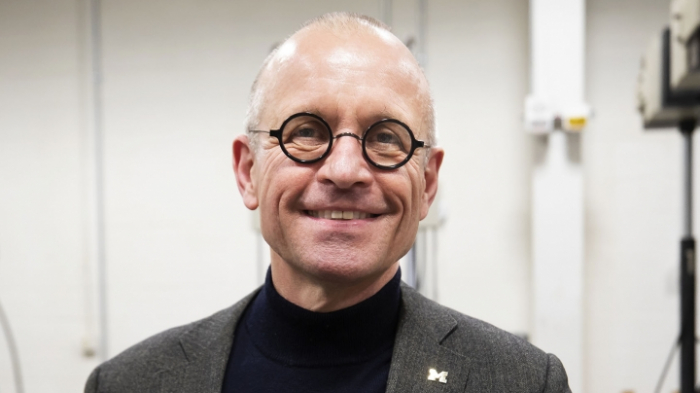
The analytical-information portal News.Az continues its series of articles, interviews and videos entitled "COP29 Baku". As part of this series, we will be posting interviews with and videos of prominent climate and environmental experts. Our guest today is Volker Sick, Arthur F. Thurnau Professor, Mechanical Engineering; DTE Energy Professor of Advanced Energy Research; Director, Global CO2 Initiative; Faculty Director, Center for Entrepreneurship College of Engineering, University of Michigan.
- Based on the outcomes and discussions at COP28 in Dubai, what key insights or takeaways do you believe can be applied to the upcoming COP29 in Baku?- I did not attend COP28 in person but contributed to documents that were presented by the Sustainable Development Goals Global Council on Future Fuels. This event emphasized how we could bring sustainable aviation fuels to markets. More so than ever before, COP29 must yield specific commitments to take concrete actions for real greenhouse gas emissions reductions with long-term potential. The time for band aids has passed.
- What are your expectations from COP29 in terms of advancing CO2 utilization technologies, and what outcomes would you consider as successful for the conference?
- COP29 must create awareness so that the international community understands that a fossil-free future requires CO2 utilization to ensure adequate access to essential carbon-based products. The future access to carbon-based products is particularly critical to help developing countries increase their standard of living as well as improve the global health of the planet. CO2 sequestration alone will not fix the problem! A clear commitment to prioritize the deployment of CO2 utilization must be a key outcome for COP29.
- How do you envision the integration of CO2 utilization technologies into existing industrial processes, and what are the main challenges in achieving large-scale deployment?
- Apart from addressing the increased cost to manufacture products compared to incumbent products, the development of supply chains for a CO2 utilization industry will be the key challenge. Co-locating capture and utilization facilities is a key facilitator and strength in this context.
We can reduce the cost of deployments by retrofitting and repurposing production facilities (e.g. concrete plants and chemical and petrochemical factories), as well as transportation infrastructure (e.g. trains and barges used for coal transport). Engagement with the current industry workforce and local communities in such large-scale transformations will be key to successful outcomes.
- Can you provide some examples of innovative CO2 utilization projects that have shown promise in reducing carbon emissions and their potential impact on the climate crisis?
- By far, the largest potential impact product categories for CO2 utilization are construction materials (e.g. concrete and aggregates) and aviation fuels.
Commercialization is underway to take emissions from steel plants and convert them to limestone aggregates. Others are taking such emissions to produce aviation fuel. Emissions from power plants are used in the production of concrete materials that provide long-lived removal of the CO2. This is a particular attractive solution for handling emission from so-called hard-to-abate industries.
Fundamentally, all of these CO2 conversion technologies can work with CO2 taken from air. Hence, once fossil-based production facilities are decommissioned, we can still use these CO2 utilization plants and provide much needed products. It should be noted that there will be some fossil-based production facilities that will take much longer to decommission, e.g. cement factories.
Work at the Global CO2 Initiative has shown that CO2 utilization for these two product categories has the potential to use several gigatons of CO2 every year!
- What role does advanced energy research play in accelerating the development of sustainable CO2 utilization technologies, and how is your work contributing to this field?
- Renewable energy is essential for CO2-utilization technologies to maximize their climate relevant benefits. As such, it will be a longer transition period until all demands for zero-carbon energy can be met. Advancing the deployment of renewable energy is therefore a key necessity for the success of CO2 utilization.
- Your work spans both engineering and medical fields. How do you balance these interdisciplinary projects, and what synergies have you discovered between them that benefit both areas of research?
- The driving force behind both of these fields is to come up with solutions that make a real difference to people's lives and well-being. Our work on human eye infectious diseases will hopefully contribute to preventing blindness for millions of patients every year. The underlying technology we are developing stems from my past work on laser spectroscopy to study combustion chemistry and technical implementation. Lessons learned from that work inform and drive my work for the Global CO2 Initiative. Both areas are examples for why we need to reach across disciplines and draw from multiple sectors of expertise to address the world's biggest challenges.
Related articles:
- Baruch Fischhoff: Attendees of COP29 Baku to be motivated by different goals
- COP29 Baku to outline more ambitious climate action strategies – Malaysian expert
- COP29 will bring several opportunities for Azerbaijan - US expert
- Nithi Nesadurai: COP29 in Baku to discuss increasing climate project funding
- INTERVIEW. What to expect from COP29 in Azerbaijan?
- Steve Vavrus: COP29 will need to reckon with "shocking" global warming


Similar news