How the Trump-Zelensky rift could reshape Atlantic relations



Editor's note: Jeffrey Sommers is a professor of political economy and public policy at the University of Wisconsin-Milwaukee. In addition to his academic work, he has been published in outlets such as the Financial Times, The New York Times, Project Syndicate, The Guardian, The Nation, Social Europe and others. The article expresses the personal opinion of the author and may not coincide with the view of News.Az.
The Trump-Zelensky scandal has undeniably added another layer of complexity to the already fragile Atlantic relations. The anxieties that emerged among Atlanticists following Donald Trump's election have only intensified, particularly after U.S. Vice President JD Vance's comments at the Munich Security Conference on February 14th. The results of Germany’s Bundestag elections a week later further deepened these concerns. Although the February 23rd elections were not an outright disaster for Atlanticists, the weak performance of the Sozialdemokratische Partei Deutschlands (SPD) and the relatively strong showing of Alternative für Deutschland (AfD) have undoubtedly raised alarms.
In an attempt to manage this deteriorating situation, Atlanticists have resorted to appealing to Trump’s vanity and his well-known transactional approach to politics. Emmanuel Macron's visit to the White House on February 24th was clearly an effort to secure Trump’s backing to ensure Kremlin compliance with any ceasefire agreement. Similarly, Keir Starmer’s visit on February 27th, accompanied by his spouse and a hand-written letter from His Majesty the King, appeared to be a more effective approach to appealing to Trump’s vulnerabilities.
From the Kremlin’s perspective, the open split between Zelensky and the White House on February 28th must be a welcome development. However, it would be a mistake to assume that this development brings Moscow any closer to achieving its objectives. The Kremlin's demands for a restructured security architecture stem from a long-standing sense of vulnerability, rooted in the historical memory of catastrophic invasions by Western powers. The perceived betrayal of the United States' 1990 pledge not to expand NATO and the discussions about fragmenting Russia into smaller states over the past three decades have only reinforced these insecurities.
On the other hand, Ukraine’s position is equally understandable. The fear of Russian expansionism, which has historically brought immense suffering to the Ukrainian people, is a powerful motivator. Even if the current Kremlin leadership does not harbor ambitions of conquest, there are influential factions in Moscow that do.
Both Moscow and Kyiv are thus left grappling with a legitimate question: Even if peace is possible now, what guarantees are there that future governments, potentially driven by more extreme ideologies, will not seek to upend any agreements reached today? For Moscow, this concern is directed at NATO's intentions, while for Kyiv, the threat is clearly Russia.
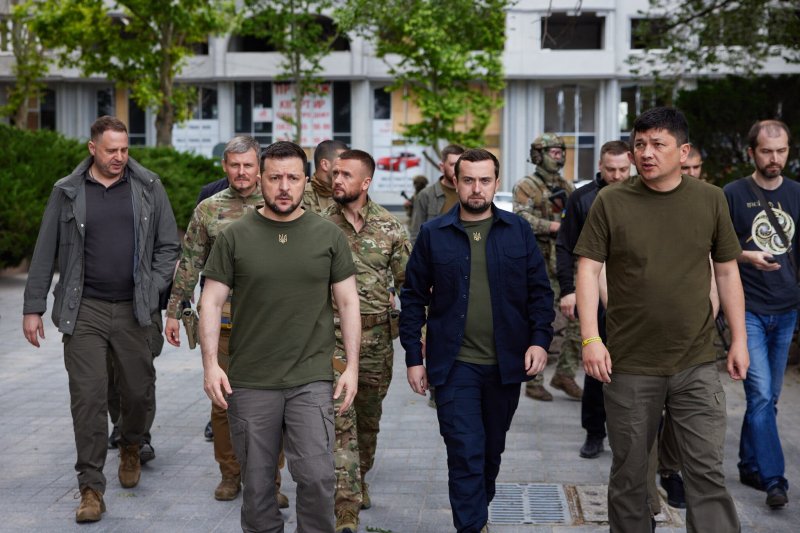
Image:nytimes.com
There is little doubt that the scandal significantly undermines Zelensky’s standing, both internationally and domestically. Trump's well-documented vanity and penchant for holding grudges make the situation even more precarious. However, it would be premature to completely write off Zelensky’s chances of recovery. Trump's transactional nature, which prioritizes deals over principles, leaves a narrow but potentially viable path for Zelensky to regain some leverage—albeit with diminished prospects compared to just a week ago. The window for such a recovery is closing rapidly, and Zelensky's ability to navigate this crisis will be a decisive factor in determining Ukraine’s diplomatic trajectory.
Refusing to negotiate risks triggering a catastrophic escalation, potentially leading to World War III. The danger lies in the unpredictable dynamics introduced by Trump’s strategic ambitions, including his vision of an Israeli-style “Iron Dome” and the expansion of the Space Force. These initiatives, coupled with the U.S.'s withdrawal from the Intermediate-Range Nuclear Forces (INF) and Anti-Ballistic Missile (ABM) treaties, could inadvertently raise the risk of preemptive nuclear conflict.
In this scenario, Zelensky's options appear increasingly constrained. Securing further U.S. support will likely require a transactional approach—similar to the initial “weapons for rare earth minerals” proposal. However, the counteroffers so far have been unacceptable to Kyiv and would remain so for any leader committed to their national interest.
If U.S. support falters, Zelensky would be compelled to turn to the European Union for backing. While the EU has the financial resources to provide assistance, this approach would strain member states' budgets, potentially fueling the rightward political shift that has been gaining momentum across Europe. In the long term, this could even lead to a fragmentation of the EU into two competing blocs. Meanwhile, the United States would continue to benefit from increased energy and arms sales to Europe, further complicating the geopolitical landscape.
Prolonged conflict also means greater casualties and deeper economic strains—not only for Ukraine but for the entire Transatlantic alliance. The longer the war drags on, the higher the likelihood that Ukraine will lose more territory to Russian advances, making a negotiated settlement even more elusive.
(If you possess specialized knowledge and wish to contribute, please reach out to us at opinions@news.az).


Similar news