Delhi's reaction to the Baku platform: what is the real reason behind the concern? - VIDEO


.png)
Editor’s note: Faig Mahmudov is a journalist based in Azerbaijan covering regional security, foreign policy, and geopolitical developments. The views expressed in this article are his own and do not necessarily reflect the official position or editorial stance of News.Az.
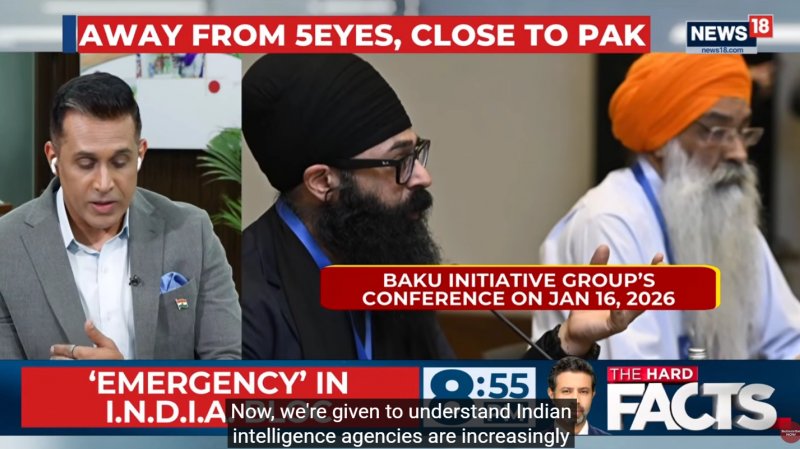
In recent months, growing cooperation between the Baku Initiative Group (BIG) and the International Sikh Federation has attracted increasing attention in Indian media. In particular, the Indian television channel CNN-News18 aired an extensive report containing a number of allegations directed at both Azerbaijan and the Baku Initiative Group. At the same time, discussions surrounding BIG's activities have expanded across various Indian media outlets and expert circles.
To understand the controversy, it is necessary to examine the origins of the Baku Initiative Group, its core mission and the nature of its cooperation with the International Sikh Federation.
Baku Initiative Group as an anti-colonial platform
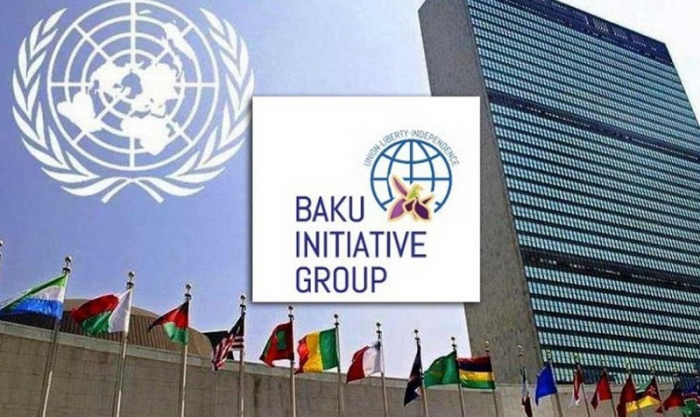
The Baku Initiative Group was established with the stated goal of bringing the concerns of colonised peoples, indigenous communities and national minorities to the international agenda. The organisation says its work is guided by the principles of the United Nations Charter, the protection of human rights, the right of peoples to self-determination and opposition to colonial practices.
Source: BIG
Since its establishment, BIG has focused primarily on issues relating to territories and communities that claim to be affected by colonial legacies. The organisation has hosted conferences, forums and discussions involving representatives from New Caledonia, Corsica, French Polynesia, Martinique, Guadeloupe, French Guiana and other territories.
Through events organised at international venues, including discussions linked to UN platforms, BIG has sought to bring together experts, academics, human rights advocates and public figures to debate issues related to decolonisation and self-determination. The organisation presents itself not as a tool directed against any specific country, but as a platform promoting anti-colonial dialogue and human rights advocacy.
The significance of cooperation with the International Sikh Federation
Over time, BIG has expanded its focus to include issues affecting various ethnic and religious communities. It is within this broader framework that its cooperation with the International Sikh Federation emerged.
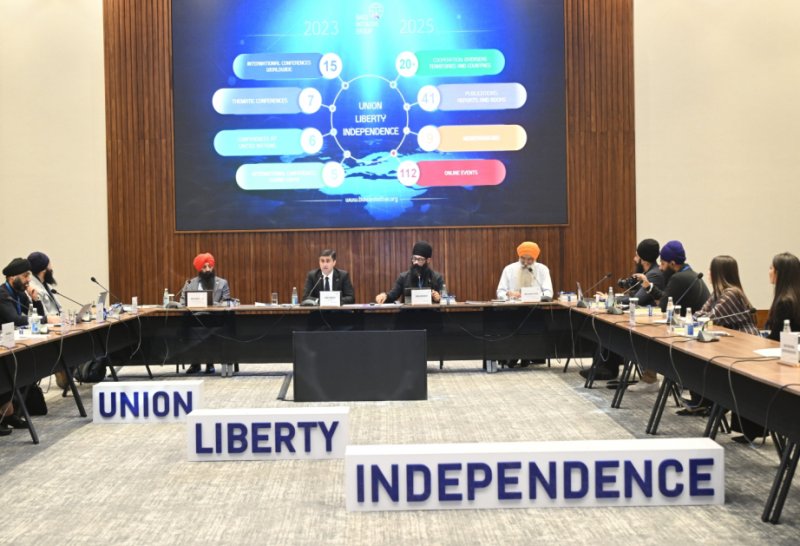
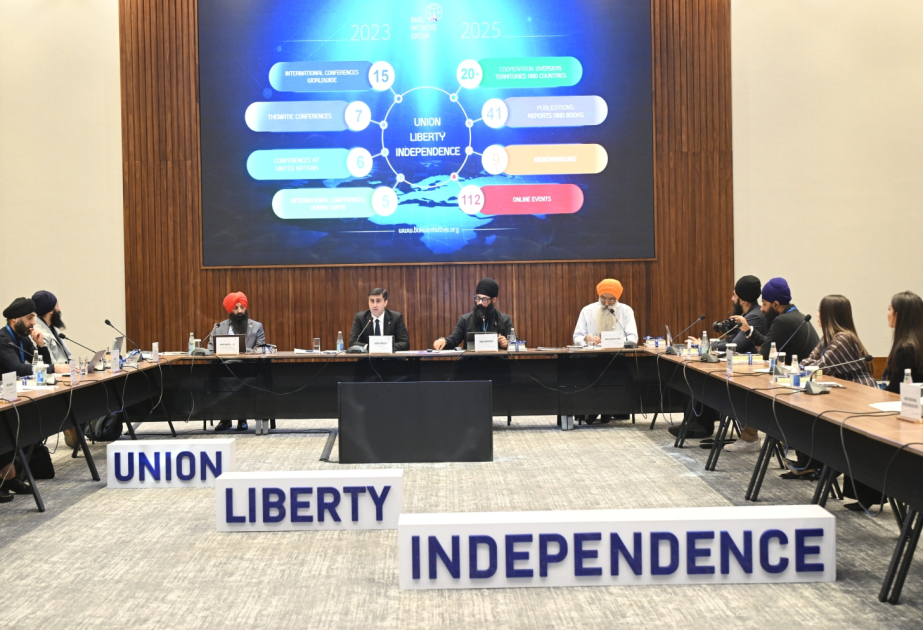
Events held in Baku have addressed issues related to the rights of the Sikh community, religious freedom, the preservation of national identity and allegations of discrimination. One of the most widely discussed events was the international conference entitled "Racism and Violence Against Sikhs and Other National Minorities in India", held on 16 January 2026.

Source: APA
The conference brought together Sikh representatives, international experts, researchers and human rights advocates to discuss issues relating to freedom of religion, minority rights and discrimination. In addition, the Baku Initiative Group and the International Sikh Federation signed a cooperation memorandum aimed at facilitating future conferences, academic research, expert exchanges and public dialogue initiatives.
Why has this cooperation attracted attention in India?
It is precisely this cooperation that has generated significant debate in India. CNN-News18 and several other Indian media outlets have raised a number of allegations concerning Azerbaijan and the Baku Initiative Group.
Among the claims most frequently repeated are the following:
"Azerbaijan is becoming a new operational space for Khalistan-linked networks."
In reality, the events held in Baku have been public and openly organised. Conference agendas, participant lists and discussion topics have been publicly available. The focus of these events has been on human rights, religious freedom and minority issues rather than clandestine political activities. Presenting open international conferences as evidence of covert operations raises questions about the basis of such accusations.
"The Baku Initiative Group is conducting a hybrid campaign against India."
However, BIG's activities are not limited to issues relating to India. Long before engaging with Sikh organisations, the group had organised events concerning French overseas territories, indigenous populations and other minority communities. Viewed in that context, discussions involving Sikh representatives appear to be part of a broader thematic agenda rather than a targeted campaign against a single country.
"Azerbaijan, Pakistan, and Türkiye are creating a geopolitical platform against India."
While Azerbaijan maintains close relations with both Pakistan and Türkiye, this fact alone does not demonstrate that conferences on minority rights and human rights issues form part of a geopolitical alliance directed against India. Participants in BIG events have generally included academics, activists, researchers and civil society representatives rather than government officials engaged in strategic planning.
"These activities are being carried out on behalf of Pakistan."
This allegation is largely speculative. The Baku Initiative Group was created in Azerbaijan and has publicly pursued activities covering a wide range of international issues and regions. Its record predates its engagement with Sikh organisations and includes subjects entirely unrelated to South Asia.
"Azerbaijan is using Khalistan-linked networks as leverage against India."
Yet the documented content of conferences held in Baku focuses on issues such as minority rights, religious freedom, discrimination and political representation. Discussing such issues in an international forum does not automatically amount to supporting separatism or using a particular movement as a geopolitical instrument.
"The Baku Initiative Group is one of Azerbaijan's principal lobbying tools against India."
This characterisation overlooks the broader scope of the organisation's activities. BIG's agenda extends far beyond India and encompasses a wide range of international issues relating to colonial legacies, indigenous rights and minority concerns.
The most controversial allegations
Perhaps the most striking aspect of the criticism is that some commentators have gone beyond discussing the Sikh issue altogether.
In various commentaries, allegations have appeared suggesting that Azerbaijan serves as a hub for human trafficking, drug trafficking and other forms of illicit activity, while simultaneously claiming that the Sikh issue is being used as a bargaining chip against India.
Such claims are particularly noteworthy because no direct evidence has been presented linking these accusations to the activities of the Baku Initiative Group. Human rights conferences and academic discussions are fundamentally different from criminal activities such as trafficking or organised crime. Conflating these issues risks turning a political disagreement into a broader campaign of reputational attacks rather than a fact-based debate.
The real source of concern
The deeper issue may lie elsewhere. For many years, questions concerning the Sikh community were largely viewed through the lens of India's domestic politics. Today, however, these issues are increasingly being discussed on international platforms. The Baku Initiative Group has become one of the venues where such discussions are taking place.
As a result, cooperation between BIG and the International Sikh Federation is being closely monitored in New Delhi because it creates additional opportunities for Sikh voices to reach international audiences.
Source: azertag
This does not necessarily mean that every concern expressed in India is without foundation. States often react sensitively when domestic issues gain international visibility. Nevertheless, the intensity of some of the accusations directed at Azerbaijan and the Baku Initiative Group suggests that the debate extends beyond questions of security and enters the realm of geopolitical competition and information politics.
Ultimately, the controversy surrounding the Baku Initiative Group and the International Sikh Federation reflects a broader clash of narratives.
Critics in India argue that Azerbaijan is providing a platform for voices that challenge Indian national interests. Supporters of BIG, on the other hand, maintain that the organisation is simply offering a forum for discussions on human rights, minority issues and self-determination.
The central question, therefore, is not merely whether conferences in Baku should take place. Rather, it is why discussions involving minority rights and political grievances have generated such strong reactions in New Delhi. The answer may reveal less about the Baku Initiative Group itself and more about the growing internationalisation of debates that were once regarded as purely domestic matters.
(If you possess specialized knowledge and wish to contribute, please reach out to us at opinions@news.az).


Similar news