India and Pakistan on the brink: Could a tactical nuclear strike be next?


Editor's note: Russian military-political analyst, expert in the field of strategic security, specialist in the Middle East and Africa Vladimir Bekish. The article expresses the personal opinion of the author and may not coincide with the view of News.Az.
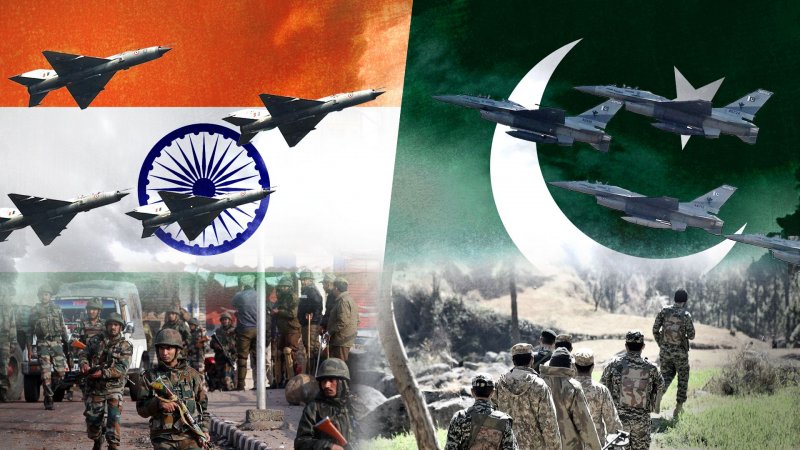
Two nuclear-armed countries have once again quarreled, exchanged threats, and engaged in military hostilities, edging closer to a serious conflict.
It is clear that we are speaking about India and Pakistan. The trigger for this escalation was a recent terrorist attack in the Indian state of Jammu and Kashmir, where members of the "Resistance Front" group attacked tourists, killing 26 people and injuring many more. Since this group is affiliated with the Pakistan-based terrorist organization Lashkar-e-Taiba, India has blamed Pakistan, suggesting that the Pakistani authorities are either supporting the organization or are complicit in the attack.
The steps India has begun to take against Pakistan, and Pakistan’s responses, are serious and alarming—not only for the two countries involved but for the entire region and the world at large.
Mutual shelling across the border has already begun. Pakistan has closed its airspace to Indian airlines. India has reduced the number of Pakistani diplomatic personnel, suspended visa issuance for Pakistani citizens, and revoked visas already issued.
Source:Brijesh Vaghela
Significantly, India has also suspended the Indus Waters Treaty of 1960, which governs the sharing of six rivers originating in Kashmir. Even during open conflicts, India had never suspended this treaty before. Its suspension could gravely affect Pakistan’s agriculture and energy sectors.
In response, Pakistan has labeled India's actions as an "act of war" and declared that it is ready to respond "with all its might, using the full range of national power." This thinly veiled threat clearly includes the potential use of nuclear weapons.
Footage has emerged of Pakistan moving heavy artillery and tanks toward the border. India, in turn, has deployed an aircraft carrier to Pakistani waters and conducted anti-ship missile exercises.
This is not the first escalation between the two countries. Since their partition in 1947, India and Pakistan have fought three major wars, primarily over Kashmir. However, India’s invocation of the "water weapon" is unprecedented and marks a serious escalation.
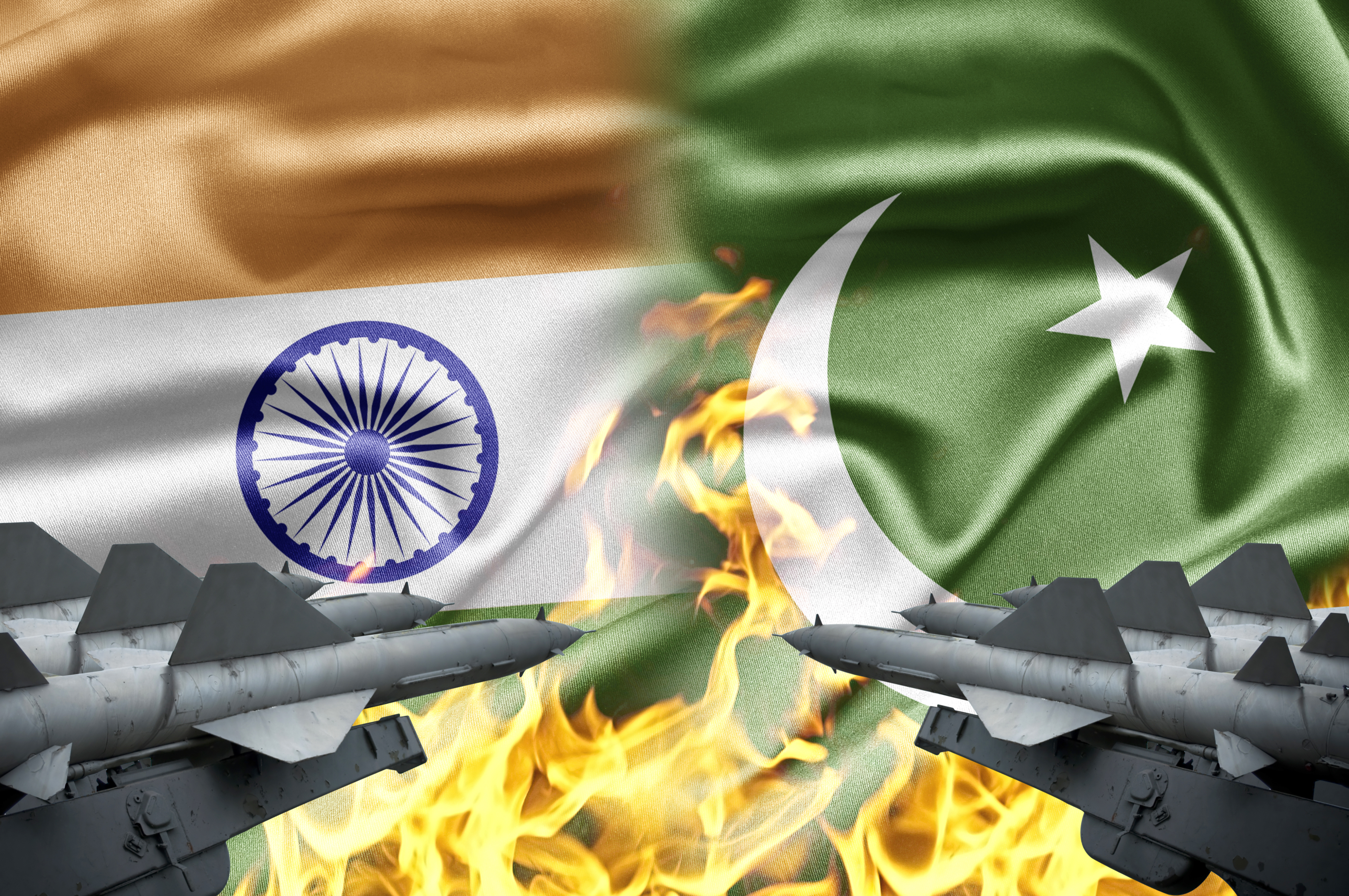
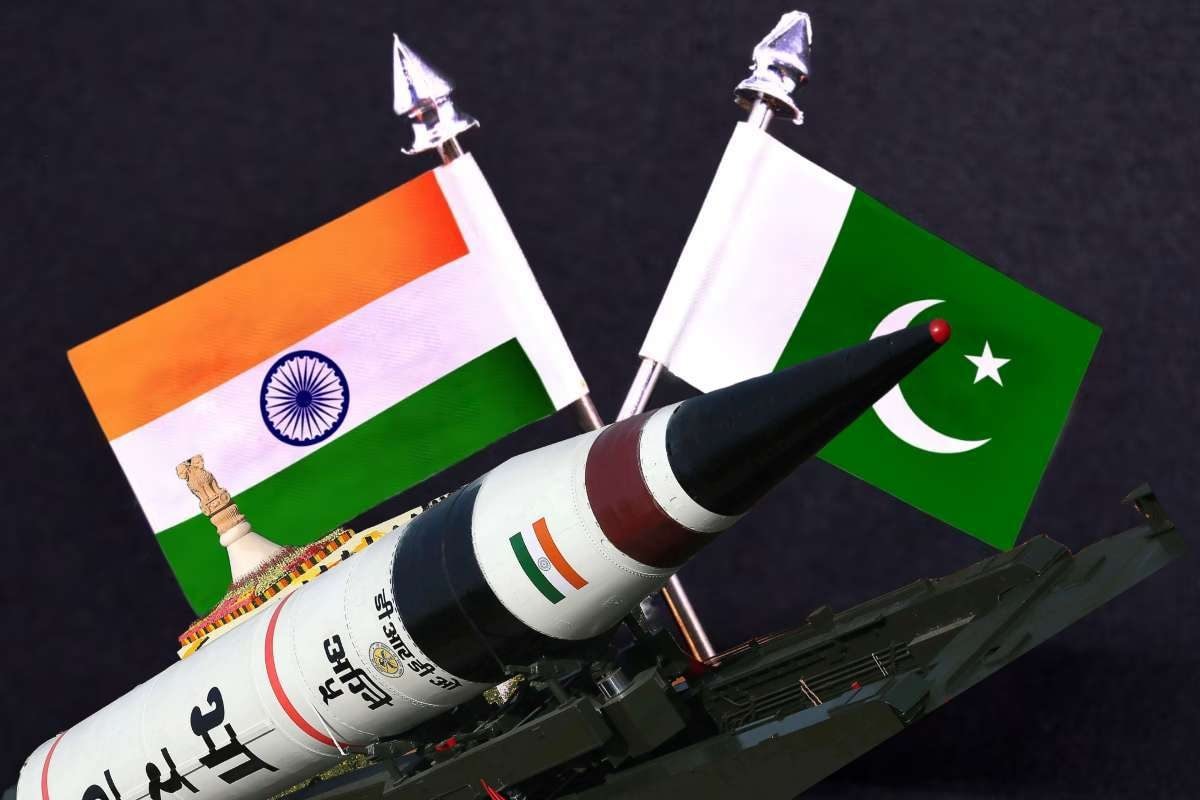
While India surpasses Pakistan in terms of territory, population, military size, and overall economy, the situation with nuclear capabilities is more balanced. According to the Stockholm International Peace Research Institute (SIPRI), as of 2024, India possesses 172 nuclear warheads, while Pakistan has 170.
These are primarily tactical nuclear weapons with yields between 10 and 40 kilotons.
Source: The Kathmandu Post
Here lies the critical factor: the yield of nuclear weapons matters. The smaller the yield, the higher the likelihood of use.
To understand this, consider the yield of the bombs dropped on Hiroshima and Nagasaki—about 20 kilotons each. While the devastation was immense, Japan survived as a nation. A 10-kiloton weapon would have even less destructive power.
In contrast, a full-scale nuclear exchange between major powers like the United States, Russia, or China—armed with hundreds of warheads yielding 250 kilotons to 1 megaton or more—would destroy human civilization.
Against this backdrop, the use of a "mere" 10-kiloton tactical nuclear weapon may seem relatively limited in its consequences for humanity at large, making its use more "thinkable" in a regional conflict.
Another key factor is the nuclear command and control structure. In most nuclear-armed states, the decision to use nuclear weapons lies with the head of state, often a civilian. However, civilians, lacking deep military knowledge, may misjudge the consequences of such decisions.
Source: Getty Images
In Pakistan, the situation is different. The decision to use nuclear weapons lies not with the President or Prime Minister, but with the Minister of Defense—currently Khawaja Asif. The military’s central role in Pakistani society, and its reputation for professionalism and discipline, explain this structure.
Having visited Pakistan personally and observed its military sector, I can confirm that Pakistani officers and defense officials are characterized by strong discipline, organization, and efficiency, even outside of purely military matters.
All statements from Pakistan regarding the current crisis—including the possibility of nuclear use—have been made by the Minister of Defense. Both India and Pakistan have publicly stated that they seek to avoid nuclear conflict, but both have also warned they will not hesitate to use nuclear weapons if necessary.
Adding another dimension to the crisis, Pakistan has proposed that an independent international investigation be conducted into the terrorist attack, offering Russia and China as potential investigators. This suggests that Pakistan is confident the investigation would exonerate it.
Source: News18 Hindi
India’s reaction to this proposal will be telling. If India refuses an international investigation, it may indicate that it fears Pakistan’s non-involvement will be confirmed, implying that India’s accusations were knowingly false and that the current escalations were deliberately orchestrated.
On the other hand, if India agrees to such an investigation, it may possess evidence linking the attackers to Pakistani authorities. In any case, if Pakistan is cleared, India will face a difficult choice: either de-escalate and suffer political, reputational, and economic losses—or continue the conflict, possibly escalating it to a limited nuclear exchange, shifting international focus away from the original cause.
In my view, the probability of a continued escalation is high. Let us watch carefully how the situation develops.
(If you possess specialized knowledge and wish to contribute, please reach out to us at opinions@news.az).


Similar news