INTERVIEW: Blocked straits and sanctions: Why China is betting on Northern LNG


News.Az analytical portal interviewed Igor Yushkov, the Leading analyst of the National Energy Security Fund, an expert at the Financial University under the Government of the Russian Federation.

Source: TASS | Igor Yushkov, the Leading analyst of the National Energy Security Fund, an expert at the Financial University under the Government of the Russian Federation
– What is China’s strategic goal in increasing its purchases of liquefied natural gas (LNG) from Russia? Is this a forced measure amid U.S. tariffs or part of a long-term energy reorientation by Beijing?
China's increased purchase of Russian LNG is primarily part of a long-term strategic reorientation. Even before the U.S. imposed tariffs on Chinese goods, China had already been actively participating in Russian LNG projects. For instance, it has long been buying surplus volumes from the Sakhalin-2 LNG plant. Most of Sakhalin’s output is tied up in long-term contracts with Japan and South Korea, but whatever is left over is often purchased by China.
This makes logistical sense. LNG from Sakhalin can be delivered to China in just 24 hours, offering a quick and reliable supply route. As U.S.-China relations deteriorate and the risk of conflict grows, Beijing increasingly values northern delivery routes for energy imports because they offer greater stability and security.
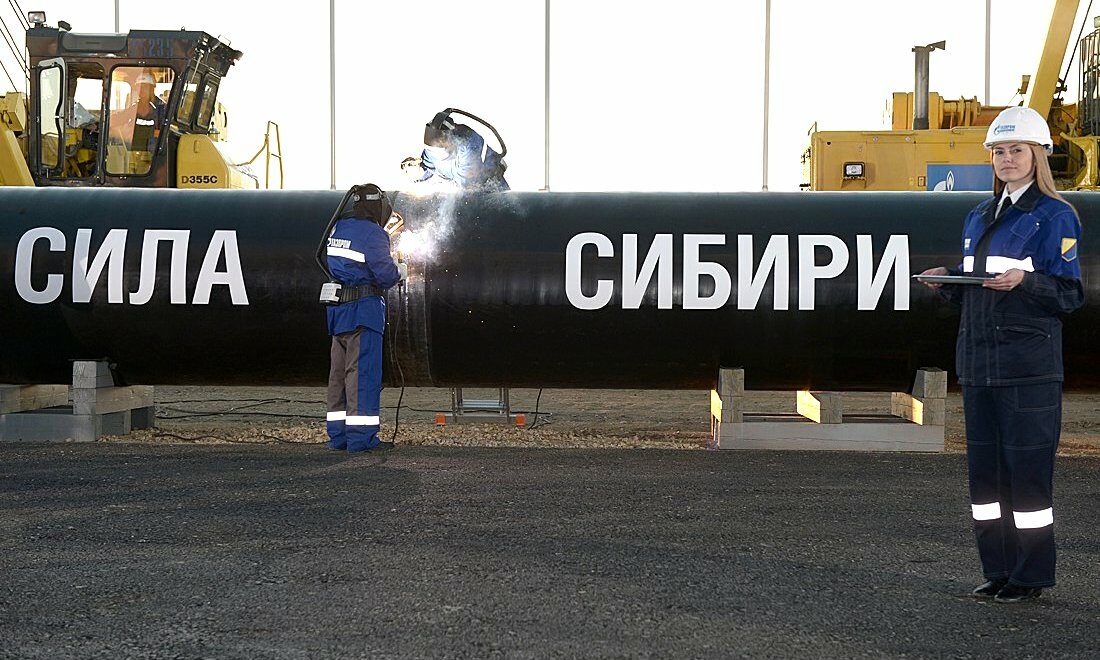
Russia supplies China with both pipeline gas and LNG. The Power of Siberia pipeline is already operational, and an agreement was signed in 2022 for a new Far Eastern route. Starting in 2027, Gazprom will begin supplying an additional 10 billion cubic meters of gas per year via a branch off the Sakhalin–Khabarovsk–Vladivostok pipeline.
China has also invested in Russia’s Yamal LNG project. CNPC owns a 20% stake, and the Silk Road Fund owns another 9.9%, giving China nearly 30% ownership. China has a long-term contract for 3 million tons per year from this project, typically delivered in summer via the Northern Sea Route, though sometimes via Europe and the southern route. Russia has promised year-round navigation in the future, which would allow uninterrupted deliveries.
In addition, China holds a 20% stake in the Arctic LNG-2 project (10% each by two companies). The original plan was for shareholders to receive LNG output proportional to their stake—meaning China would get 20% of the 20 million tons expected annually. However, due to sanctions, China has so far refrained from taking delivery to avoid triggering secondary U.S. sanctions. Although a few trial shipments have occurred, the project has largely stalled.
Source: TASS
– Why, despite years of negotiations, has there still been no agreement on the Power of Siberia-2 project? What are China’s conditions, and what interests is Russia protecting?
The delay stems largely from China's strategic calculus. The volumes discussed for Power of Siberia-2 are significant—up to 50 billion cubic meters per year. But China is in no rush. It wants to diversify its gas imports and reduce dependence on any single supplier. It is also pressing for steep discounts, which are not favorable to Russia.
Currently, Power of Siberia-1 is operating at full capacity, delivering 38 billion cubic meters annually. The new Far Eastern pipeline, once launched, will add 10 billion more. Including LNG deliveries, Russia is already supplying China with around 50–55 billion cubic meters per year—surpassing Turkmenistan and competing with Australia for the top spot overall.
For China, doubling gas imports from Russia would pose a concentration risk. So it continues to hedge by sourcing from other Central Asian countries: Turkmenistan (its top pipeline gas supplier), Uzbekistan (which now exports only in summer and is gradually becoming a net importer), and Kazakhstan (which supplies 5–10 bcm/year but is facing growing domestic demand and stagnant production).
China is also looking to maintain supply diversification from other regions. However, many of these routes—especially those from Qatar, Africa, or the U.S.—are vulnerable. Tankers must pass through chokepoints like the Strait of Hormuz or the Strait of Malacca, where U.S. naval presence is strong. Beijing views such southern routes as risky, especially in case of geopolitical conflict.

Source: Reuters
– How will China’s growing demand for Russian LNG impact the global LNG market, especially amid competition with Qatar, Australia, and a potential decline in U.S. market share in Asia?
China’s LNG demand is not surging dramatically—it is strategic, not reactive. Russian LNG from projects like Sakhalin and Yamal is largely committed under long-term contracts. For instance, Yamal LNG’s contract with China is fixed at 3 million tons per year. Other volumes are traded on the open market, with traders selling where prices are most favorable.
Globally, LNG prices are expected to decline as the U.S. doubles its export capacity between 2025 and 2028. This will affect all suppliers, including Russia. Lower prices could dampen demand growth, especially for spot-market LNG.
Russia’s challenge is not demand, but supply. Several mid-scale LNG plants in the Leningrad region—like those in Vysotsk and Portovaya—have nearly halted operations due to U.S. sanctions. Arctic LNG-2 is also sanctioned, despite initial launches. Trial shipments were made using second-hand tankers, but buyers in India and China refused to accept the cargo, fearing secondary sanctions.
All new Russian LNG projects—Arctic LNG-1, LNG-3, Obskiy LNG, Murmansk LNG—are frozen. There are no domestic gas carriers of the necessary capacity. Although Novatek and Gazprom have developed in-house liquefaction technology, the actual construction and equipment are still heavily dependent on foreign components.
Thus, despite plans to reach 100 million tons of LNG production by 2030, this target appears unrealistic under current conditions. Only two major plants—Sakhalin-2 and Yamal LNG—are reliably operating. Without resolution of the sanctions issue or significant technological breakthroughs, Russia’s future expansion in the LNG market will remain constrained.


Similar news