INTERVIEW: Delaying Ukraine’s NATO membership poses a threat to all of Europe


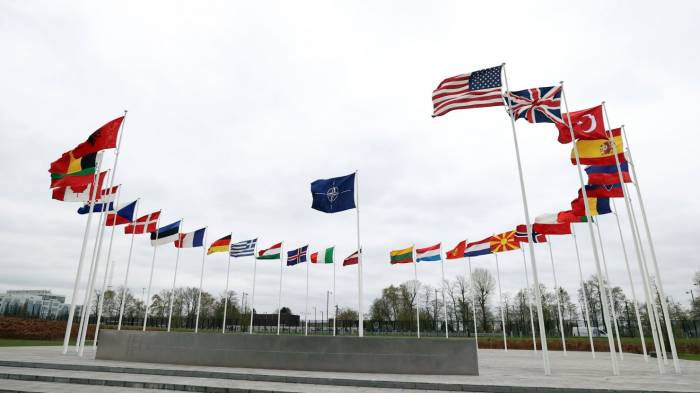
Photo: Flags of Alliance members flap in the wind outside NATO headquarters in Brussels. Photo: Getty Images
By Asif Aydini
News.Az presents an nterview with Ukrainian analyst Sviatoslav Bohdanov.
- Recently, The Times reported on a document prepared for Ukraine's Ministry of Defense, suggesting that Kyiv could create a simple nuclear bomb within months if Donald Trump halts U.S. military aid. How credible is this claim?
- The claim lacks credibility and appears to be part of Russia's ongoing disinformation campaign. Ukraine remains firmly committed to the principles of nuclear non-proliferation, under constant monitoring by the International Atomic Energy Agency (IAEA). Any covert nuclear activity is virtually impossible.
This narrative aligns with Russia's strategy to depict Ukraine as a nuclear threat to alarm its Western allies. Ironically, it is Russia that consistently violates international norms, engaging in nuclear provocations, occupying nuclear facilities, and employing "nuclear blackmail" in its rhetoric.
Kyiv understands the global ramifications of nuclear proliferation. Any move toward nuclear armament would result in the loss of Western diplomatic, military, and financial support. Thus, the focus should not be on Ukraine's capability to create nuclear weapons but on its steadfast refusal to pursue such a path.
- Ukraine plans to halt the transit of Russian gas starting January 1, 2025. What impact will this decision have on Ukraine and Europe?
- Ukraine is fully prepared for a future without Russian gas transit. The country’s gas transmission system is optimized for reverse operation, and domestic production satisfies national needs. Moreover, experts highlight alternative uses for the infrastructure, such as transporting biomethane, hydrogen, or even reparations flows from Russia.
The European Union is equally prepared, having significantly diversified its energy supplies over the past two years. European Energy Commissioner Kadri Simson has emphasized that the EU is ready to live without Russian gas. This transition underlines the diminishing leverage of Russian energy on European markets.
Russia’s attempt to frame this decision as a crisis for Ukraine and Europe is another manipulation. Both Ukraine and the EU are increasingly energy-independent, while Russia faces mounting challenges in maintaining its budget amid a shrinking client base.
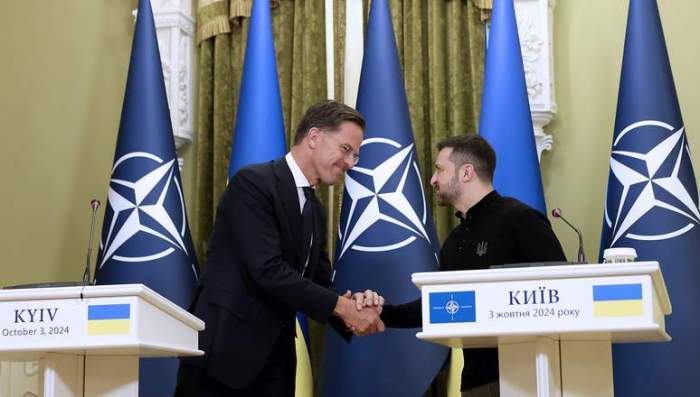
NATO Secretary General Mark Rutte with Ukrainian President Volodymyr Zelenskyy in Kyiv during his first official visit as Secretary General on 3 October 2024. Photo: NATO
- How realistic is Ukraine’s NATO membership in the near future?
- Ukraine’s NATO membership is not just a diplomatic ambition; it is a cornerstone of European security. Delaying Ukraine's accession only emboldens Russian aggression, as history has shown that appeasement fuels expansionist agendas.
For Ukraine, joining NATO is about more than military guarantees; it signifies a civilizational shift toward high governance standards and robust security. For NATO, Ukraine represents a strategic asset—a capable ally with unmatched combat experience and expertise in countering hybrid threats.
While predicting the exact timeline is difficult, further delays by NATO risk undermining European security and stability. Ukraine has demonstrated its readiness, and NATO must now step up to prevent history from repeating its mistakes.
- Could U.S. military aid to Ukraine change if Donald Trump returns to power?
- Trump’s presidency would introduce uncertainties, but it wouldn’t necessarily mean the end of U.S. support for Ukraine. The deciding factor will be Russia's behavior—if it continues its aggression and makes unrealistic demands, even a pragmatic Trump would find it hard to justify withdrawing support.
Ukraine must present itself as a strategic partner rather than a petitioner, emphasizing mutual benefits and a resilient stance. Diplomacy and structured dialogue will play critical roles in navigating this uncertain landscape.
- What are your predictions for the continuation of hostilities in 2025?
- The likelihood of continued conflict in 2025 is high unless there are significant shifts in the global or regional landscape. Russia shows no genuine interest in peace negotiations, while Ukraine refuses to entertain Moscow’s unacceptable demands.
Without a resolution, the conflict risks becoming a frozen war—a scenario Ukraine aims to avoid. However, developments such as NATO membership for Ukraine, changes in U.S. support, or economic collapse in Russia could dramatically alter the situation.
For now, Ukraine remains committed to resisting aggression, knowing that concessions would only embolden the Kremlin for future attacks.


Similar news