INTERVIEW: Israel will escalate further against Iran



In an exclusive interview with News.Az , Jacob Shapiro, Director of Geopolitical Analysis, shares his insights on the evolving dynamics in the Middle East.
With tensions escalating between Iran and Israel, and the ongoing Israel-Hamas conflict reshaping regional alliances, Shapiro delves into the potential consequences of these developments. He also offers his perspective on the role of non-state actors like Hezbollah, the strategic interests of the U.S., and the growing influence of China and Russia in the region.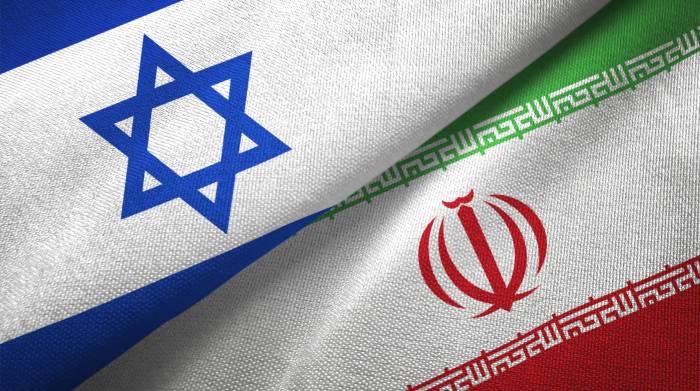
- In light of the escalating tensions between Iran and Israel, what do you foresee as the possible next stages in this conflict? Do you believe there is potential for a large-scale military confrontation?
- What we are witnessing is already a fairly large-scale military confrontation. And yes, I think there is potential for more. Israel has demonstrated tremendous strength against Iran and its proxies in the last two months. Hamas has been decimated. Hezbollah has been decapitated. Israel has shown it can hit the Houthis directly and is preparing a response against Iran itself — we will see how much damage it can do. Perhaps Iran has more in reserve than it has shown so far, but between its domestic politics, its proxies being unable to stand up to Israel, and its inability or unwillingness to deter Israel, it seems likely that Israel will escalate further, especially considering the recent military successes, which have bolstered the Netanyahu government's popularity.
- Considering the ongoing Israel-Hamas conflict, how do you perceive its potential long-term impact on regional stability in the Middle East, especially in relation to Iran and its role in the conflict?
- The uncomfortable truth no one wants to admit is that the Israeli-Palestinian conflict, in and of itself, is not terribly strategic. To the extent that Israel's operations against Hamas change anything, I think it will be on two levels: 1) Turkey, which has positioned itself as a leader in the Muslim world and specifically as a protector of the Palestinians, has done nothing. What will Turkey do in the future? Could this be laying the groundwork for much more difficult Turkish-Israeli relations ahead? 2) What does this mean for the West Bank? Will Israel do to the West Bank what it just did to Gaza? Will refugees stream into Jordan and undermine that country's fragile political stability? There is also the question of how much Israel’s actions will radicalize a new generation of potential Islamists.
- With the growing influence of China and Russia in the Middle East, how do you think U.S. foreign policy should adapt to maintain its influence in the region, especially with the current geopolitical shifts?
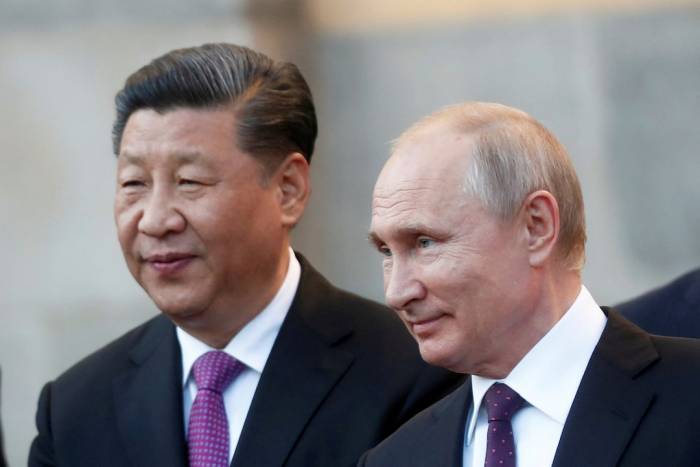
- I am an analyst, not a policymaker, but if I were advising U.S. policymakers, I would point out that the U.S. does not need to import energy from the region anymore, whereas China and other Asian powers do. It makes more sense to try and establish a balance of power between competing nations (Israel and the Gulf states versus Turkey and Iran) and to focus more on the Western Hemisphere and the Pacific rather than continuing to waste valuable blood and treasure in a part of the world where the U.S. has never demonstrated great proficiency and where it no longer has strategic imperatives.
- Given the increasing tensions between the U.S. and Iran, what role do you think diplomatic negotiations could play in de-escalating conflicts? Is there a realistic path forward for U.S.-Iran relations under the current circumstances?
- Under Trump, categorically no. Perhaps under Harris, though her recent comments about Iran being the biggest foreign threat to the United States — as laughable as that notion is to me — suggest that there is no prospect of improved U.S.-Iran relations as long as the current regime in Iran remains in power. Perhaps after the Supreme Leader eventually passes away, or if domestic instability brings about a new regime, things could change, but these seem like low-probability events. U.S. policy on Iran has ossified in much the same way it has with North Korea and Cuba.
- As a specialist in Middle East studies, how do you view the role of non-state actors, such as Hezbollah and other militias, in shaping the future of the Middle East amid ongoing conflicts in Lebanon, Syria, and Yemen?
- I am reminded of when Socrates said that the beginning of wisdom is the admission that we know nothing. A few months ago, I would have said non-state actors (and I would include the various Kurdish groups as well) were in some ways defining the political geography of the region more than ever before, and that we were witnessing the slow redrawing of borders around the success and power of these groups. However, Israel just demonstrated that with superior technology, it may have managed to wipe out the leadership of the non-state actor many experts, including myself, considered the strongest (Hezbollah). As powerful as non-state actors can be, they cannot marshal the resources of states, which is why sovereignty and independence are so important to any group that longs for a nation-state of their own.


Similar news