Is Washington aligning with Delhi against Beijing?


By Tural Heybatov
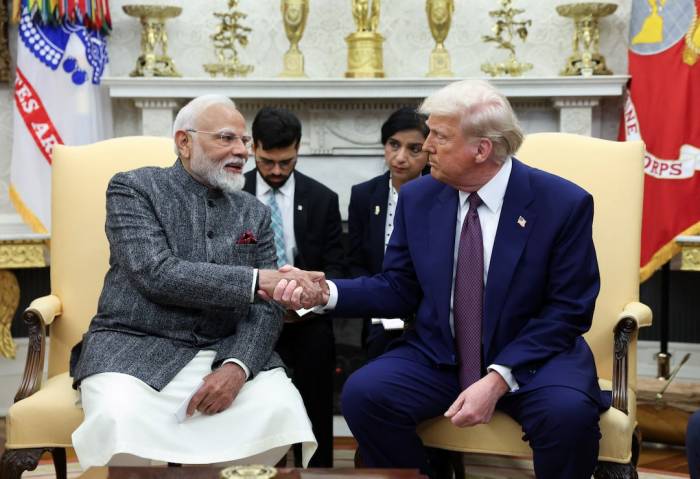
Indian Prime Minister Narendra Modi was the latest head of state to personally travel to Washington for talks with the newly elected U.S. president. Many anticipated major revelations from this meeting, but there were none. The roles the United States envisions for India, as well as India's own expectations from its relationship with Washington, have long been clear.
One of the key topics discussed in Washington was the growth of bilateral trade. The meeting’s outcome highlighted that this growth would primarily manifest in India's commitment to purchasing large quantities of American oil and gas. At the press briefing following the talks, Donald Trump repeatedly emphasized that India must lower its high tariffs. The U.S. trade deficit with India stands at nearly $100 billion, a figure that the American president finds unacceptable. In response to India’s high tariffs on American goods, Trump promised to introduce reciprocal tariffs.
Overall, Trump maintained a friendly tone, suggesting that negotiations proceeded on terms favorable to the White House. The U.S. intends to expand its arms exports to India, with the potential inclusion of F-35 stealth fighter jets in the future.
It is worth noting that India signed an agreement to purchase American weaponry back in 2008. However, Russia remained its primary arms supplier for years, as the U.S. had been reluctant to sell India the equipment it sought. It was only last year that India acquired 31 MQ-9B SeaGuardian and SkyGuardian drones, a deal that had been in negotiations for six years. Now, with India planning to spend $200 billion on military modernization, the U.S. has secured a significant share of this investment.
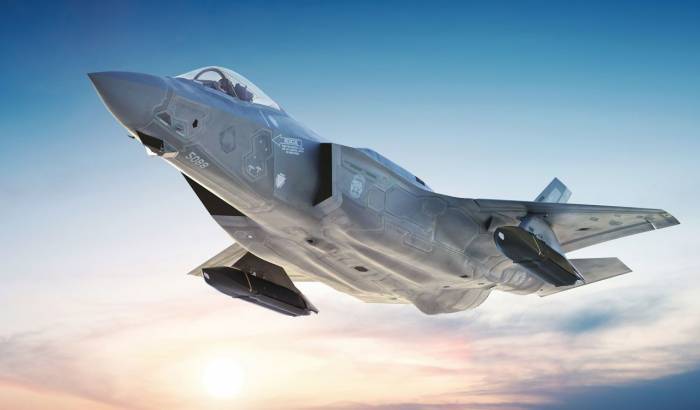 F-35 fighter jet. Photo: Lockheed Martin
Washington and Delhi also pledged to cooperate in countering "the threat of radical Islamic terrorism," promoting peace in Ukraine, and strengthening their partnership within the U.S.-India-Australia-Japan framework.
The American president refrained from making strong statements against China, merely noting his concern over "intense clashes on the India-China border." He also expressed hope that "China will help end the war between Russia and Ukraine" and shared his intention to hold negotiations between the U.S., Russia, and China on arms reduction and denuclearization. Trump lamented that all three nations were spending vast sums on their militaries when those resources could be allocated to more beneficial endeavors.
Nevertheless, India has its own expectations from the U.S., and these appear to align with Washington’s strategic interests.
Two years ago, Indian Defense Minister Rajnath Singh stated at the "2+2" dialogue between the Indian and U.S. foreign and defense ministers that India's strategic cooperation with the U.S., particularly in countering "Chinese aggression," was "critically important." He emphasized that both sides were increasingly aligned on key strategic issues, including the necessity of "combating Chinese aggression."
This so-called "aggression" refers to the border disputes between India and China in southern Tibet, where both countries lay claim to certain territories, leading to periodic armed clashes—the most recent of which occurred in December 2022. By 2023, Western analysts were already warning of a potential new conflict between the two nations.
The U.S. has not remained neutral in this dispute, siding with India. The U.S. State Department issued a statement recognizing Arunachal Pradesh as Indian territory and opposing any unilateral attempts to alter the Line of Actual Control between India and China. Beijing condemned Washington’s involvement in the territorial dispute, with a Chinese Foreign Ministry spokesperson asserting that border demarcation between China and India is a bilateral issue and has no relevance to the U.S. He further accused Washington of deliberately stoking conflicts between other nations to serve its geopolitical interests.
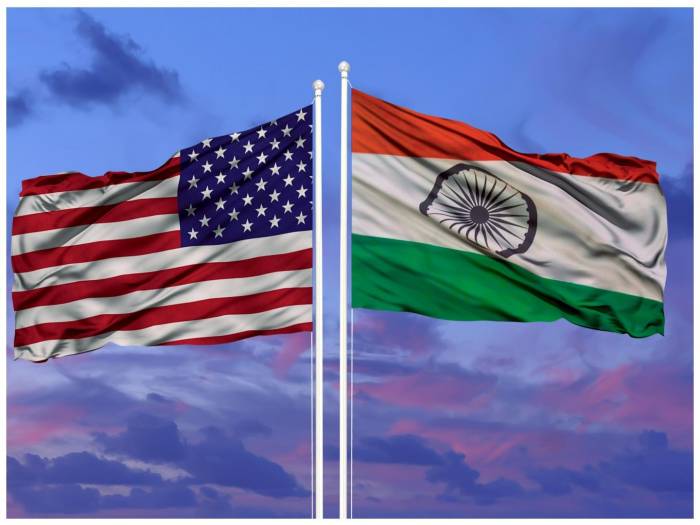 Photo: Shutterstock
Washington has never concealed such intentions. During his first term, Trump reshaped the geopolitical landscape by forging an India-Japan alliance aimed at containing China. Tokyo and Delhi subsequently agreed to integrate their maritime trade routes as a countermeasure to China’s Maritime Silk Road initiative.
Notably, every U.S.-backed initiative involving India has, in one way or another, been directed against China’s interests.
In September 2023, then-U.S. President Joe Biden announced a joint infrastructure project with India to rival China’s Belt and Road Initiative. This plan, unveiled at a high-profile multilateral summit, aimed to establish a trade corridor linking India to Europe via the Middle East. However, just a month later, the outbreak of the Israeli-Palestinian conflict derailed these anti-China ambitions.
It remains to be seen what the current agreements between Trump and Modi will yield. One thing is certain: the public statements made at the briefing do not reveal the full scope of their discussions.


Similar news