Lagunin: A chance for a new east - INTERVIEW



Yuri Lagunin: Peace is built through negotiations, not slogans
Amid unprecedented developments in the Middle East, where every diplomatic nuance can shift the global balance of power, the ceasefire reached in the Gaza Strip has become one of the most widely discussed topics of recent weeks. News.Az spoke with Yuri Lagunin, an Israeli public and political figure and expert in international relations, about the significance of this step, the role of external actors, and how the new dynamics in Gaza might reshape the international security architecture.
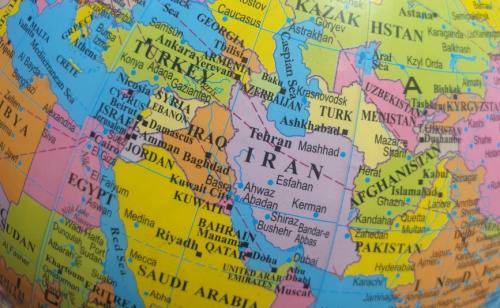
— How do you assess the ceasefire reached in Gaza? Is it primarily a humanitarian necessity, or rather part of a broader geopolitical scenario in which key external players such as the United States, Qatar, Egypt, and Iran are trying to redistribute influence in the region? Can this agreement be considered the beginning of a new regional security architecture?

Source: Reuters
— You know, when we evaluate the ceasefire agreement, there is no doubt that, first and foremost, it is a major positive step forward. Before this deal, the parties to the conflict had, for various reasons, been unable to reach any form of agreement. There were multiple breakdowns — you are well aware of them, and all attempts to bring Hamas to the negotiating table had failed.
Today, this represents a truly significant breakthrough that can change the overall picture in the Middle East and beyond. Every conflict that can be resolved offers hope that others may also be addressed peacefully. Undoubtedly, it can serve as a catalyst for further peace processes. Above all, this is a positive signal, bringing hope for additional constructive steps, both in the Middle East and around the world.
— How have the positions of Washington, Brussels, and Tehran influenced the current ceasefire? Given the growing contradictions within the United States and pressure from Arab states, can Israel today pursue an autonomous policy in the Gaza Strip, or is it essentially compelled to act within the framework of international expectations and constraints?

Source: News.Az
— Both yes and no. It’s important to understand that Israel acts first and foremost based on its national security interests. This national security, however, in no way threatens the neighboring countries surrounding Israel. Accordingly, all the many players involved in this process, despite various contradictions within the United States, will ultimately orient themselves toward President Trump’s decisions.
He is, in this case, the key figure who can and will defend his interests, and at the moment, U.S. interests largely align with those of Israel. Any contradictions that arise are now being addressed through efforts to find solutions that smooth them over.
It’s also important to note that both Iran and Israel, through various intermediaries, have made it clear that they do not want to escalate the situation. The crisis that emerged between Israel and Iran is currently on pause, and both sides would prefer to resolve the conflict at this stage.
It’s difficult to predict the future, but the peace process in the Middle East that has begun today demonstrates a genuine will to find a resolution. Now the focus is on implementing the actions outlined in the agreements — steps that could lead to a final resolution of the conflict and potentially to long-term peace.
— In your view, what will Israel’s strategy be following the partial withdrawal of its forces? Could the current step become a prologue to creating a new administrative model for Gaza involving Arab states or supported by international structures? And what are the risks of Israel being drawn back into the conflict?

Source: Reuters
— Today, through its actions, Israel is demonstrating its commitment to halting hostilities and establishing sustainable peace in the Middle East. Israel is withdrawing its troops, suspending major operations within the enclave, and signaling its intentions not through rhetoric but through concrete steps. This must be clearly understood.
On the other hand, any attempts by certain anti-Israeli actors in the region are unlikely to achieve tangible results. As the saying goes, each side reveals its true nature through its actions. If certain forces try to drag Israel into new confrontations, they will only destabilize themselves and achieve nothing.
The majority of Israel’s adversaries today understand that, despite its military superiority, Israel is making efforts to localize this conflict as much as possible and is genuinely oriented toward a peaceful resolution.
Therefore, I do not believe that attempts to provoke Israel into new clashes will succeed. What we are witnessing today are real, positive steps toward peace. Of course, as I mentioned earlier, provocations are possible and attempts to disrupt agreements may occur. But the movement that has begun is the most constructive and promising we’ve seen to date.
— How are current events affecting Israel’s international image and its relations with allies amid the growing Chinese and Russian presence in the Middle East? Can we say that the situation in Gaza is becoming an arena for global confrontation between the “West” and the “anti-Western” bloc?

Source: ispionline
— To a large extent, the deterioration of Israel’s image has been fueled by the actions of certain countries, particularly some European politicians who tried to use the war in the Middle East for their personal gain and political ambitions.
Broadly speaking, we now see that there is no real division within Europe over concluding a peace agreement; everyone supports peace in the Middle East. Accordingly, if Israel and the enclave find common ground, hostilities are halted, and all agreements are implemented, then the anti-Israeli rhetoric will fade away.
We are also witnessing comprehensive support from the United States and Israel’s friends — among them Azerbaijan, which has always treated Israel with respect and support, and this has always been mutual. We see this reflected in the economic cooperation between our countries. Over time, image concerns will move into the background, while economic considerations take center stage.
The opportunity to develop the Middle East will become an attractive investment project that many will embrace. As for Russia and China, it is important to understand that both have always been present in the Middle East to varying degrees. If these relations remain within the realm of diplomacy and the resolution of difficult, disputed issues through diplomatic mechanisms, there is nothing wrong with that. Israel will work and engage with whoever it benefits from.
I believe that once full peace is achieved in the Middle East, the situation will stabilize, and the “Israel issue” will recede into the background. Other regions — those that need assistance in finding the right conditions to sign peace agreements or require a third-party mediator — will come to the fore. As a result, the media attention surrounding events in Israel will subside. In three to four months, we will likely see a completely different situation and be able to draw deeper conclusions about the dynamics taking shape.
— Finally, a question about our own region. A recent meeting between the presidents of Azerbaijan and Russia showed that diplomacy still has the power to resolve even the most complex issues, offering an alternative to loud statements and military rhetoric. How do you interpret this signal? Can the Baku–Moscow dialogue serve as a model for other regional states that have yet to find common ground? And at the same time, how do you view the destructive actions of some European players who, under the guise of humanitarian slogans, are in fact undermining fragile balances — whether in the Middle East or the South Caucasus?
Source: TASS
— Undoubtedly, the meeting between the presidents of Azerbaijan and Russia is a powerful diplomatic signal, demonstrating that even the most difficult issues can be resolved at the negotiating table rather than under the roar of artillery. The very fact that the two heads of state showed goodwill, sat down together, held a calm and constructive conversation, and identified common points already reflects real progress.
This is an example of mature diplomacy and political responsibility. In my view, such steps should serve as a reference point for other countries in the region that have not yet learned to truly listen to one another. Diplomacy is the language that silences guns. Today, it is the key to stability and security in our region.
The Baku–Moscow example shows that with political will, any disagreements can be overcome if mutual respect and rational dialogue take precedence over ambition.
As for Europe, unfortunately, we increasingly observe destructive actions cloaked in lofty humanitarian slogans. France is a prime example: its interference, whether in the South Caucasus or the Middle East, only exacerbates existing tensions. President Macron has, regrettably, turned his country’s foreign policy into a source of friction. The result is clear: instead of peace and trust, the world is witnessing the emergence of new dividing lines.
That is why I am convinced that Azerbaijan’s example, showing restraint and a strong commitment to diplomacy, must be recognized. Peace is built not through slogans but through dialogue; not through ultimatums but through mutual respect. The meeting between Ilham Aliyev and Vladimir Putin is the best proof of this.


Similar news