New friendship, old threats: Why the world should fear a U.S.–Russia rapprochement


Editor's note: Russian military-political analyst, expert in the field of strategic security, specialist in the Middle East and Africa Vladimir Bekish. The article expresses the personal opinion of the author and may not coincide with the view of News.Az.
And if history truly repeats itself, then I must admit—I feel afraid today. And here's why.
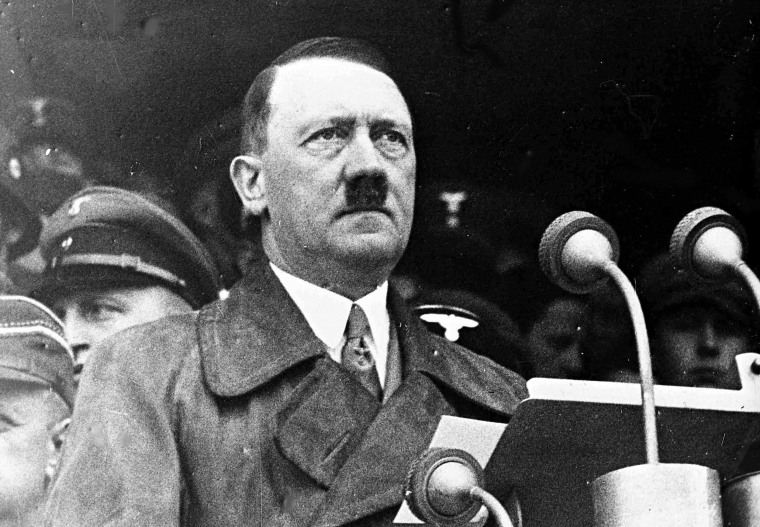
Several decades ago, in the mid-20th century, Europe and the world witnessed a series of significant and consequential events. In Europe, a country that had never been historically insignificant suddenly began to feel humiliated. Marginalized. Disrespected. And in the wake of these sentiments, a strong leader rose to power in that country. Loud. Aggressive. Resolute and uncompromising. This very leader announced his intentions to reshape the world—to change it in favor of his nation. To restore what he called historical justice. And he was willing to use force if necessary.
At the same time, in that same region of the world, there was another country—powerful, ambitious, unconventional, and determined. It too was led by an extraordinary figure. A man of ambition and grand ideas.
And, as one might expect, when two such leaders come into conflict over their visions of the world, their ambitions, and their ideologies, things become very complicated. One of the few ways to avoid catastrophe is for such leaders to come to an understanding—or even forge a friendship.
Source: NBC News
Now, speaking of these mid-20th century historical events, I’m referring to Germany and its extraordinary leader, Chancellor Adolf Hitler. He was determined to restore Germany’s status as a great power—one to be feared, respected, and obeyed. A nation to which others would surrender whatever was demanded: territory, assets, resources.
But there was another great power in the same region, one that also recognized its own historical grandeur, uniqueness, and significance—the Soviet Union. In other words, Russia, along with the peoples and lands it had absorbed. The Soviet Union was led by a remarkable and unconventional ruler—Joseph Stalin.
At a certain moment, when both of these nations and their leaders realized they were equally determined and exceptional, but their interests were on a collision course, they made a decision: it was better to strike a deal and divide the playing field. To establish a new world order—if only temporarily.
And so they did. They signed the Molotov-Ribbentrop Pact, dividing their ambitions, claims, and territories.
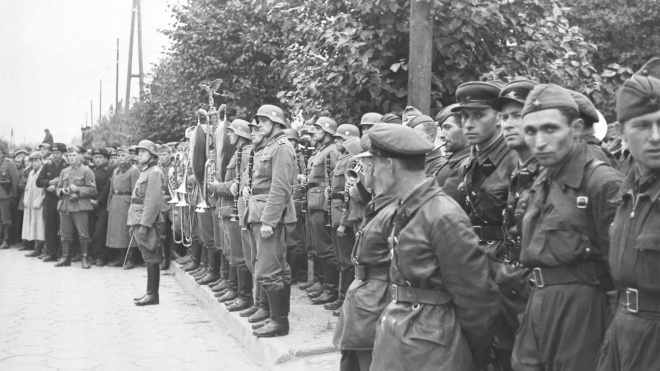
Mutual respect and understanding began to emerge between these two leaders and their countries. A joint military parade between the German and Soviet armies. Intense trade—trainloads of goods moving from the USSR to Germany. New lands absorbed into both empires. And all of this happened on the eve of a war. Not just between them—but a war that would engulf the world.
Source: Babel
We all know how this so-called mutual respect and cooperation ended. We remember how the USSR was devastated—invaded, with millions of lives lost. And we remember how, not long after, the same fate befell Germany. We know what that initial friendship ultimately cost Germany, Europe, and the entire world.
And so, recalling these events and facts from human history—from the stories of great nations and their extraordinary leaders—you look at the world today, at certain countries and their larger-than-life rulers, and you can’t help but feel uneasy.
At the helm of the great country of America—with its mighty military and vast nuclear arsenal—stands the unmistakable Donald Trump. A man who has launched a bold campaign to make America the greatest of all. A leader who seems intent on transforming other sovereign states into mere extensions of the United States—absorbing them, expanding American territory. And Trump openly declares that he will do just that—and if force is necessary, so be it. No one, he claims, will stop him.
He has also begun demanding total obedience from certain other countries—both to himself personally and to America as a whole—in foreign policy, economics, and trade. In short, a new world order is being drawn up. Because he’s tired of the old one.
Now… Trump has only recently returned to power—and for what might be a short time. But there is another great nation in the world, one with a formidable army and a massive nuclear arsenal. Its leader—firmly in power for years and likely to remain for many more—is another unique and exceptional figure: Vladimir Putin.
And as history repeatedly shows us, great powers like America and Russia have long been rivals, opponents—at times even outright enemies. They compete for global influence. They threaten one another with annihilation in the name of protecting their national interests.

Source: Reuters
Russia, for its part, has recently set out to grow even greater—by seizing territories that are not its own. That is exactly what’s been happening over the past few years. And it seems that Russia’s great leader has also grown tired of the old world order. It no longer suits him. And so, Vladimir Putin and Russia have begun building a new world. They call it multipolar and just. But the name hardly matters—what matters is what is actually being done: in politics, in economics, in trade, in military presence.
And so, understanding that two great powers—under the leadership of such bold figures—could one day come to blows and cause irreversible devastation, these two leaders are now choosing another path: to negotiate. To divide spheres of influence. To divide the world.
And as we see, they are reaching agreements. And the fate of the world has never depended so heavily on such agreements.
But here’s the thing… History always repeats itself. And there’s a creeping sense that today’s friendly contacts and agreements between these nations will ultimately lead the world down the same path taken by two other great powers in the mid-20th century. Only this time, the consequences may be far worse—for everyone.
(If you possess specialized knowledge and wish to contribute, please reach out to us at opinions@news.az).


Similar news