New law: Cryptocurrencies pave the way for cross-border payments in Russia


By Asif Aydinli
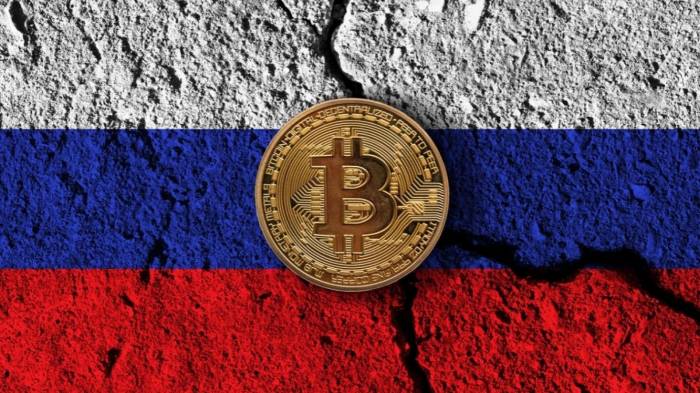
Starting on September 1, the Central Bank of Russia began testing cryptocurrency settlements for foreign trade contracts, made possible by a new law signed by the president in early August. This law permits the use of digital currencies for cross-border settlements and allows for exchange trading under the oversight of the Central Bank.
The Ministry of Finance also supports this initiative, particularly in the context of establishing Russian cryptocurrency exchanges, which could reduce commission fees for exporters and importers. Finance Minister Anton Siluanov noted that fees for cross-border transfers have already decreased, and regulating the digital environment will be the next step.
The new law also introduces experimental legal regimes (ELRs) for various sectors of the economy, including the financial market. The Central Bank will have the authority to regulate the use of cryptocurrencies within these regimes, enabling organized trading of digital currencies and the creation of platforms for settlements within the national payment system.
As a result, the Central Bank will undertake three key pilot projects: the use of cryptocurrencies in international settlements, the trading of digital currencies on exchanges, and the establishment of an operator for cryptocurrency settlements within the national payment system.

In an interview with News.Az, Igor Yushkov, a leading analyst at the National Energy Security Fund and an expert at the Financial University under the Government of the Russian Federation , highlighted that Russia is seeking alternative currencies, such as cryptocurrencies, for international trade transactions. He noted that this issue was discussed at the Eastern Economic Forum in Vladivostok as one of the central challenges in Russia-China relations.
According to Yushkov, Chinese banks are increasingly concerned about the growing U.S. sanctions on Russia.
"They cannot accept money from Russia, and conducting international settlements has become extremely difficult, if not impossible. Last year, U.S. Treasury Secretary Janet Yellen visited China and warned behind closed doors that any company trading sanctioned goods with Russia would be blacklisted. As a result, Chinese companies are becoming increasingly wary of engaging with Russia," Yushkov explained.
He added that many participants in international transactions are now resorting to cryptocurrency payments as a necessary measure.
"As trade schemes with Russia become more complex, involving numerous intermediaries, cryptocurrency is being considered by some players as a potential solution. This topic is gaining momentum, but it remains unclear how it will be practically implemented. Russia is trying to persuade China that sooner or later, sanctions will also be imposed on Beijing, as its economic growth raises concerns in the U.S. Cooperation with Russia is just a pretext for such sanctions. Even if Russia were not involved, the U.S. would find another reason to target China. However, China has yet to fully recognize this and is trying to delay the inevitable, avoiding actions that could lead to restrictions.
Cryptocurrencies are likely to be used primarily by smaller companies, while large corporations are unlikely to adopt this approach, as cryptocurrency still operates in a grey area. For private businesses, especially those dealing with smaller volumes, this could be a viable option. Such sentiments are becoming increasingly common in both Chinese and Russian business circles," Yushkov concluded.


Similar news