How the Druzhba oil pipeline works: Europe’s main oil artery


.png)
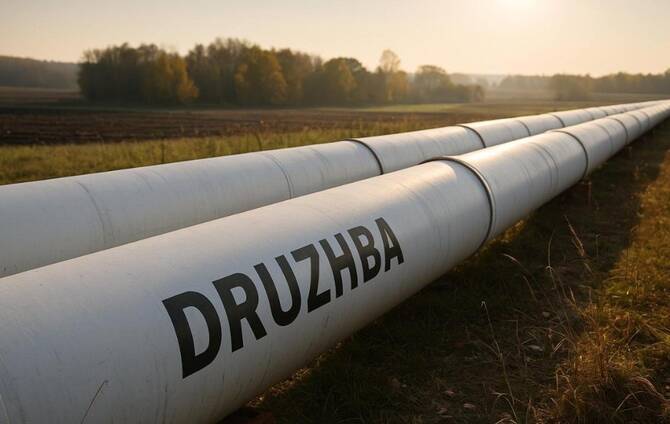
The Druzhba (Friendship) oil pipeline system is one of the largest and longest oil pipeline networks in the world. Constructed in the early 1960s during the Soviet era, it was designed to integrate the energy systems of Eastern Bloc countries and ensure a stable supply of crude oil to industrial centres across Europe.
More than six decades later, Druzhba continues to function as a major conduit for oil flows, even as its role has been reshaped by geopolitical tensions, sanctions, and Europe’s gradual shift towards energy diversification.
In structural terms, Druzhba is not a single line but a network exceeding 4,000 kilometres in length, with some estimates placing the total system, including branches and extensions, closer to 5,500 kilometres. The pipeline originates in Russia near the city of Samara, where oil from major production regions such as Western Siberia and the Volga-Ural basin is collected. From there, it runs westward through Belarus, where it splits into two primary branches. The northern branch extends through Poland to Germany, while the southern branch passes through Ukraine and supplies Slovakia, Hungary, and the Czech Republic.
The system’s capacity is one of its most significant features. At peak operation, Druzhba has been capable of transporting approximately 1.2 to 1.4 million barrels of crude oil per day, equivalent to roughly 60 to 70 million tonnes annually. Historically, this accounted for a substantial share of Europe’s oil imports. Before 2022, Russia supplied around 25 to 30 per cent of the European Union’s crude oil demand, with a large portion delivered via pipeline systems including Druzhba. For landlocked countries such as Hungary and Slovakia, dependence was even higher, in some cases exceeding 60 per cent of total oil imports.

Source: Belts
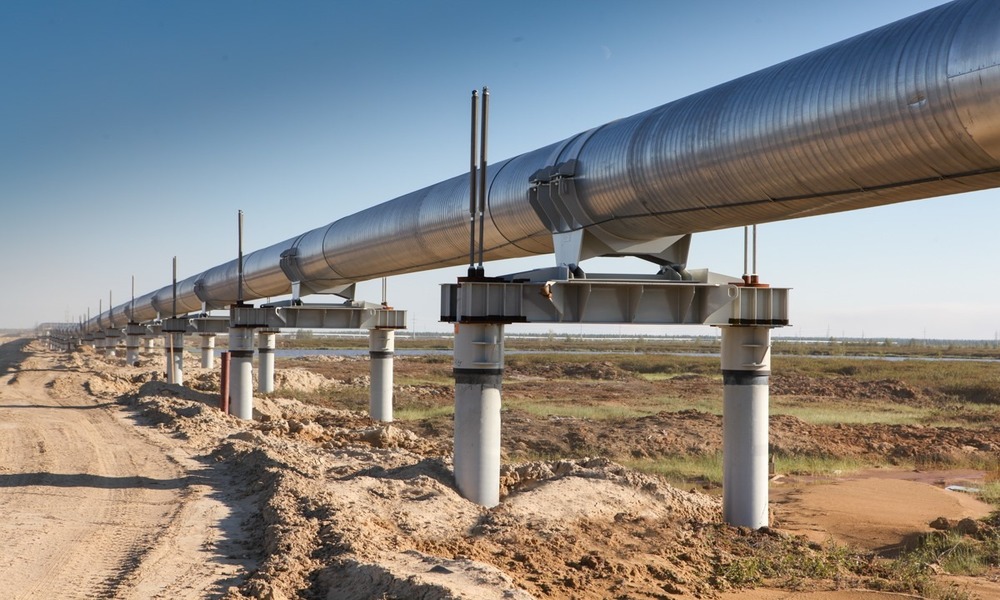
Technically, Druzhba operates through a system of continuous flow maintained by dozens of pumping stations spaced along the route. These stations ensure that crude oil moves at a steady velocity, compensating for pressure losses and elevation differences. The pipeline typically carries Urals blend crude, a medium-density, sulphur-containing oil that has historically matched the configuration of refineries in Central and Eastern Europe. This compatibility has allowed refineries to operate efficiently without requiring extensive modifications, reinforcing long-term reliance on the pipeline.
A key operational component of Druzhba is its network of metering and storage facilities. Oil entering the pipeline is measured with high precision to ensure compliance with contractual volumes. Along the route, storage tanks with capacities often exceeding hundreds of thousands of cubic metres provide buffering capability. This allows operators to manage supply disruptions, seasonal demand fluctuations, or temporary maintenance shutdowns. In total, the system includes dozens of large-scale storage depots and blending stations that maintain consistent crude quality.
The economic advantage of Druzhba has traditionally stemmed from its cost efficiency. Pipeline transport costs are significantly lower than maritime shipping, particularly for inland destinations. Estimates suggest that transporting oil via pipeline can be 30 to 50 per cent cheaper than alternative routes involving tankers and rail. This cost differential historically made Russian crude highly competitive in European markets, especially for refineries located far from seaports. Long-term supply contracts, often spanning 10 to 20 years, further stabilised pricing and reinforced dependency.
However, Druzhba’s importance is not purely economic. It has long been a strategic asset in geopolitical relations. Transit countries such as Belarus and Ukraine play critical roles in the system, and disputes involving transit fees or political disagreements have periodically disrupted flows. A notable incident occurred in 2019, when contamination of oil with organic chlorides forced a temporary shutdown of parts of the pipeline, affecting supplies to multiple European countries and highlighting vulnerabilities in quality control and system oversight.
Since 2022, the operational landscape of Druzhba has changed dramatically. Following the escalation of geopolitical tensions and the introduction of European Union sanctions on Russian oil, many countries have reduced or eliminated imports via the northern branch. Germany and Poland, which previously received hundreds of thousands of barrels per day through Druzhba, have shifted to alternative supply routes. Ports such as Gdansk in Poland and Rostock in Germany have been upgraded to handle increased volumes of seaborne crude, with capacities expanded to tens of millions of tonnes annually.
Source: Warsaw Institute
In contrast, the southern branch of Druzhba remains operational at significant levels. Hungary, Slovakia, and the Czech Republic continue to receive oil through this route, although efforts are underway to diversify supply. For example, connections to the Adria pipeline, which links to the Croatian port of Omisalj, provide an alternative route for non-Russian crude. However, capacity constraints and technical limitations mean that fully replacing Druzhba supplies remains challenging in the short term.
Adapting the pipeline involves significant technical complexity. Some sections have been modified for reverse flow, requiring reconfigured pumping stations, adjusted pressure systems, and strict safety measures. Managing different crude types also demands careful handling to prevent contamination and ensure refinery compatibility.
Environmental and safety concerns are becoming increasingly important. With parts of the pipeline now over 60 years old, it requires constant inspection and maintenance. Advanced tools are used to detect corrosion and structural issues, while real-time monitoring helps identify leaks quickly. Despite these efforts, environmental risks remain, especially in sensitive areas along the route.
Looking ahead, the future use of Druzhba is expected to decline in line with Europe’s broader energy transition. The European Union aims to significantly reduce fossil fuel consumption by 2030 and achieve climate neutrality by 2050. Oil demand in Europe, currently around 9 to 10 million barrels per day, is projected to decrease steadily. As a result, large-scale infrastructure such as Druzhba may operate at reduced capacity or be repurposed for alternative uses over time.
The legacy of the Druzhba pipeline as Europe’s main oil artery remains clear. At its peak, it transported over one million barrels per day, supporting industrial growth and strengthening economic ties across multiple countries. Despite geopolitical shifts, it still serves as a key supply route for several Central European states. Its scale and engineering make it a strong example of how energy infrastructure shapes both markets and geopolitics.


Similar news