Ukraine and Azerbaijan are building a new security architecture


Editor's note: Ivan Us, chief consultant of the Center for Foreign Policy Research of the National Institute for Strategic Studies (Ukraine), Ph.D. in Economics. The article expresses the personal opinion of the author and may not coincide with the view of News.Az.
In the context of the recent meeting between the presidents of Ukraine and Azerbaijan, one critical fact deserves particular attention. Ukrainian military personnel and specialized experts are already physically present in Azerbaijan, where they are transferring practical know-how on protecting critical and civilian infrastructure from aerial threats. This is not a symbolic “delegation visit” or a one-off training seminar. It is a sustained operational presence on the ground. Notably, Volodymyr Zelenskyy personally received a briefing from this team during his visit to Baku.
The strategic significance of this development is difficult to overstate. It directly challenges one of the most persistent arguments heard in European capitals — that Ukrainian expertise remains largely theoretical and requires validation in real-world conditions. Kyiv can now respond with clarity and confidence: Ukrainian specialists are already working in Azerbaijan. Invite the same teams to Warsaw, Helsinki, or Bucharest, and tangible results will be visible within 60 days.
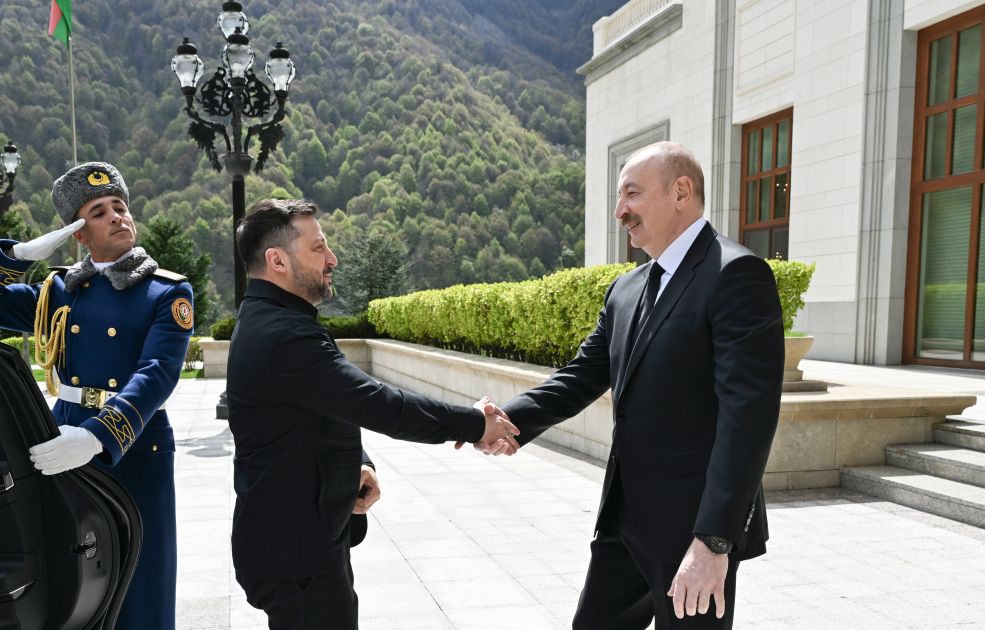
The diplomatic dimension of the visit is equally revealing. The meeting between Volodymyr Zelenskyy and Ilham Aliyev in Gabala marked the first visit by the Ukrainian president to Azerbaijan since the start of the full-scale war. At the same time, it was their seventh meeting in just four years. This alone illustrates that relations between Kyiv and Baku are not in an exploratory phase but represent a mature and institutionalized diplomatic track.
Source: Azertag
Throughout 2025, foreign ministers held consultations, and the intergovernmental commission convened multiple sessions. The Gabala meeting builds logically on this trajectory, with both sides already agreeing to hold the next round of talks in Ukraine. The outcome of the current visit — six signed bilateral agreements, including a security package and arrangements on joint production within the defense-industrial sector — reflects not just dialogue, but the formal institutionalization of a strategic partnership.
The first and most important pillar of this partnership is defense-industrial co-production. Volodymyr Zelenskyy himself described it as the “number one priority.” This marks a shift in Ukraine’s approach — from exporting expertise to integrating Azerbaijan’s industrial capacities into its own defense ecosystem. In parallel, Ilham Aliyev openly confirmed the existence of “broad prospects” for military-technical cooperation and joint production.
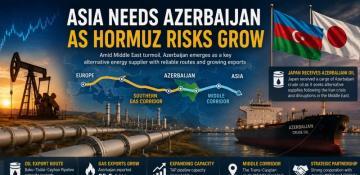
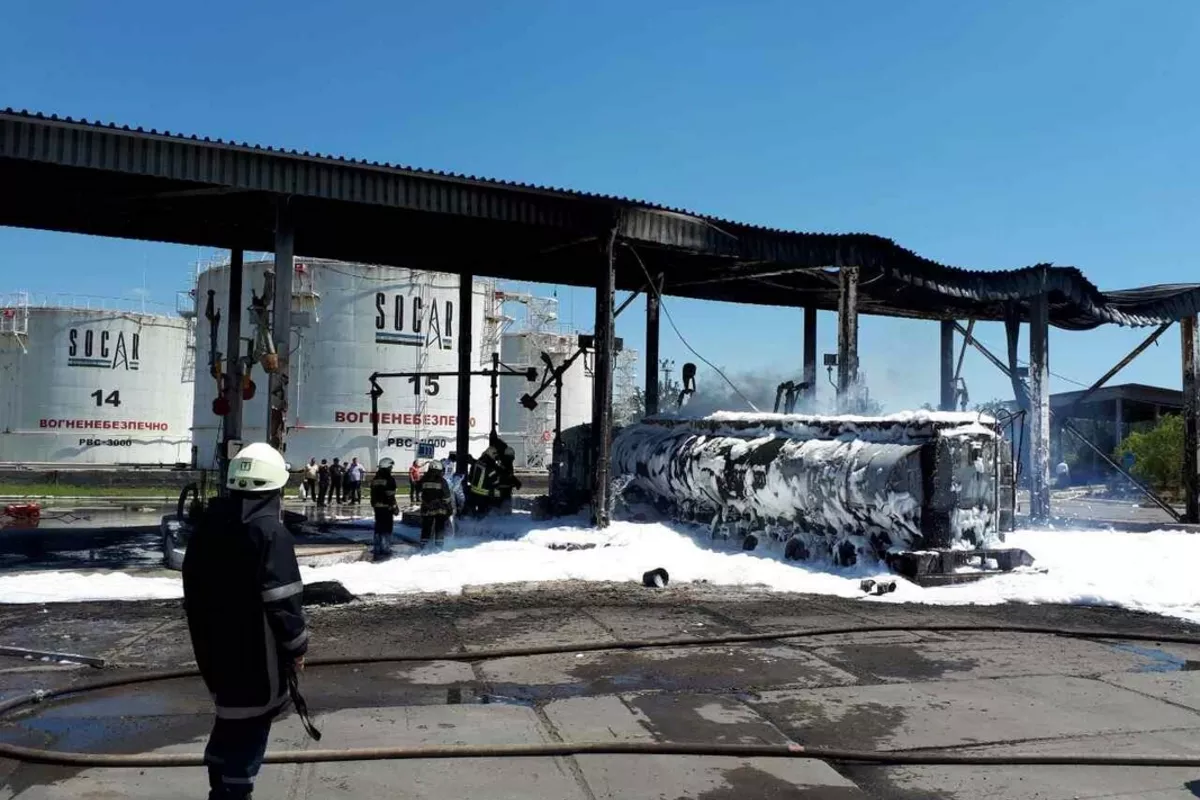
The second pillar is energy. Eleven packages of Azerbaijani assistance to Ukraine’s energy system, combined with investments from SOCAR and the prospect of new joint projects, are creating a resilient framework for energy cooperation. In a global environment shaped by instability around the Strait of Hormuz and disruptions in energy supply chains, a reliable partner in the Caspian region becomes strategically indispensable for Ukraine.
The third dimension is economic. Bilateral trade has already surpassed $500 million and, according to both presidents, is expected to grow further. This is not merely a statistic — it represents the formation of a dense economic fabric that is increasingly resistant to external disruption.
The fourth element is humanitarian. Azerbaijan has already hosted more than 500 Ukrainian children from frontline regions for rehabilitation programs. Azerbaijani students continue to study in Ukraine, and both sides have agreed to expand educational cooperation. These are slow-building, long-term connections that create trust at a societal level and shape bilateral relations for decades to come.
The fifth, and perhaps most politically consequential, aspect concerns diplomacy. Ukraine has confirmed its readiness to hold a new round of negotiations with Russia on Azerbaijani soil. Volodymyr Zelenskyy articulated this position in a clear sequence: negotiations have already taken place in Türkiye and with American partners in Switzerland, and Azerbaijan logically emerges as a third legitimate platform — “if Russia is ready for diplomacy.” This conditional framing is crucial. It allows Kyiv to demonstrate openness to peace while placing responsibility squarely on Moscow.
Source: KyivPost
At the same time, this development significantly enhances the diplomatic weight of Ilham Aliyev, positioning Azerbaijan as a potential mediator alongside Ankara and Bern.
It is also important to view this meeting against the backdrop of rapidly deteriorating Russian-Azerbaijani relations. Russia has repeatedly targeted Azerbaijani-linked facilities in Kyiv, including diplomatic assets, actions that Baku has publicly described as “unfriendly steps.” Equally telling is the delayed compensation for the AZAL aircraft shot down in 2024, which Moscow only agreed to address in April 2026 — a clear indication of the Kremlin’s diminishing leverage over Azerbaijan.
Following the Karabakh war, Azerbaijan has firmly established itself as a regional power, with a capable military, substantial energy resources, and a central role in the Middle Corridor — the Trans-Caspian route that bypasses Russia.
Partnership with such a state is not about engaging another donor. It is about constructing an alternative security architecture across the Black Sea and Caspian regions — one that systematically bypasses Moscow geographically, economically, and politically.
(If you possess specialized knowledge and wish to contribute, please reach out to us at opinions@news.az).


Similar news