Destruction of Azerbaijan’s cultural heritage during Armenian occupation: facts and evidence - PHOTOS


.png)
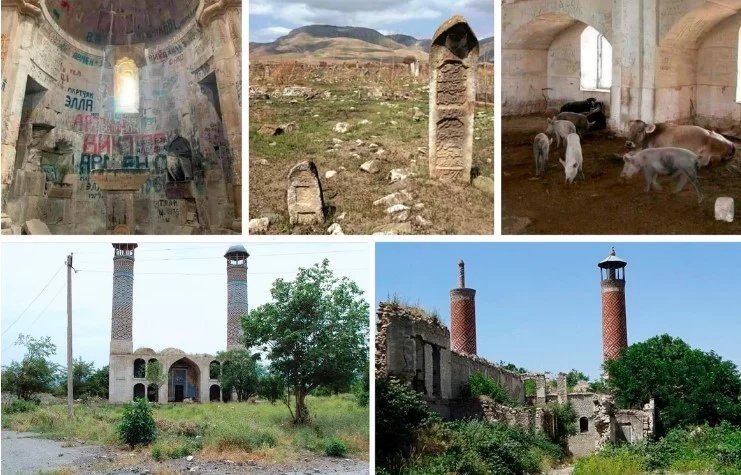
The occupation of Azerbaijan’s internationally recognized territories by Armenia for nearly 30 years was not limited to the forcible alteration of the military and political status quo; it was also accompanied by a systematic, deliberate, and ideologically driven policy of cultural destruction.
This policy went beyond conventional warfare tactics, encompassing the destruction of cultural heritage, the desecration of religious sites, and the erasure of historical memory as interconnected components. As a result, this process not only violated the fundamental principles of international humanitarian law but can also be characterized as a pattern of behavior bearing elements of cultural genocide.
Following the end of the occupation and the restoration of Azerbaijan’s sovereign control over these territories, realities that had been concealed or denied for years have been revealed through systematic monitoring and official assessments. These evaluations confirm, with factual evidence, the large-scale destruction, acts of vandalism, and the deliberate deformation of historical heritage. The issue has thus moved beyond the realm of political claims and has taken shape as a reality substantiated by concrete figures and material evidence.
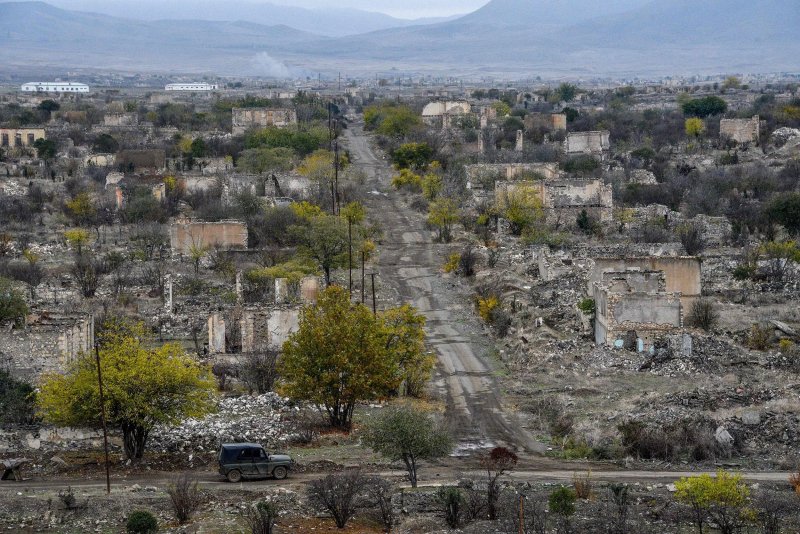
Deserted and ruined city of Aghdam, Azerbaijan
Statistical data clearly demonstrate the scale of cultural vandalism carried out during the occupation. More than 700 historical monuments, 22 museums, approximately 100,000 museum exhibits, 927 libraries, 58 archaeological settlements, 26 fortresses and fortress walls, along with numerous other cultural heritage sites, were destroyed, looted, or appropriated. These figures reflect not only physical devastation but also a systematic policy of cultural erasure.
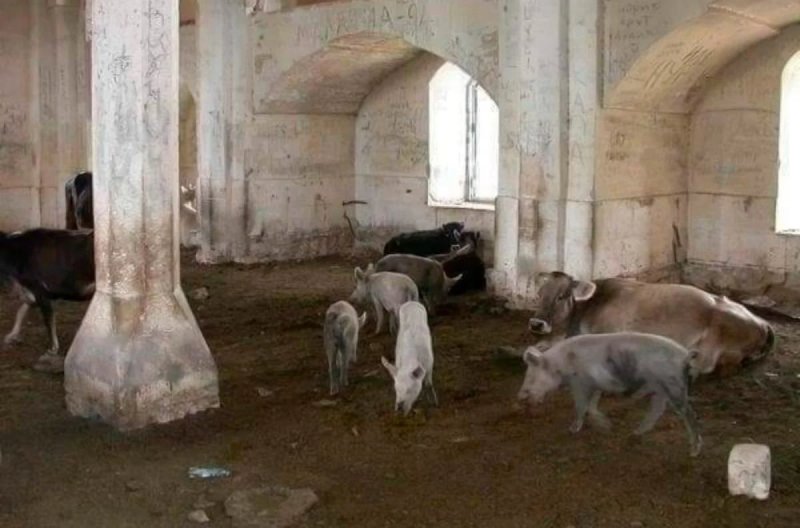
Armenians turned a mosque, a holy place for Muslims, in the Karabakh region of Azerbaijan into a barn for pigs and cattle during the years of occupation from the early 1990s to 2020 / Courtesy
Interventions targeting religious heritage are particularly striking. During the occupation, 65 out of 67 mosques were completely destroyed, while the remaining two were partially ruined and used for keeping animals. This fact represents not only vandalism but also a form of symbolic violence and deliberate humiliation of religious values.
Aghoghlan Monastery (Lachin, 6th century)
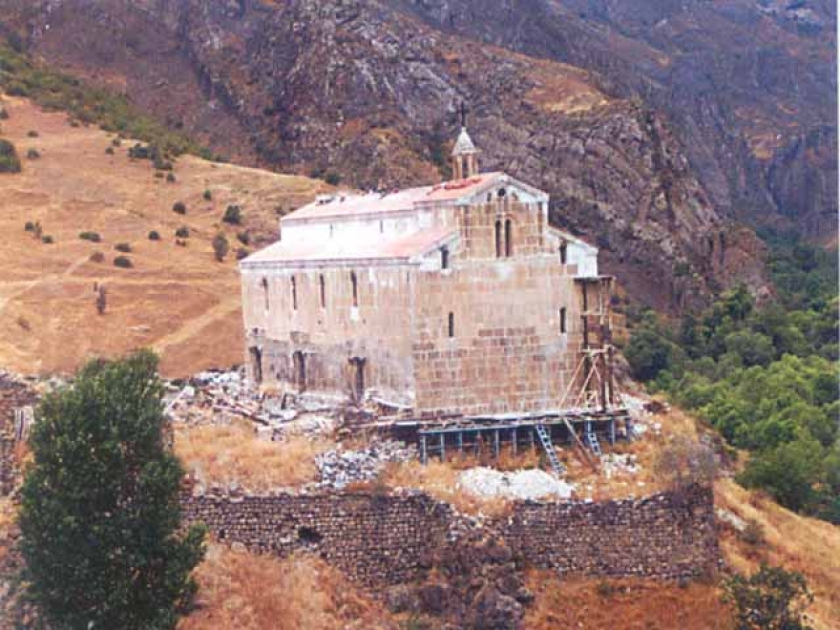
This ancient religious complex belonging to Caucasian Albania was subjected to neglect, interference, and attempts of appropriation during the occupation, resulting in damage to parts of its original architectural features.
Malik Ajdar Mausoleum (Lachin, 14th century)

An example of medieval Azerbaijani architecture, the mausoleum suffered structural damage due to destruction and vandalism, leading to distortion of its historical appearance.
Amaras Monastery (Khojavend, 4th century)
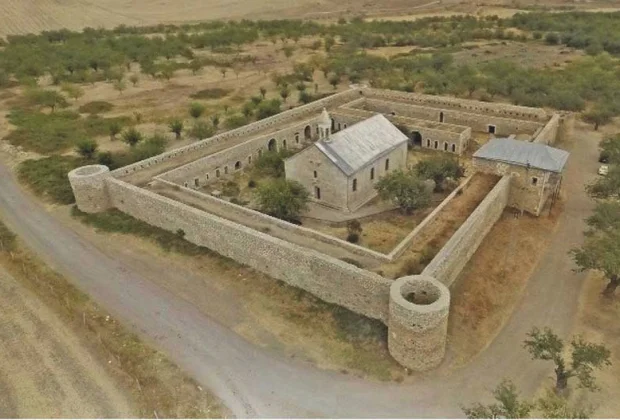
One of the region’s oldest Christian monuments, this complex became an object of appropriation and falsification policies during the occupation.
Asgaran Fortress (Khojaly, 18th century)
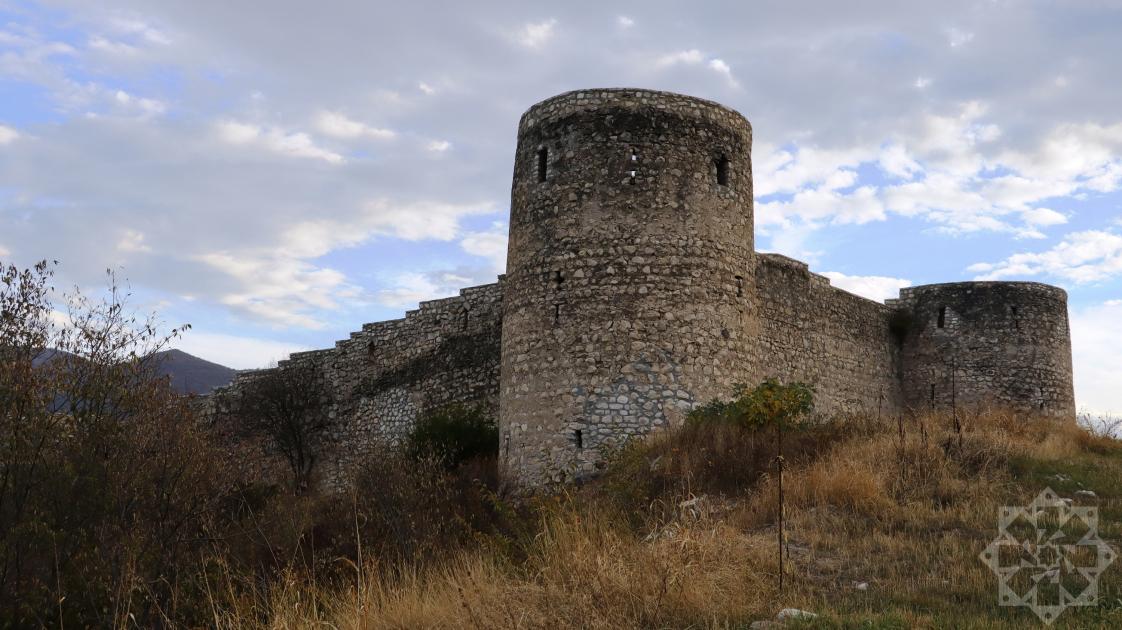
An important example of defensive architecture, the fortress was damaged as a result of military operations and subsequent neglect.
Saint Jacob Monastery (Kalbajar, 6th century)

This religious site of Albanian heritage had its architectural elements destroyed, weakening its historical authenticity.
Khudavang Monastery (Kalbajar, 13th century)

The complex was subjected to alterations during the occupation, with efforts made to falsify its historical affiliation.
Lek Fortress (Kalbajar, 13th–14th centuries)
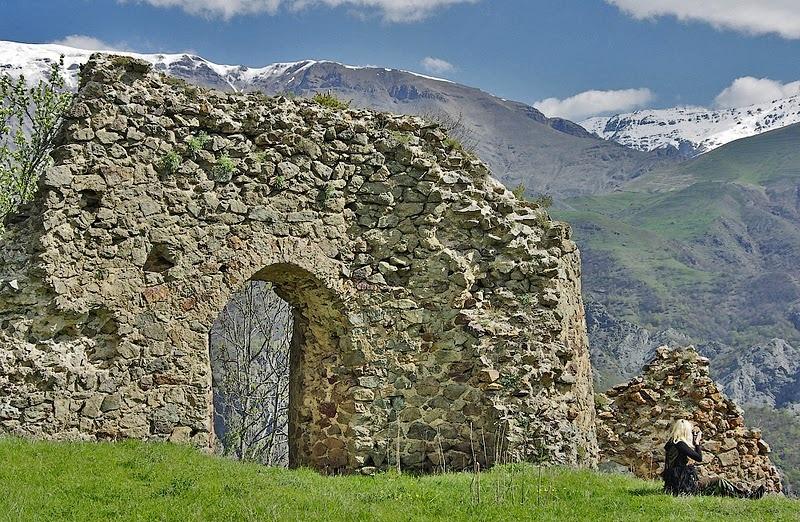
As a historical defensive structure, the fortress suffered serious damage due to neglect and destruction.
Mirali Mausoleum (Fuzuli, 13th–14th centuries)
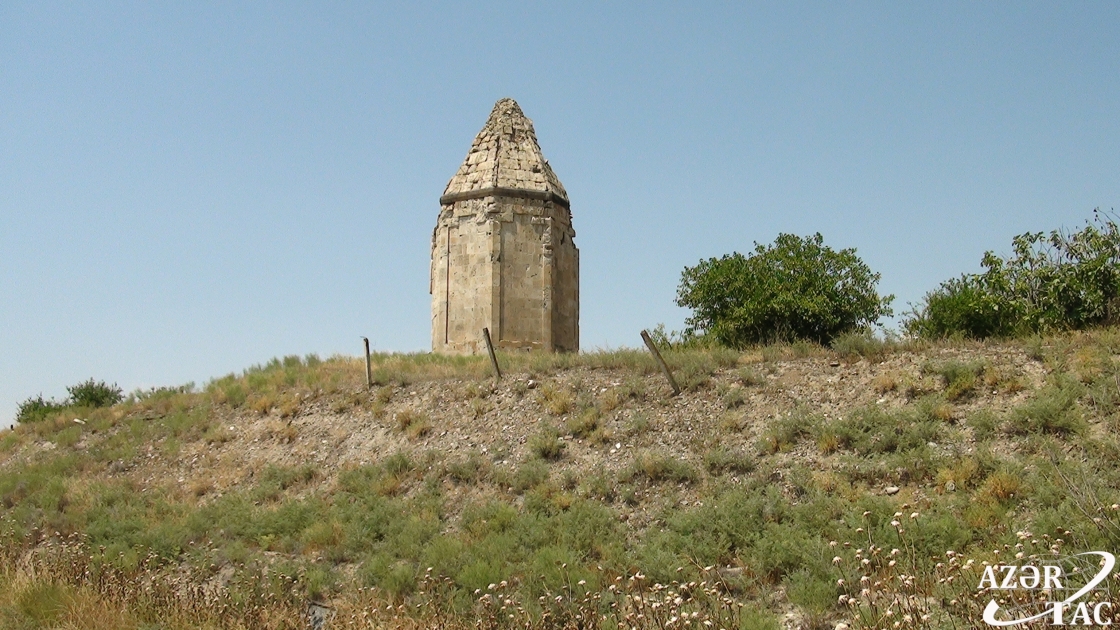
This architectural monument was destroyed during the occupation, with parts of its original structure lost.
Upper and Lower Govhar Agha Mosques (Shusha, 18th–19th centuries)
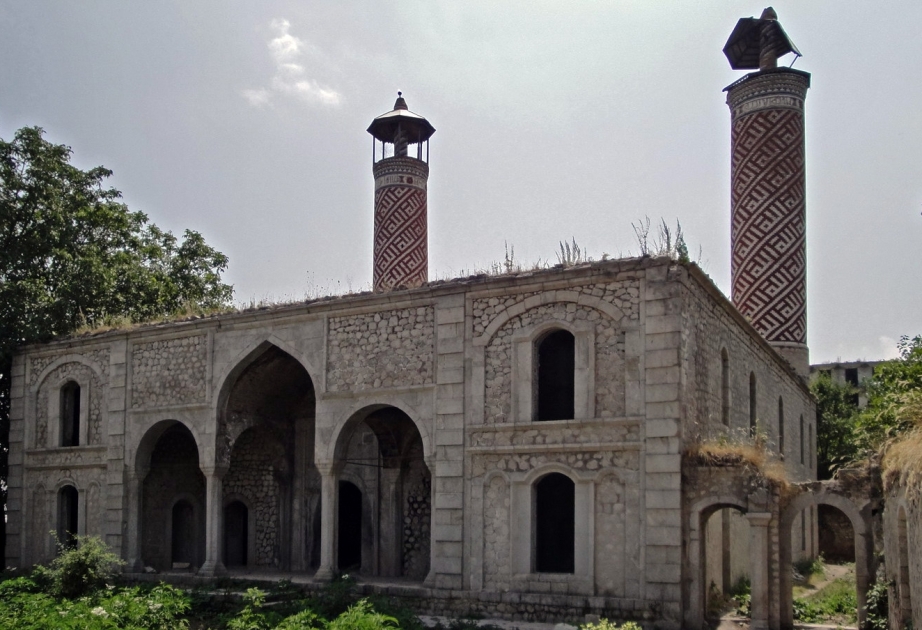
Lower Govhar Agha Mosque
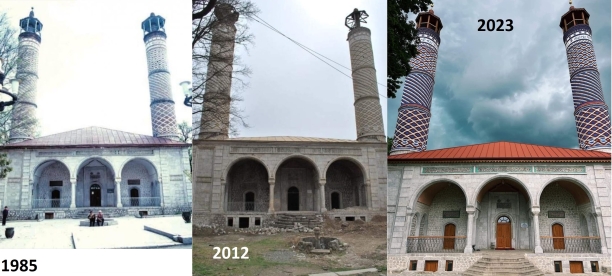
Upper Govhar Agha Mosque
These iconic religious monuments of Shusha were burned, looted, and severely damaged in terms of architectural detail.
Saatli Mosque (Shusha, 18th century)
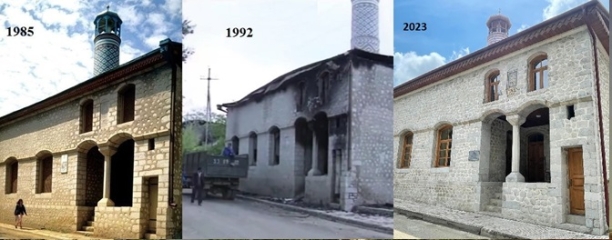
The architectural elements of the monument were altered, and its religious and historical features were deliberately distorted.
Aghdam Mosque (19th century)
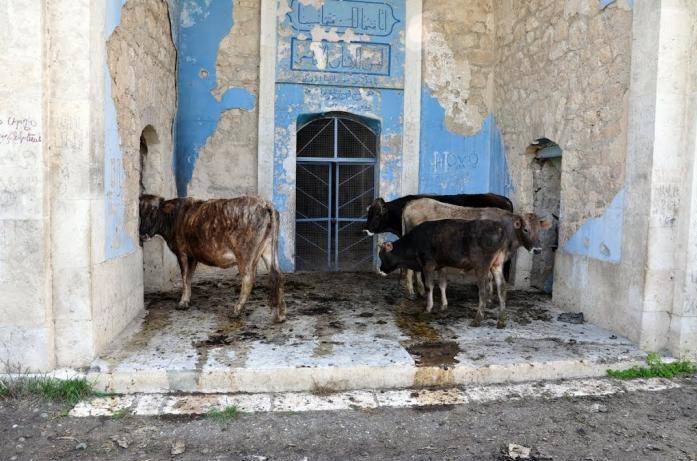
Heavily destroyed during the occupation, its interior was desecrated and rendered unusable.
Khudafarin Bridges (Jabrayil, Bronze Age and medieval periods)

The 11-span and 15-span bridges, important historical and logistical structures, were left unattended and suffered damage.
Azykh Cave (Khojavend, Paleolithic period)

One of the oldest human habitation sites in the world, the cave was endangered due to illegal activities and lack of proper protection.
Gutlu Musa Oglu Mausoleum (Aghdam, 14th century)
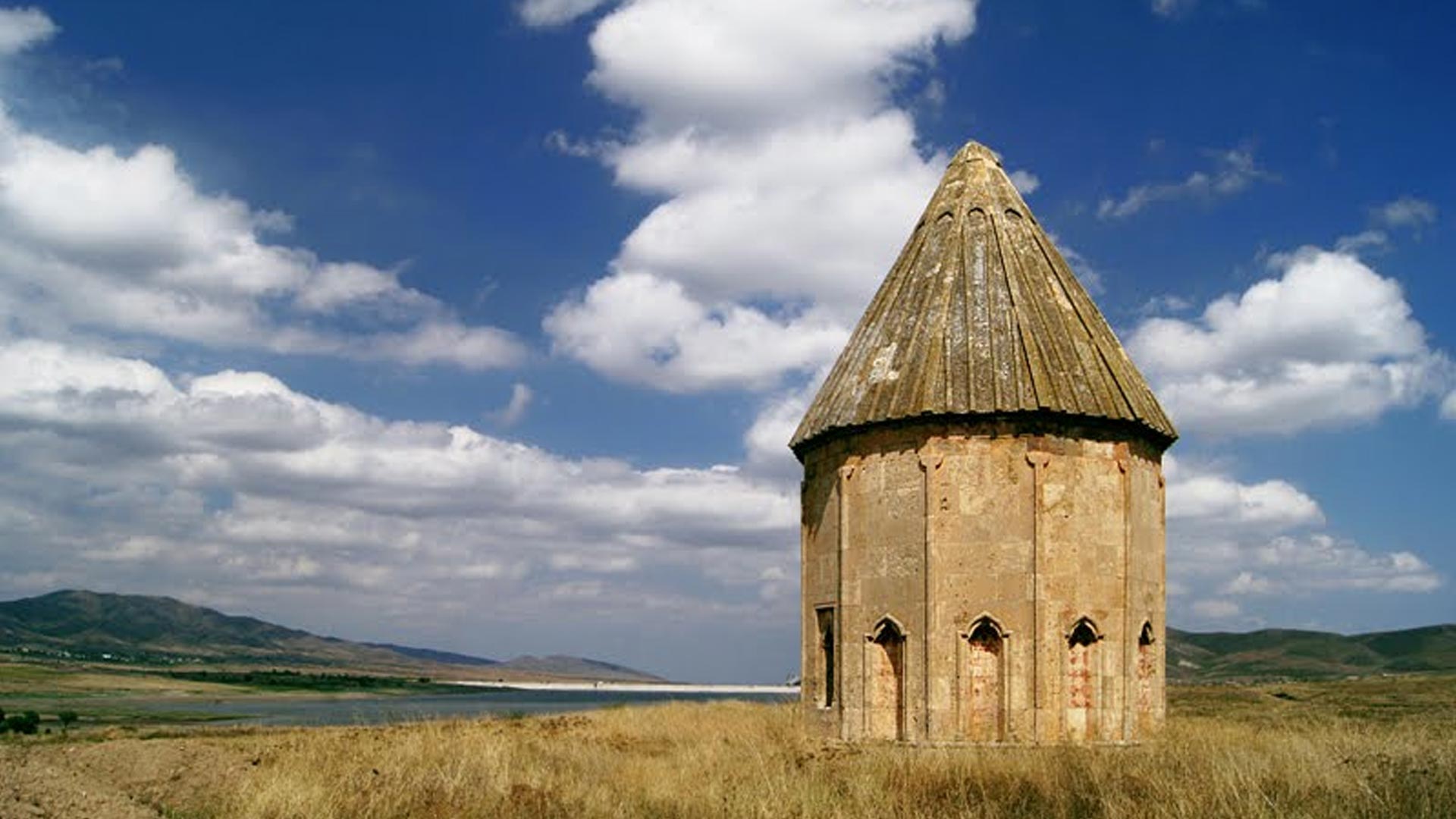
This medieval architectural monument was significantly damaged due to destruction.
Imanqazantepe tumuli (Jabrayil, Bronze Age)
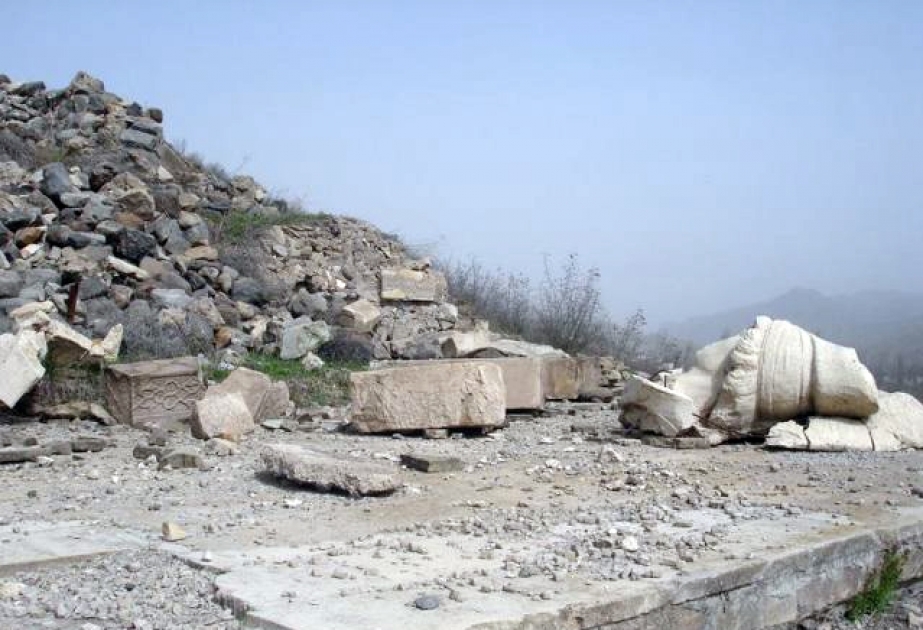
These burial mounds were destroyed, and archaeological layers were disturbed, diminishing their scientific value.
The systematic destruction of architectural monuments in the city of Shusha immediately after military operations in the early 1990s indicates that this policy was formed at an early stage. The Upper and Lower Govhar Agha Mosques and madrasas, the Vagif Mausoleum, Natavan’s house, and caravanserais were burned, looted, and severely damaged.
A similar pattern is observed in other regions. In the Aghdam district, the Panah Khan Palace complex, mosques in the villages of Abdal and Gulabli, the mausoleum of Ughurlu Bey, and the house museum of Gurban Pirimov were destroyed. In the Khojaly district, a 14th-century mausoleum; in the Kalbajar district, mosques in the villages of Bashlibel and Otakli, as well as cemeteries in Kalbajar city and the villages of Moz, Keshdak, and Yukhari Ayrim; in the Zangilan district, mosques and cemeteries across multiple settlements; in the Gubadli district, cemeteries in the villages of Gayali and Mamar; in the Lachin district, a mosque in Garigishlag village and a cemetery in Zabukh village; in the Jabrayil district, a mosque complex in Chelebiler village and a cemetery in Khubyarly village; in the Fuzuli district, mosques in various settlements; in the Khojavend district, numerous village cemeteries; in the Tartar district, baths in Umudlu village; and in the Sadarak district, a cemetery in Kerki village were all destroyed and looted.

Jabrayil cemetery
These acts of destruction were not limited to physical annihilation but were accompanied by attempts to alter cultural identity. In the city of Shusha, the architectural elements of monuments such as the Saatli Mosque and the Khanlig Mukhtar caravanserai were modified, while Arabic inscriptions on the 19th-century Mamayi spring were erased and replaced with Armenian symbols and crosses.
The destruction of cemeteries represents one of the most analytically significant aspects of this process. In the districts of Aghdam, Fuzuli, Zangilan, Kalbajar, and Jabrayil, dozens of cemeteries were destroyed, graves were excavated, and tombstones were demolished. This should be understood not merely as physical destruction but as a systematic attack on collective memory, targeting historical continuity and identity.
Overall, the presented facts demonstrate that the actions carried out during the occupation were not random acts of vandalism but the result of a consistent policy aimed at the systematic destruction and alteration of cultural heritage. This policy not only violated international legal norms but also inflicted serious damage on the principles of cultural diversity and the preservation of historical heritage.


Similar news