Oğuzhan Akyener: Türkiye ready to import up to 65 billion cubic meters of gas from Turkmenistan – INTERVIEW


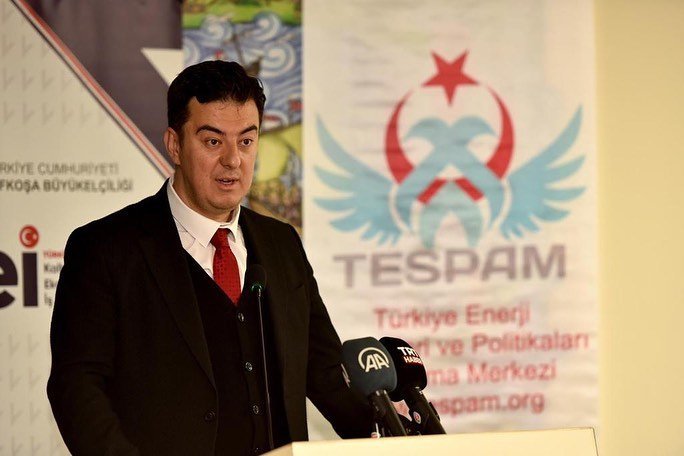
Energy security and geopolitical influence are deeply intertwined in today’s world, and Türkiye is positioning itself at the heart of this dynamic equation.
As global energy markets undergo a major transformation, Türkiye is striving to become a critical hub for natural gas trade, leveraging its strategic location between major suppliers and European consumers.
With ambitious infrastructure projects, expanded pipeline networks, and strategic partnerships, Ankara envisions a future where it not only ensures its own energy security but also plays a decisive role in shaping regional and global energy flows. But what challenges lie ahead for Türkiye’s energy strategy? Can it truly become a dominant force in the global gas market, competing with traditional powerhouses? And how will shifting geopolitical alliances impact its ambitions?
In this exclusive interview with News.Az, we delve into these pressing questions with Oğuzhan Akyener, President of the Turkish Energy Strategies and Policies Research Center (TESPAM), an expert in energy policy, to explore Türkiye’s potential as an energy hub, the risks it faces, and the road ahead in an increasingly volatile global energy landscape.
Source: Tespam
-Which countries are Türkiye’s natural gas suppliers?
-Russia is Türkiye’s largest natural gas supplier, followed by Azerbaijan and Iran. These countries supply gas to Türkiye through pipeline infrastructure. Now, Turkmenistan is set to join this list, with the gas delivery process being conducted through the swap method. This mechanism will enable Türkiye to receive gas from Turkmenistan through pipelines.
Additionally, Türkiye imports natural gas from other countries, including Nigeria, Algeria, Egypt, and the United States. Moreover, spot gas purchases from various sources are also carried out.
Source: Shutterstock
-When will the flow of Turkmen gas to Türkiye begin? What is the annual supply volume under the signed agreement?
-The delivery of Turkmen gas to Türkiye is scheduled to begin on March 1 via the swap method. This method works as follows: Turkmenistan already supplies gas to Iran. The total annual transmission capacity of the pipelines between Turkmenistan and Iran is 12 billion cubic meters. At present, Turkmenistan will supply Iran with 1.3 billion cubic meters of gas, which will then be transferred to Türkiye. Meanwhile, Iran will use the gas it receives from Turkmenistan in its northeastern regions, thereby freeing up additional gas that can be sent to Türkiye. This process is known as the swap method.
An alternative option of delivering Turkmen gas via Azerbaijan was also considered. However, this would have taken a longer time and required additional infrastructure investments. Another possibility is delivering Turkmen gas via Russia, as there are large-capacity pipelines between Turkmenistan and Russia. However, the key question is how the gas would reach Türkiye from Russia. If the Western Line (Batı Hattı) were still operational, this would have been feasible. Currently, however, this pipeline is not in service. Alternatively, if spare capacity is available in TurkStream or Blue Stream, this route could also be explored.
Transporting Turkmen gas through Azerbaijan to Türkiye is also possible, but it would require the construction of a pipeline from Turkmenbashi (Turkmenistan) to Baku (Azerbaijan) and an expansion of the South Caucasus Pipeline (SCPx). This option envisions larger gas supplies but necessitates the construction of new pipeline infrastructure. Overall, one of the most significant objectives for Türkiye and the Turkic world is to successfully implement this process.
-How will this agreement contribute to Türkiye’s goal of becoming an energy hub?
-Türkiye aims to become a major energy hub in the long term, with the transition into a natural gas trade center being a top priority. The country has already expanded its pipeline infrastructure and diversified its gas supply sources. At the same time, Türkiye has increased its domestic gas production capacity and developed the legal and regulatory framework necessary to re-export imported gas.
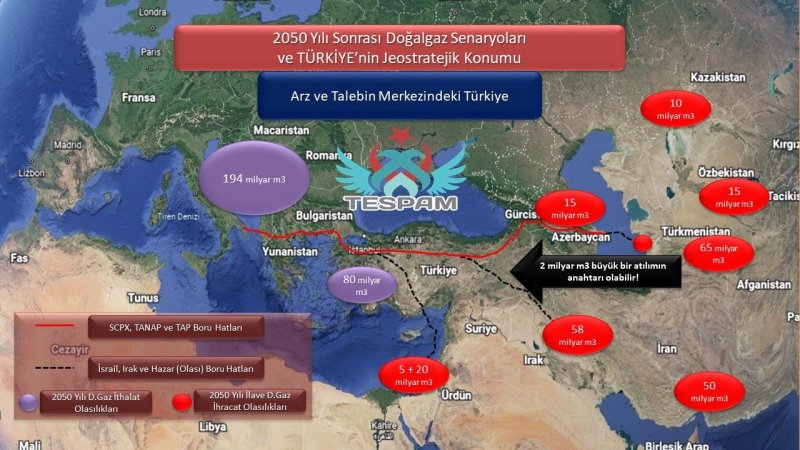
By 2050 and beyond, Türkiye aims to maximize its natural gas supply capacity. According to a map prepared by TESPAM, if the necessary investments and infrastructure are established, Türkiye could import an additional:
- 65 billion cubic meters from Turkmenistan,
- 15 billion cubic meters from Azerbaijan,
- 10 billion cubic meters from Kazakhstan,
- 15 billion cubic meters from Uzbekistan,
- 58 billion cubic meters from Iraq, and
- 25 billion cubic meters from the Eastern Mediterranean.
If this scenario is realized, Türkiye would be able to import large volumes of gas, optimize it within its market, and export it to Europe. In the long run, Türkiye could reach an annual gas trade capacity of 300 billion cubic meters, strengthening its position as a global energy hub.

Source: Reuters
-What are Turkmenistan’s natural gas export goals, and what role will Türkiye play in this process?
-Turkmenistan is among the countries with the largest natural gas reserves and has long-term energy export ambitions. Alongside Kazakhstan and Uzbekistan, Turkmenistan has the potential to increase its gas exports significantly. Currently, Turkmenistan exports approximately 40 billion cubic meters of gas annually, with 35-36 billion cubic meters going to China. China remains Turkmenistan’s largest gas buyer and plays a crucial role in shaping the pricing dynamics. When China reduces gas imports, Turkmenistan faces serious economic challenges.
Therefore, Turkmenistan seeks to diversify its gas export markets and find new buyers. The country is exploring alternative routes to access the European market, looking at Azerbaijan’s model as an example to gain European political support. Additionally, Turkmenistan is interested in completing the TAPI pipeline (Turkmenistan-Afghanistan-Pakistan-India). However, conflicts between Afghanistan and Pakistan, as well as tensions between Pakistan and India, have stalled the project. Furthermore, China is leveraging its influence to prevent the pipeline's completion.
Ultimately, the most realistic option for Turkmenistan is to increase its gas exports via Türkiye. This requires stronger energy cooperation between Türkiye and Turkmenistan. If this process is successfully implemented, the Turkic world will achieve greater integration in the energy sector, securing its position as a major supplier of natural gas.


Similar news