Pavlo Lakiychuk on frontline dynamics: Ukraine’s resistance and Russia’s setbacks


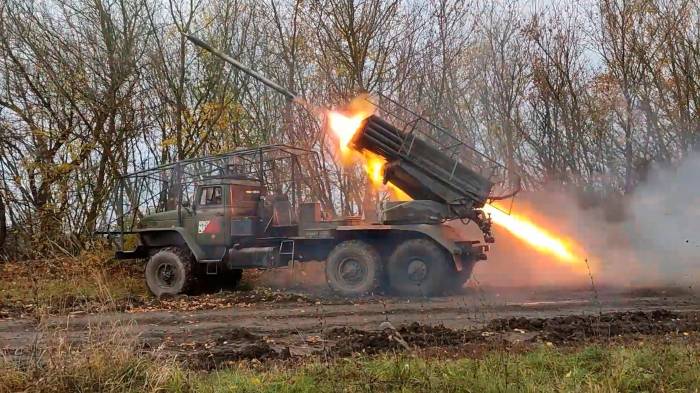
In this photo taken from video released by the Russian Defense Ministry on Dec. 3, 2024, a "Grad" multiple rocket launcher fires toward Ukrainian positions in Russia's Kursk region. AP
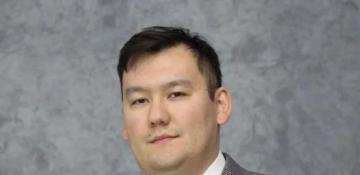
By Asif Aydinli News.Az presents an interview with Pavlo Lakiychuk, a Ukrainian military expert and retired Captain First Rank. Lakiychuk leads the military programs of the Center for Global Studies "Strategy XXI" and is a member of the Coordinating Council of the Public League "Ukraine-NATO."
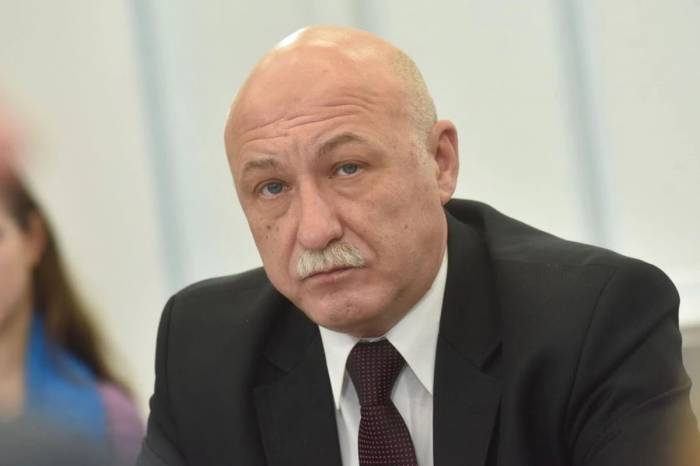
Pavlo Lakiychuk. Photo: Social media
- How would you assess the current situation on the frontlines, considering the intensity of hostilities and the dynamics of Russian and Ukrainian troop movements? What key factors determine the course of events?
- The situation on the frontlines remains extremely tense. Ukrainian defenders continue to actively resist the Russian aggressor, inflicting significant losses in manpower and equipment. According to the General Staff of the Armed Forces of Ukraine, daily Russian troop losses in November–December 2024 range between 1,500 and 2,000 personnel. For comparison, during the fiercest battles for Bakhmut in May 2023, these numbers were 500–600 daily, rising to 700–900 in February. What were previously termed "meat assaults" are now more aptly described as "offal attacks."
Reuters estimates that these "offal assaults" resulted in the Russian army seizing approximately 600 square kilometers of Ukrainian territory in November. But the question arises: is this a lot or a little? Divided over the time period, the average advance would be 24.5 km per month. The reality, however, is more nuanced. In the most dynamic areas, such as the Shakhtarsk direction (southwest of Kurakhove), the advance was about 9 km, while in the Kurakhove direction it was less than 8 km, and south of Pokrovsk—up to 8.5 km at most. On other sections of the thousand-kilometer front, Russian advances rarely exceeded 2–3 km, and in most cases, their forces remained stationary.
This does not mean, however, that Ukrainian forces are in an ideal position. The most challenging situation is observed in the Kurakhove operational direction, where the center of gravity of hostilities is gradually shifting toward the Pokrovsk direction. In late November, the main concentration of clashes occurred in Kurakhove, but now the intensity of battles in both directions has leveled off at 40–45 engagements per day, roughly double the intensity seen elsewhere. Intense fighting also continues in the Kursk region, where 20–30 clashes are reported daily. However, here the task of the Ukrainian Armed Forces is not to hold positions at any cost but to draw enemy reserves into a mobile, attritional "salad bowl" of engagements.
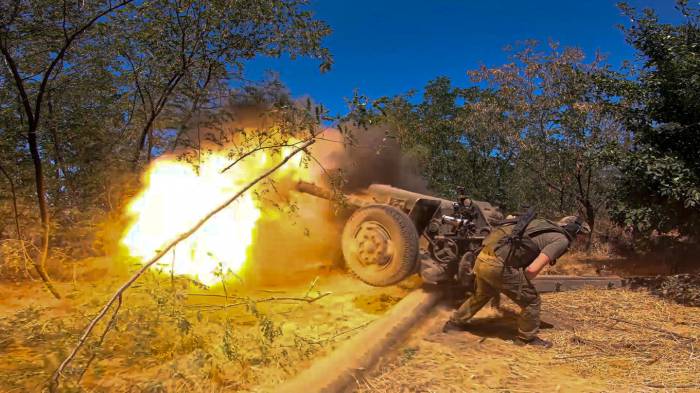
In this photo taken from a video released by the Russian Defense Ministry on Aug. 22, a Russian soldier fires from D-30 howitzer towards Ukrainian positions in an undisclosed location in Ukraine. Russian Defense Ministry Press Service via AP
- In recent interviews, Ukrainian President Volodymyr Zelensky has mentioned the possibility of ending the "hot phase of the war" in exchange for NATO membership, even without liberating occupied territories. How realistic is such a scenario, and how do you interpret his position?
- President Zelensky has never advocated ending the war without regaining territories. In an interview with Sky News, he noted that an agreement to halt the "hot phase of the war" might be possible if Ukraine were offered NATO membership, even without the temporarily occupied territories. His exact words were: "If we want to stop the hot stage of the war, we need to bring under NATO’s umbrella the part of Ukraine that we control." However, a temporary ceasefire or truce is not the end of the war, and NATO membership without the occupied territories does not imply abandoning them. With NATO’s "umbrella," Ukraine could reclaim its territories through diplomatic means.
In his interview with Kyodo News, Zelensky stated that, at present, the military de-occupation of Crimea is impossible due to resource constraints. Thus, he emphasized the need to pursue diplomatic solutions while strengthening Ukraine’s position. He added: "Putin must know we will return to all our lands. Ideally, this should be done diplomatically to minimize casualties." This is a logical approach, given Ukraine's commitment to safeguarding civilian lives.
- Given the current geopolitical situation, how realistic is Ukraine's NATO accession in the near future? What obstacles and opportunities might arise?
- In my view, this is unrealistic. NATO decisions are made by consensus among all 32 member states. Furthermore, admitting a new member to the Alliance requires the sovereign approval of each country. This is a lengthy process. However, I do not rule out that Ukraine might receive an official "invitation" to NATO soon. It is important to understand that such an invitation is symbolic and non-binding. Between the announcement of an invitation and actual membership, many years or even decades can pass. The process could, theoretically, remain unfinished.
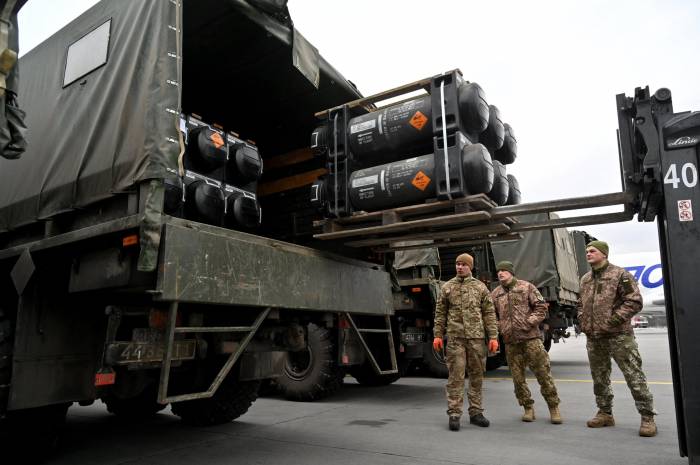
Ukrainian servicemen load a truck with Javelin anti-tank missiles sent by the United States. Photo: Sergei Supinsky/AFP/Getty Images
- How might U.S. military assistance to Ukraine change if Donald Trump returns to power? What risks and scenarios can be anticipated?
- In the short term, the situation is predictable. We might see a repeat of 2024, when internal divisions within the American elite delayed the approval of the budget, including Ukraine support, from December 2023 to late April 2024. At best, similar delays can be expected. As for the long term, no one can provide a definitive forecast, neither in Kyiv nor in Washington. Scenarios range from a complete cessation of support to a massive "lend-lease" program incomparable to current aid levels.
- Ukrainian-Georgian relations have recently become strained, particularly after Ukraine imposed sanctions on Georgian officials. How do you assess the current dynamics of bilateral relations? What steps could lead to normalization?
- Relations are more accurately described as frozen or on hold. Today, President Zelensky signed a decree imposing sanctions on the pro-Russian segment of the Georgian authorities, including billionaire and former Prime Minister Bidzina Ivanishvili and his close associates. In his statement, Zelensky emphasized that these measures target those "handing Georgia over to Putin."
Kyiv stands in solidarity with the Georgian people and condemns human rights violations and the use of force against peaceful demonstrators in Georgia. Ukraine calls on the Georgian government to stop intimidating its citizens with the mythical "Ukrainian scenario" while implementing a real "Belarusian scenario" in practice.


Similar news