Political earthquake: How the elections went in Poland


By Tural Heybatov
Europe has been experiencing increasingly frequent political tremors—and the recent presidential election in Poland became yet another epicenter of such upheaval.
The outcome not only exposed deep internal divisions within Polish society but also reflected a growing disillusionment with the idea of European integration. More and more EU member states are moving away from Eurocentrism, choosing their own paths. Experts now suggest that under its new president, Poland may follow in the footsteps of Hungary—a country that often irritates EU leadership with its independent stance and unwillingness to march in ideological lockstep.
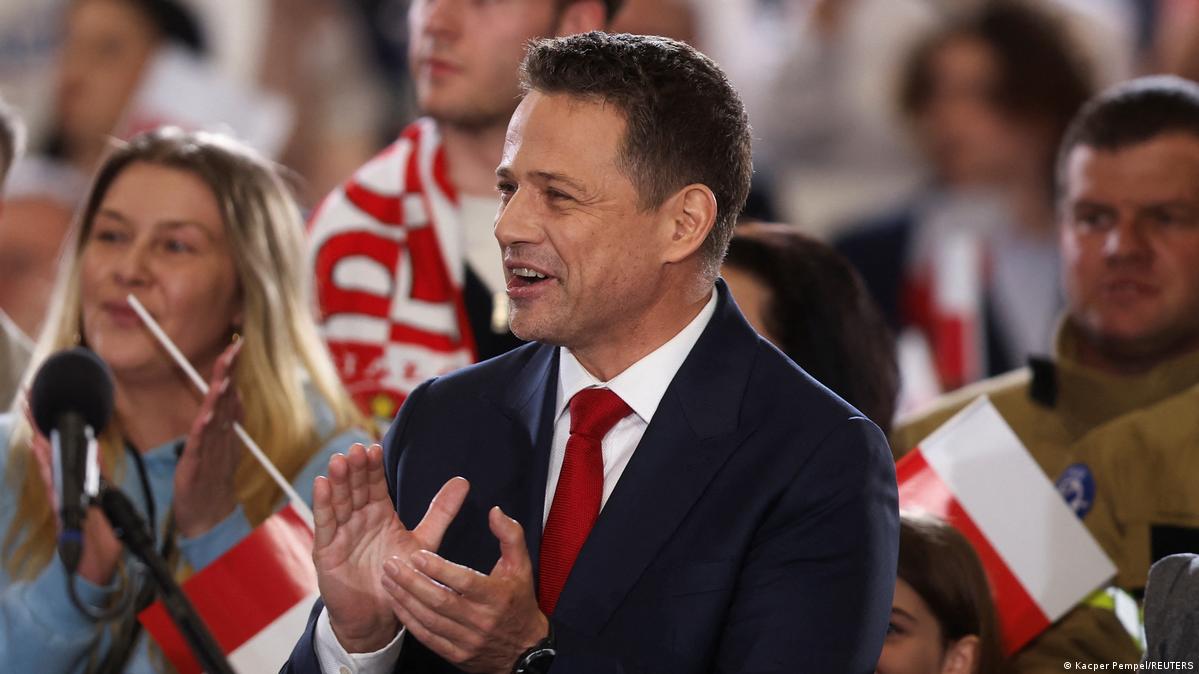
In the runoff held on June 1, conservative and Eurosceptic candidate Karol Nawrocki defeated liberal Warsaw Mayor Rafał Trzaskowski, who was backed by the ruling coalition. According to official results from the National Electoral Commission, Nawrocki secured 50.89% of the vote, while Trzaskowski received 49.11%. Voter turnout reached a remarkable 71.63%, with nearly 21 million citizens casting their ballots.

Source: Reuters
Exit polls released immediately after polls closed at 9 p.m. had initially indicated a slight advantage for Trzaskowski. The mayor was quick to declare that he would implement his program "like a torpedo" and extended a symbolic hand to those who had voted against him. Yet just two hours later, updated figures reversed the narrative: Nawrocki had emerged as the victor.
Presenting himself as the leader of a "patriotic camp," Nawrocki promised to build a "normal Poland"—one free from illegal migrants and guided by national interests rather than directives from Brussels. His victory is expected to lead to a shift in both domestic and foreign policy. Observers anticipate increased tension between Warsaw and both the European Union and Ukraine. Domestically, a showdown appears imminent between the conservative president and the liberal government led by Prime Minister Donald Tusk.
Although the powers of the Polish president are limited, the office still holds veto authority—which could pose a serious obstacle to the government’s agenda. Tusk’s coalition does not have the two-thirds majority in parliament required to override a presidential veto, meaning the country could face legislative paralysis. Many analysts predict a prolonged period of political gridlock and confrontation that may last until the next parliamentary elections in 2027.
Source: dw
The first round of the election, held on May 18, brought no major surprises, but it nevertheless unsettled liberals. The narrow gap between the two frontrunners was much smaller than expected. Even more alarming was the strong showing of far-right candidates, who collectively garnered 21% of the vote—an indicator of growing protest sentiment within Polish society.
The campaign itself was relatively free of major scandals, save for one incident on May 27, when news outlet Onet published a report quoting anonymous acquaintances of Nawrocki. According to the article, Nawrocki allegedly worked as a hotel security guard in Sopot in the past and discreetly arranged escort services for guests. Nawrocki dismissed the accusations outright, calling them a smear campaign orchestrated by media allies of Tusk and Trzaskowski. "Poland’s real problem is political prostitution," he said, as quoted by the BBC. "Media operatives won’t steal this victory from us."
Former Polish President Aleksander Kwaśniewski offered a bleak forecast in an interview with Rzeczpospolita, predicting a breakdown of legislative consensus and intensified political conflict. He emphasized that unlike the relatively passive Andrzej Duda, Nawrocki is unlikely to remain neutral: "If you listen carefully to what Nawrocki said during his campaign, we’re in for two and a half years of fighting—an uninterrupted clash. The president will obstruct the government at every step."
Prime Minister Tusk addressed the nation on Monday evening, stating that an "emergency plan" for coexistence with the opposition-held presidency was already in place. "If the president shows willingness to cooperate, that will be a welcome surprise, and we will respond with openness," he said. "We will put forward ready-made legislative proposals—but if necessary, we will govern and make decisions even if the president blocks reforms. We’ve done it before."
Nawrocki himself appears unfazed by the looming confrontation. Throughout the campaign, he maintained composure and projected confidence, even in the face of media attacks. According to Polish analysts, attempts to discredit him backfired and only strengthened his supporters’ sense of solidarity.
Journalist Jacek Nizinkiewicz, writing in Rzeczpospolita, described the outcome of the election as a “political earthquake.” And indeed, the aftershocks of this electoral upheaval are likely to reverberate across Poland’s political landscape—and possibly throughout the European Union—for years to come.


Similar news