
On October 12, 331 BC, the previously unknown, mountain-bound Macedonia delivered a crushing final blow to the mighty Achaemenid Empire. That victory proved a timeless historical truth: the size of an empire, the multitude of its subjects, and the scale of its army are no match for new methods of warfare. The offensive launched by Israel against the Islamic Republic of Iran on June 13, 2025, and its outcomes have once again confirmed that truth, recorded forever in the annals of history.
If we compare the military capabilities of Iran and Israel, the disparity is striking. According to the latest data, Iran has a population of approximately 89 million, while Israel’s population is just over 10 million. Iran covers an area of more than 1.6 million square kilometers, whereas Israel occupies only about 22,000. Around 91.39% of Israel’s population lives in urban areas, compared to 73.32% in Iran.
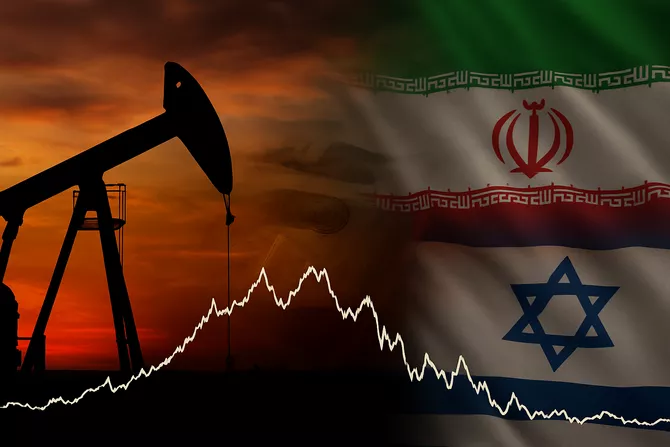
Iran’s economy is primarily service-based, contributing about 51% of the country’s total GDP. Within this sector, real estate and professional services account for around 14%, trade, restaurants, and hotels 12%, and government services 10%. The oil industry plays a crucial role, generating approximately 23% of the nation's wealth. The industrial sector, including processing and mining, contributes another 13%. Agriculture makes up 10%, while construction and utilities (electricity, gas, water) add about 7%.
Source: Caspianpost
According to the World Bank, Israel's nominal GDP in 2023 was $513.6 billion. In Q1 2025, despite the war in Gaza and the confrontation with Iran, Israel’s economy grew more than expected, with a 2.4% increase in per capita GDP. In 2024, Israel’s nominal GDP reached $583 billion, while Iran’s stood at about $341 billion. On a per capita basis, the contrast is even starker: over $52,000 versus $3,900.
A high GDP per capita means that Israel’s defense industry, startups, and universities receive more funding, which is crucial for national power. Money translates into technology and trained personnel. Iran, however, faces currency fluctuations and export restrictions, meaning even high oil revenues are often diverted to social subsidies instead of modernization.
According to the latest SIPRI report, Israel’s defense spending jumped by 65% in 2024 to $46.5 billion—8.8% of its GDP—ranking it second globally in defense spending as a share of GDP. Iran spent about $7.9 billion on defense the same year, a 10% cut due to economic pressure—a nearly sixfold difference. While Iran has a larger army, it lags significantly in equipment and training per soldier.
Equally important is how funds are spent: Israel allocates half to R&D and precision weaponry, whereas Iran focuses on personnel and artillery. In 2025 global military rankings, Israel is 15th, and Iran is right behind. But in comparative metrics, Israel leads in air force and technology, while Iran leads in ground forces and artillery. In other words, while they score similarly overall, they pursue vastly different strategic paths.

Source: jpost
Given similar aggregate indexes, real superiority lies in the speed of deploying new systems to the battlefield—where Israel’s innovative economy gives it an edge. In the 2024 Global Innovation Index, Israel ranked 15th and led in R&D and venture capital. Iran ranked 64th. Israel spends over 5% of GDP on science—more than many countries—fostering a thriving startup ecosystem. In contrast, over 70% of Iran’s research funding is state-sponsored, a more rigid, less adaptive model.
Israel’s strengths also include a high human development index and a stable economy with unemployment at around 3%. Iran, meanwhile, must juggle internal demand and external constraints. As the pandemic showed, a flexible IT infrastructure allows faster shifts in drone production to civilian use.
Israel’s experience demonstrates that an innovative economy offers greater protection against external threats. Moreover, Israeli defense products, proven in combat, are in high demand on international arms markets. All these factors played a decisive role in the near-total defeat of Iran’s military machine.
As military analyst M. Khodarenok writes:
"Israel achieved all the objectives of its military operation, neutralizing the immediate existential dual threat—Iran’s nuclear ambitions and its ballistic missile program. Indeed, within a short time, the Israeli armed forces achieved highly impressive results: Iranian intelligence failed every task assigned to it, Iran’s air defense system was crushed within hours and proved utterly ineffective, Tehran’s air force did not contribute meaningfully to the conflict, and critical strikes were delivered to missile and nuclear infrastructure, placing their future functionality in serious doubt. Most importantly, Israel’s air force achieved full air superiority during the conflict and suffered no significant losses."

Source: Reuters
The IDF conducted a series of brilliant operations, after which Iran can no longer be considered a global threat. But more importantly, Iran revealed its vulnerability. It may attempt to restore its nuclear program in the medium term, but there are no guarantees that Israel and the U.S. won’t strike again at any moment—forcing Iran to start from scratch.
At the same time, Iran must also rebuild its air defense systems—while facing severe economic problems that neither reformers nor conservatives have been able to resolve, especially amid falling oil prices. Following the military defeat and the expected economic turmoil, internal conflicts will likely intensify between Iran’s reformist government and its conservative parliament. The struggle for the position of Supreme Leader will also escalate, with more contenders than ever before.
In the near future, the regime will face numerous challenges that may ultimately collapse the system. According to the Israeli outlet Israel Hayom, the U.S. has presented Iran with three preliminary conditions for resuming negotiations: a ban on uranium enrichment on Iranian soil, the handover of all enriched uranium, and limits on future missile production.
In other words, what is being demanded of Iran amounts to de facto capitulation—otherwise, the ceasefire could collapse as suddenly as the June 13 attack began.