Why is the Karabakh issue still on the international agenda?


.png)
Editor’s note: Faig Mahmudov is a journalist based in Azerbaijan covering regional security, foreign policy, and geopolitical developments. The views expressed in this article are his own and do not necessarily reflect the official position or editorial stance of News.Az.
Following Azerbaijan’s local anti-terror measures in September 2023, the country fully restored its sovereignty and constitutional order throughout its territory. As a result, the activities of the separatist entity that had existed on Azerbaijani soil for decades came to an end in accordance with the norms and principles of international law. The implementation of the well-known UN Security Council resolutions was effectively secured, and the Karabakh issue became a matter of Azerbaijan’s internal affairs.
However, developments in the subsequent period indicate that despite the dissolution of the separatist structure, the activities of its former representatives and the networks supporting them have not ceased entirely. On the contrary, efforts to keep the Karabakh issue on the international agenda continue through certain foreign political centres, diaspora organisations and lobbying groups.
Research shows that France, Switzerland and, in some cases, Russia have emerged as the main platforms for such activities. Notably, this involves not only public initiatives but also parliamentary events, political campaigns, international forums and coordinated information activities.
Is the new reality being accepted, or is the old agenda being preserved?

Source: Trend
Following the 2020 Patriotic War and the 2023 anti-terror measures, Azerbaijan has established an entirely new political and legal reality in the region. As President Ilham Aliyev has repeatedly stated, the Karabakh issue has been resolved and Azerbaijan has restored its territorial integrity.
Despite this, certain foreign circles continue to promote a political status quo that no longer exists. There are differing interpretations regarding the objectives behind these activities. While some experts attribute them to the influence of the Armenian diaspora, others believe they serve broader geopolitical purposes.
France: the centre of the Armenian diaspora’s political influence
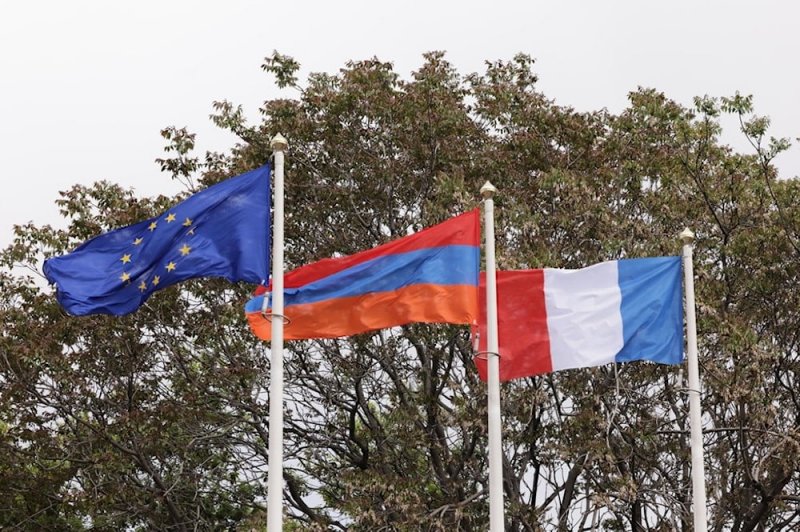
France occupies a special place in efforts to keep the Karabakh issue on the European agenda. One of the main reasons is the strength of the Armenian diaspora in the country and the political connections it has built over decades.
For many years, France has been regarded as one of Armenia’s key political partners in Europe. In recent years, discussions related to Karabakh have regularly appeared in the French National Assembly, the Senate and local government institutions.
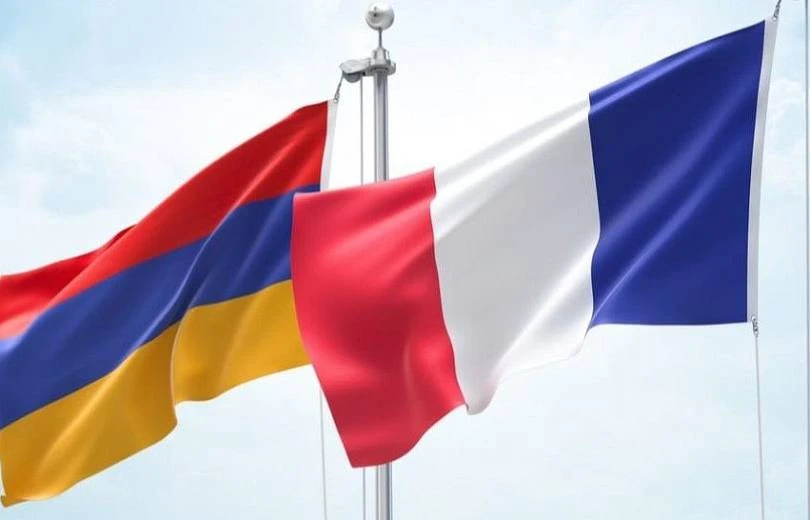
In September 2025, a conference dedicated to the rights of Karabakh Armenians was held at the French National Assembly. The event was organised at the initiative of Emmanuel Mandon, a member of parliament associated with the France-Armenia Friendship Group. Representatives from France, Belgium, Switzerland and the European Parliament took part in the meeting. Discussions focused primarily on the return of Karabakh Armenians and issues related to their rights.
Source: euromedia24
At the same time, various initiatives critical of Azerbaijan have continued to emerge within the French Parliament. In July 2025, a draft resolution called for France to play a more active role in regional affairs and advocated increased political pressure on Azerbaijan.
Research indicates that Armenian lobbying networks operating in France wield significant influence at multiple levels, from local municipalities to national political institutions. Diaspora organisations active in Paris, Marseille, Lyon and other cities regularly organise conferences, exhibitions and political campaigns related to Karabakh.
The Azerbaijani side has repeatedly stated that such activities do not contribute to peace and normalisation in the region. Official Baku argues that presenting representatives of the former separatist entity as legitimate political actors demonstrates a refusal to accept the new realities that have emerged in the South Caucasus.
Switzerland: from neutrality to political initiatives
Source: Reuters
Switzerland has also become one of the countries attracting attention in connection with the Karabakh issue.
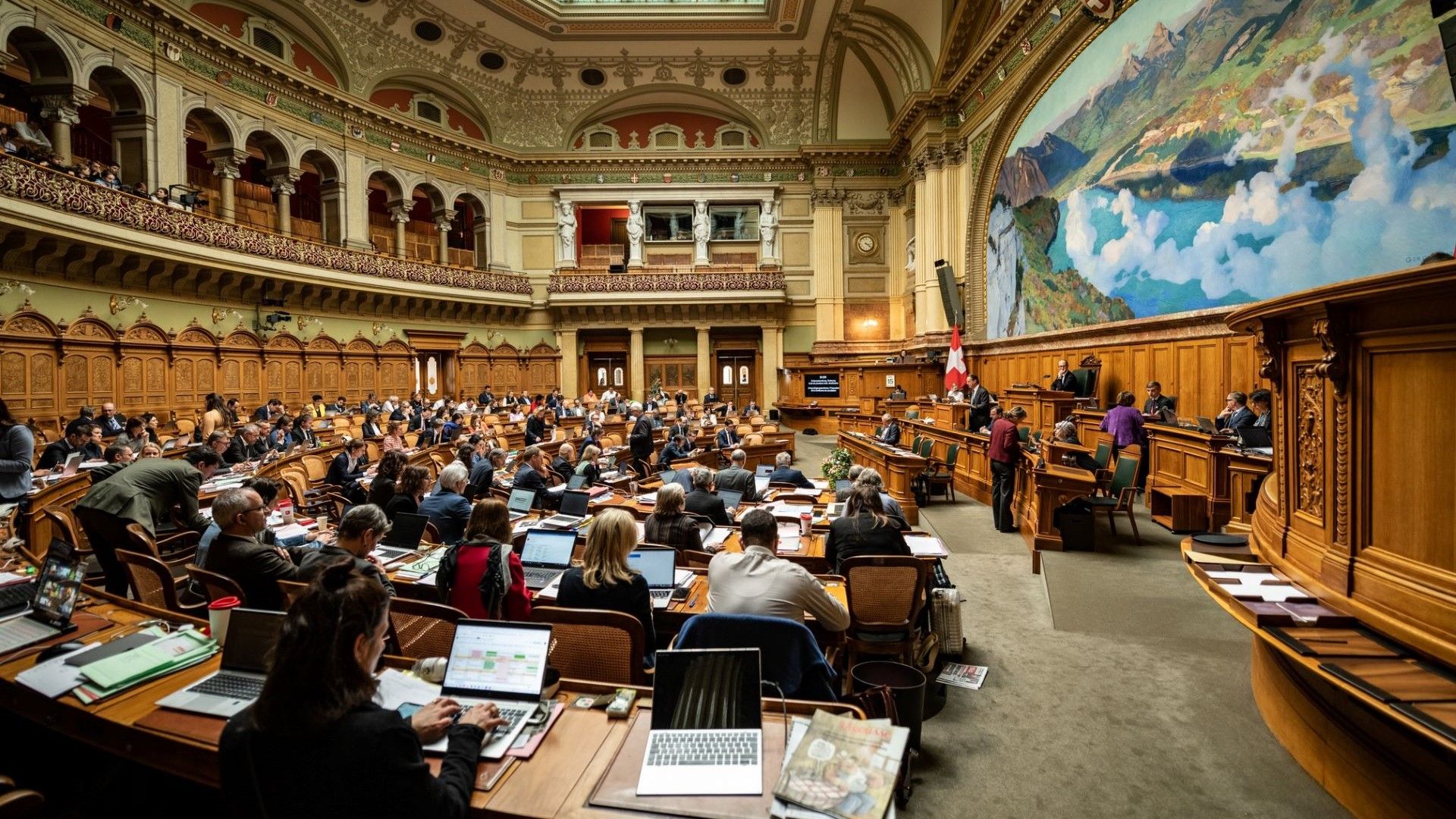
Traditionally known as a neutral state, Switzerland has over the past two years become a platform for various initiatives related to Karabakh.
At the end of 2024, the Swiss National Council, followed by the Council of States in March 2025, adopted Initiative No. 24.4259. The document recommends that the Swiss Federal Council take steps towards organising an international forum involving representatives of Karabakh Armenians and Azerbaijan.
Subsequently, a platform known as the Swiss Peace Initiative was established in Bern. Nineteen members of parliament representing different political parties joined the initiative. Although the platform presents itself as a dialogue and peace initiative, Azerbaijan has repeatedly emphasised that the creation of parallel mechanisms concerning its internal affairs is unacceptable.
Another notable event was the Armenian Heritage Conference held in Bern in May 2025. The conference brought together representatives of international organisations, religious institutions and experts. Discussions focused on the rights of Karabakh Armenians, as well as issues related to religious heritage and culture.
According to experts, linking humanitarian and cultural heritage issues with political objectives has become one of the primary mechanisms employed by segments of the Armenian diaspora in recent years.
Russia: the continuation of geopolitical influence

Source:TASS
Russia represents another avenue through which the Karabakh issue continues to be raised.
Although Moscow officially supports the normalisation process between Azerbaijan and Armenia, various public organisations, media outlets and diaspora structures operating in Russia continue to periodically bring the Karabakh issue into public discussion.
According to analysts, one of the key factors behind this is Russia’s desire to maintain its influence in the South Caucasus. The new geopolitical realities that have emerged in recent years have directly affected Moscow’s position in the region.
In this context, some experts view efforts to keep the Karabakh issue alive through events, exhibitions, humanitarian campaigns and media coverage as elements of Russia’s broader regional influence strategy.
For its part, Azerbaijan has repeatedly stated that there is no longer any issue to discuss regarding the status of Karabakh and that the future of the region can only be determined within the framework of the Constitution and laws of Azerbaijan.
Coordinated activities across Europe
One of the most notable findings of the research is the apparent connection between initiatives undertaken in different countries.
The participation of Swiss parliamentarians in events held at the French Parliament, references to French politicians during forums in Switzerland, and the repeated promotion of similar narratives across various platforms suggest a certain degree of coordination behind these activities.
In addition, Armenian diaspora organisations operating across Europe maintain close cooperation with one another. The promotion of similar resolutions in different national parliaments, the submission of identical issues to multiple legislative bodies, and parallel campaigns in international organisations reinforce perceptions of a unified information and lobbying strategy.
Azerbaijan’s position: international law and new realities

Source: APA
Azerbaijan’s position remains unchanged. Official Baku maintains that the Karabakh issue has been resolved and that the country’s territorial integrity and sovereignty have been fully restored. This reality is based on international law and is recognised by the overwhelming majority of the international community.
According to Azerbaijan, the key prerequisite for lasting peace in the region is the abandonment of political manipulation related to the former conflict and the acceptance of the new realities on the ground.
In recent years, large-scale reconstruction and redevelopment projects in Karabakh and Eastern Zangezur, the gradual return of former internally displaced persons to their ancestral homes, and the construction of new towns and villages have demonstrated that Azerbaijan’s focus is not on past conflict but on future development.
For this reason, experts argue that regardless of how long external campaigns continue, they are unlikely to alter the political and legal realities that have emerged in the region. The future of Karabakh is no longer a matter of international dispute but an integral part of Azerbaijan’s sovereign rights and the new development model being implemented in the region.
(If you possess specialized knowledge and wish to contribute, please reach out to us at opinions@news.az).


Similar news