Russia is pulling Pyongyang closer: Why Xi is rushing to North Korea


Editor’s note: Abulfaz Babazadeh is a scientist, a scholar of Japanese studies, a political observer, and a member of the Union of Journalists of Azerbaijan. The views expressed in this article are the author’s own and do not necessarily reflect those of News.Az.
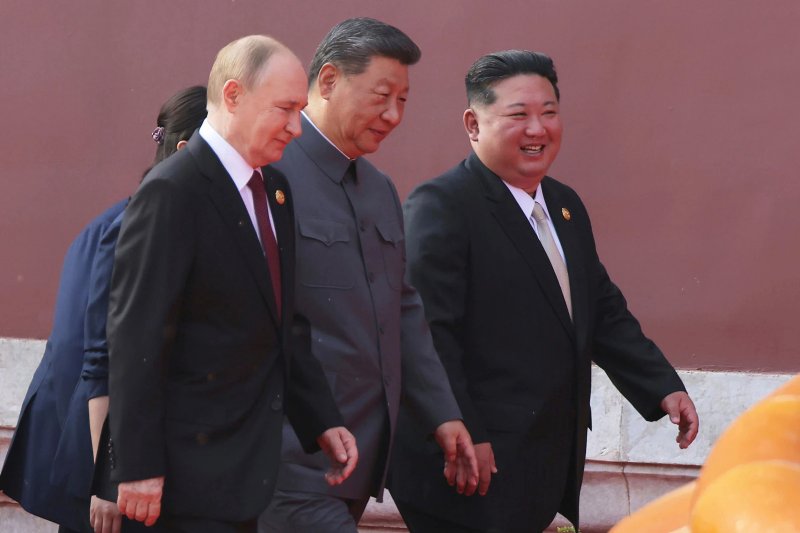
Chinese President Xi Jinping's upcoming visit to North Korea on 8–9 June is more than a protocol event between two neighbouring socialist states. It is a carefully timed geopolitical signal directed at Pyongyang, Moscow, Washington, Seoul and the wider Asia-Pacific region. For the first time in nearly seven years, the Chinese leader is travelling to North Korea, and the timing highlights how rapidly the strategic balance in Northeast Asia is changing.
Formally, the visit will take place at the invitation of North Korean leader Kim Jong Un. Politically, it comes at a moment when Beijing can no longer remain a passive observer as Pyongyang deepens its military and political partnership with Moscow. Over the past two years, North Korea has become one of Russia’s most visible partners in the war in Ukraine, providing weapons and, according to Western and South Korean assessments, even personnel in support of Moscow. This has given Kim Jong Un additional leverage and reduced, at least partially, North Korea’s traditional dependence on China.
RECOMMENDED STORIES
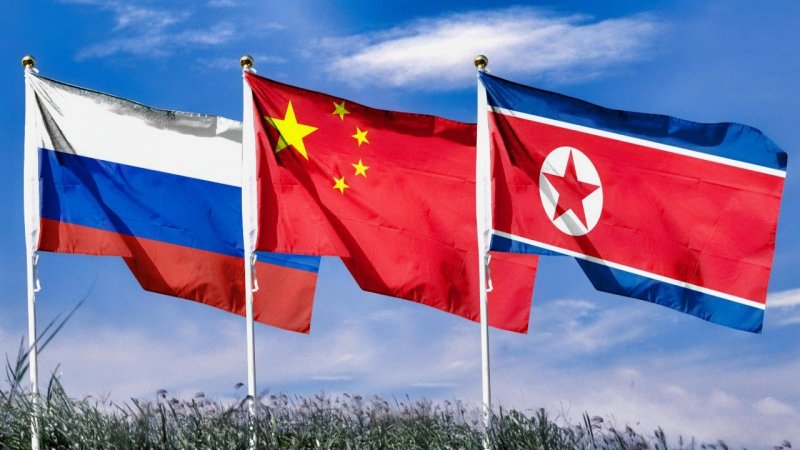
For Beijing, this presents both an opportunity and a risk. China remains North Korea’s most important economic partner, its principal diplomatic shield and its key strategic backer. Yet the rapid expansion of ties between Pyongyang and Moscow has created a triangular dynamic in which North Korea is no longer exclusively reliant on China. Kim now has another powerful partner capable of providing food, fuel, political support and potentially military technology. Xi’s visit therefore appears aimed primarily at reasserting China’s central role in North Korean affairs.
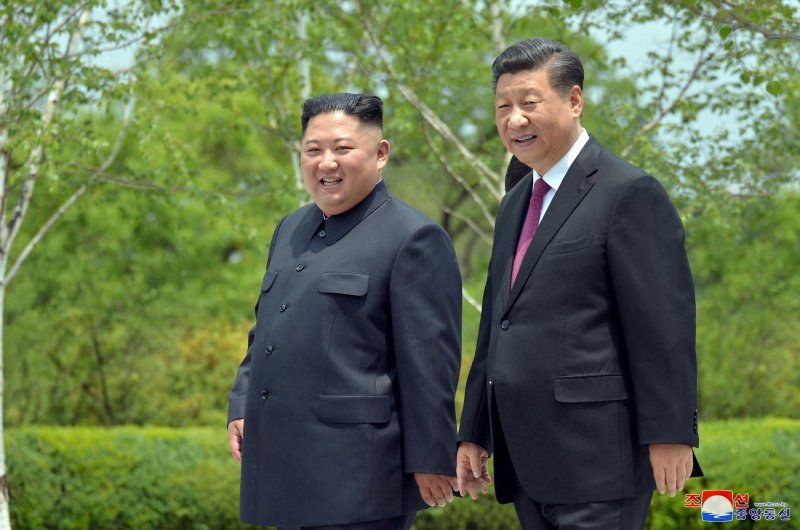
As John Delury, a senior fellow at the Asia Society, told Reuters, the implicit message from Beijing is that China remains “the principal actor” on North Korea. This captures the essence of the visit: China is not seeking to sever Pyongyang’s ties with Russia, but to remind both partners that the Korean Peninsula remains a sphere where Beijing expects decisive influence.
The visit also follows a broader diplomatic sequence. In recent weeks, Xi hosted both US President Donald Trump and Russian President Vladimir Putin in Beijing. His trip to Pyongyang completes a diplomatic triangle positioning China at the centre of engagement with all key actors shaping Northeast Asian security. It is also expected to be Xi’s first overseas visit of the year, a notable choice for a leader who has significantly reduced foreign travel since the pandemic.
Another factor behind the visit is North Korea’s nuclear programme. Days before the announcement, Kim Jong Un inspected a newly operational facility linked to nuclear material production and called for an “exponential” expansion of the country’s arsenal. The timing is widely seen as deliberate. North Korea often publicises military advances ahead of major diplomatic events to strengthen its negotiating position.
The message from Pyongyang is clear: it does not intend to return to the framework of denuclearisation talks. Instead, Kim is seeking recognition as the leader of a de facto nuclear state rather than a regime under pressure to disarm. Analysts cited by Reuters and the Associated Press suggest the announcement may also have been intended to shape the agenda ahead of Xi’s arrival and reinforce the irreversibility of North Korea’s nuclear status.
For China, this creates a difficult balancing act. Beijing wants to avoid conflict or escalation on the Korean Peninsula, as well as a nuclear crisis that could further strengthen US military coordination with South Korea and Japan. At the same time, it is unlikely to apply open pressure on Pyongyang in a way that could destabilise the regime or push it closer to Moscow. Xi is therefore expected to emphasise restraint without directly challenging the foundations of Kim’s strategic policy.
South Korea has responded cautiously, expressing hope that China will play a constructive role in maintaining peace and stability on the peninsula. Seoul’s message is that Beijing should help prevent Pyongyang from using the visit as cover for further military provocations. However, South Korean officials also recognise that China’s priority is stability and influence rather than denuclearisation in the Western sense.
The economic dimension is also central. China remains North Korea’s largest trading partner and a vital lifeline for its sanctions-hit economy. According to Chinese customs data cited by Reuters, bilateral trade rose by 25% in 2025 to $2.73bn, nearing pre-pandemic levels of $2.79bn recorded in 2019. This recovery is significant, as trade had been severely disrupted by pandemic-era border closures and North Korea’s prolonged isolation.
Momentum continued into early 2026. In January–February, China–North Korea trade rose by 22% year on year to $418.7m. Chinese exports increased by 19% to $329.5m, while imports from North Korea also grew. Despite sanctions constraints, trade remains concentrated in limited categories such as textiles, wigs and hair products, foodstuffs, footwear and mineral resources including tungsten ore. Even this narrow structure is economically significant for Pyongyang, providing foreign currency, consumer goods and industrial inputs.
The most likely outcome of Xi’s visit is a strong political declaration emphasising friendship, strategic communication and regional stability. The two sides may announce deeper cooperation in trade, transport, party-to-party exchanges, education and possibly infrastructure. However, no major breakthrough should be expected on the nuclear issue. North Korea is unlikely to slow its nuclear programme simply at China’s request for restraint. Beijing, for its part, will avoid applying public pressure that could undermine the appearance of unity.
The broader forecast is that China–North Korea relations will become warmer, more active and more institutionalised in the coming months. Trade is likely to continue growing if transport links remain open, and political exchanges are expected to intensify. Pyongyang will seek to balance between Beijing and Moscow, extracting benefits from both. China, meanwhile, will aim to keep North Korea close, but without assuming full responsibility for Kim Jong Un’s military behaviour.
The visit therefore does not mark a return to the traditional China–North Korea relationship in which Pyongyang depended overwhelmingly on Beijing, but rather the beginning of a more complex phase. North Korea now has more external options. Russia has become more relevant. The United States remains an adversary, but also a potential future negotiating counterpart. South Korea and Japan are strengthening security coordination with Washington. In this environment, China is seeking to make one point clear: whatever changes occur around the Korean Peninsula, Beijing intends to remain the indispensable power in any future settlement.
That is the real meaning of Xi Jinping’s trip to Pyongyang. It is not simply a visit to an ally, but a signal that China will not allow the Korean question to be decided without it.
(If you possess specialized knowledge and wish to contribute, please reach out to us at opinions@news.az).


Similar news