Rethinking world order: A modern perspective



Editor's note: Moses Becker is a special commentator on political issues for News.Az, a PhD in political science and an expert on interethnic and interreligious relations. The article expresses the personal opinion of the author and may not coincide with the view of News.Az.
The 21st century has ushered in a new era in international relations. Much like the previous century, competition over natural resources, markets, and territorial influence has intensified. The Middle East and Southeast Asia have once again become epicenters of instability. With support from the United States and the tacit approval of Russia, the Kingdom of Saudi Arabia has significantly strengthened its international standing—thanks to its vast oil and gas reserves and custodianship of Islamic holy sites. Iran is being systematically sidelined, and its network of regional influence is gradually being dismantled. Lebanon’s sovereignty is being restored, Türkiye’s role in the region is evolving, and in Syria, efforts are underway to rebuild the state and preserve its territorial integrity.
In this context, the phenomenon of unrecognized states stands out as a unique and increasingly relevant development. Their existence poses significant risks—they are often likened to time bombs planted under the foundations of established nations. The ambiguity of the United Nations Charter only adds to the complexity. While the Charter upholds the "right of peoples to self-determination," it also affirms the "territorial integrity of states" as a core principle of international law. Nowhere does it clearly articulate how a nation can claim independence when it is part of a sovereign, internationally recognized state. This ambiguity creates internal tensions for legitimate governments, often forcing them into protracted conflicts to preserve national unity in the face of externally supported separatist movements.
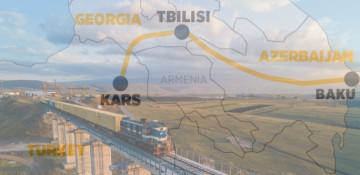
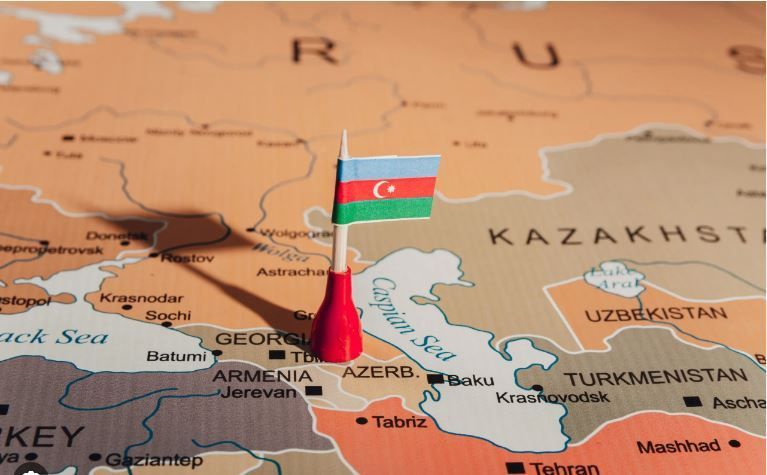
The Republic of Azerbaijan knows this struggle firsthand. It has experienced the full brunt of such conflicts and, to its credit, effectively navigated the shifting international landscape between 2020 and 2023 to restore its territorial integrity.
Source: Mappr
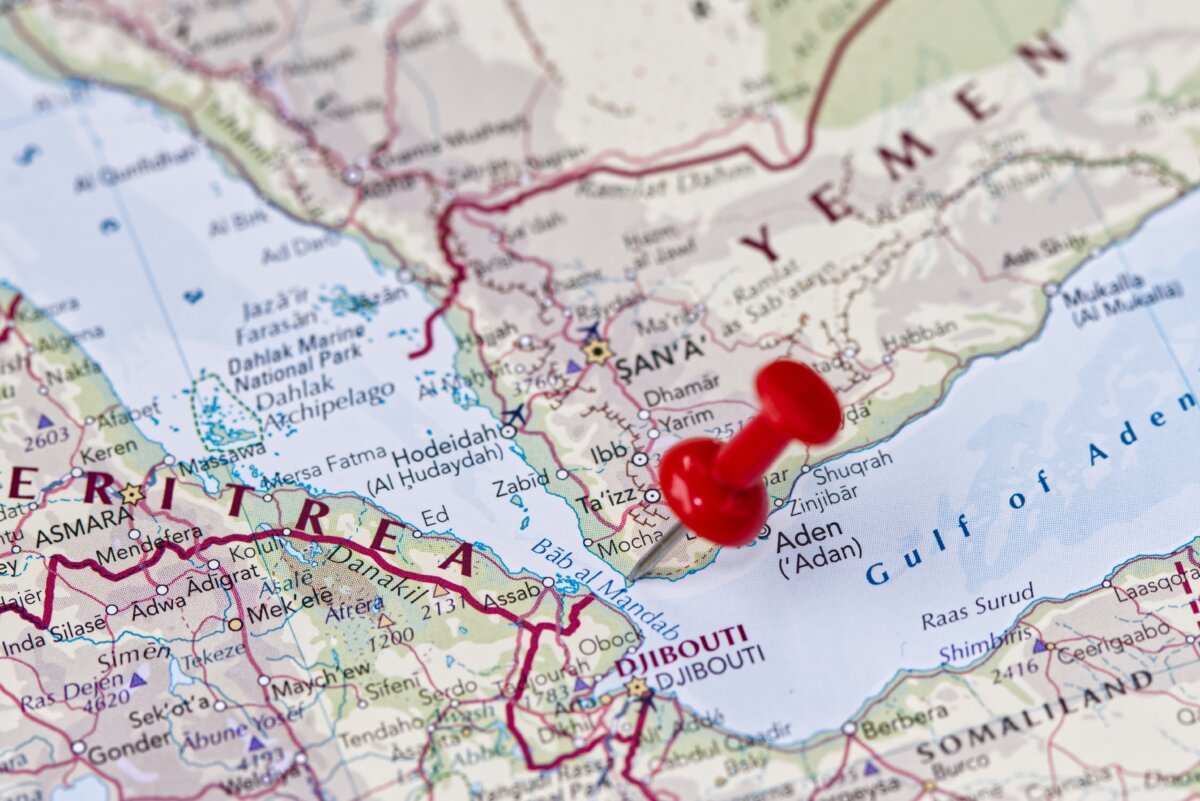
Against this backdrop, attention is increasingly turning to the unrecognized Republic of Somaliland, located in the northern part of the Horn of Africa on the territory of the former British Somaliland colony. The international community still considers it part of a unified Somalia, but its de facto capital and largest city, Hargeisa, functions as the administrative center of this self-declared state.
Somaliland’s relevance emerged unexpectedly. Until the events of October 7, 2023, when Hamas launched an unprovoked attack on Israel, the region received little international attention. However, following Israel’s military response and the widespread devastation in Gaza, former U.S. President Donald Trump proposed resettling residents of Gaza in other countries. Egypt and Jordan rejected the idea, and Sudan also refused to take in refugees, even temporarily.
This is when the idea surfaced to offer Somaliland international recognition in exchange for its agreement to host 1.5 to 2 million displaced Palestinians. Since 1991, Somaliland has been governed by a democratically elected administration that controls an area of 138,000 square kilometers—home to a population of approximately 3.5 million people. By contrast, Gaza occupies just 365 square kilometers. Simply put, Somaliland has the space.
The population of Somaliland speaks Somali and Arabic, the latter being taught in schools. Nearly all Somalilanders are Sunni Muslims of the Shafi’i school. Islam is the official and dominant religion. The region also holds untapped oil reserves estimated at over 2 billion barrels—comparable to the reserves of the United Kingdom or Argentina. With proper expertise and responsible development, these resources could transform the local economy. However, Somaliland’s lack of international recognition prevents foreign companies from officially exploring or extracting hydrocarbons.
Source: MEd-Or
Strategically located along the Red Sea, with an increasingly modern port in Berbera, Somaliland holds the potential to become a major player in global trade. Its mineral wealth, agricultural capacity, and pristine coastline remain largely untouched, awaiting investment and development. For many Gazans seeking refuge from Hamas rule, Somaliland could offer more than relocation—it could offer a fresh start, the chance to build a new society free from the shadows of internal Palestinian rivalries and the longstanding conflict with Israel.
According to Israeli government sources, at least 40% of Gaza’s population has expressed a desire to emigrate. This was confirmed by Israeli Defense Minister Yoav Gallant in remarks reported by The Times of Israel. Somaliland has signaled a willingness to consider accepting Palestinian refugees in exchange for diplomatic recognition and economic investment. In an interview with Israeli television channel Kan, Somaliland’s Foreign Minister Abdirahman Daahir Aadan confirmed that his government is open to discussing the matter—provided that interlocutors are willing to establish formal diplomatic ties and open missions in Hargeisa.
Aadan emphasized that Somaliland’s primary goal is gaining international recognition and showing the world its peaceful and democratic intent. Associated Press reported that both the United States and Israel are conducting talks with East African countries regarding the possible relocation of Gaza’s population. Alongside Somaliland, contact has been made with officials in Sudan and Somalia.
Sudanese officials have confirmed the existence of such discussions but stated that their government ultimately declined the offer, despite being presented with economic incentives, diplomatic gestures, and security guarantees. Clearly, the talks are ongoing, and given the fragile economies of the countries involved, the issue is less one of principle than of insufficient compensation.
Israeli sources suggest that Somaliland is attempting to leverage the Gaza crisis to gain political capital with the U.S. and Israel. Authorities in Hargeisa do not deny this. On the contrary, they understand that this could be a unique opportunity to achieve long-sought diplomatic recognition, which would likely unlock a wave of foreign investment—not only from Washington but from a broader range of international partners.
Moreover, Somaliland could become a logistical hub for global trade between Asia and Africa. As Middle East analyst Roi Kais put it: “Somaliland is clearly trying to use the situation in Gaza and the broader Palestinian arena to gain political advantages from the United States and Israel.” This is not an implausible or cynical prediction—it is a pragmatic one. Many countries have benefited economically and socially from accepting large numbers of migrants. The same could be true if Somaliland were to become a new home for displaced Gazans.
(If you possess specialized knowledge and wish to contribute, please reach out to us at opinions@news.az).


Similar news