Riyadh’s geopolitical chess game: Who will make the first move?


Photo: Global Look Press/Bernd von Jutrczenka
Editor's note: Pavel Klachkov is a Russian political scientist, a Director of the branch of the Financial University under the Government of the Russian Federation. The article expresses the personal opinion of the author and may not coincide with the view of News.Az.
The Ritz-Carlton in Riyadh — a symbol of luxury, oil wealth, and Arab modernization — became the stage for a far more refined game in March 2025: international diplomacy. It was here that expert-level consultations between Russia and the United States took place, which Washington modestly described as “indirect talks” between Kyiv and Moscow. The delegations sat in separate rooms, with the U.S. acting as an intermediary, passing “notes through the door.” A format as old as diplomacy itself — repackaged for a new era.
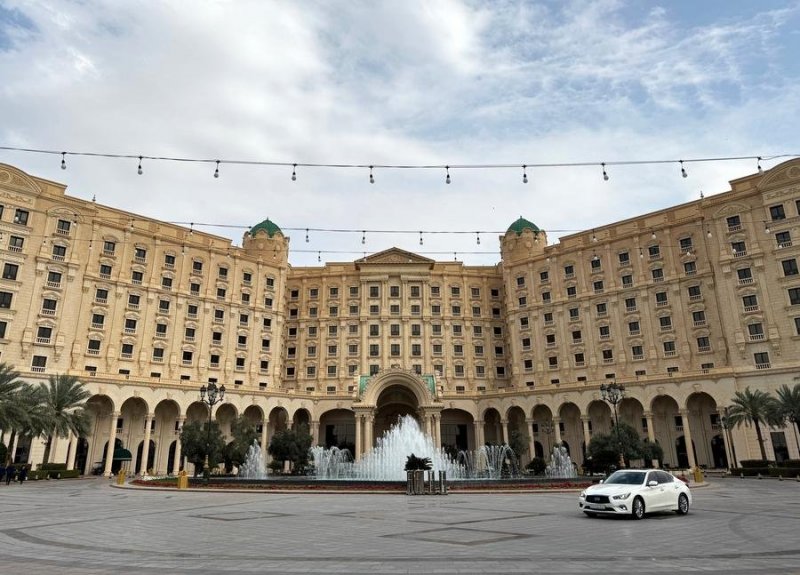
This photo taken on March 23, 2025 shows a view of the Ritz-Carlton hotel, venue of the talks between U.S. and Ukrainian delegations, in Riyadh, Saudi Arabia. (Xinhua/Wang Dongzhen)
Diplomacy beneath the desert sands
The U.S. delegation was led by National Security Council and State Department officials Andrew Peek and Michael Anton. Representing Russia were Senator Grigory Karasin and FSB representative Sergey Beseda. This was the classic “expert format”: no foreign ministers present, but seasoned figures capable of sending signals — and reading between the lines.
The discussion stretched on for more than 12 hours. Karasin described the talks as “intense, difficult, but productive.” He noted that “many issues were raised, though not all were resolved,” emphasizing that the very act of dialogue was itself a step forward. Official statements were delayed by nearly a full day — a sign of prolonged coordination over positions and wording.
Black Sea: Grain, mines, and compromise
One of the key topics was the situation in the Black Sea. Discussions centered on safe navigation, preventing the use of civilian vessels for military purposes, and — notably — a possible revival of the Black Sea Grain Initiative, albeit in a “new format.” The U.S. pledged to help Russia regain access to global grain and fertilizer markets, lower insurance rates, and restore connections to port and financial infrastructure.
In return, Moscow presented a concrete list of demands: lifting restrictions on Rosselkhozbank, restoring access to SWIFT, lifting sanctions on agricultural and fertilizer exporters, removing insurance bans on shipping, restoring port services, and allowing the supply of agricultural equipment. In essence, Moscow is demanding the unblocking of its economic arteries. If the U.S. is truly willing to consider such concessions, then this is no longer just a dialogue — it’s an attempt to redraw the architecture of sanctions, at least in specific sectors.
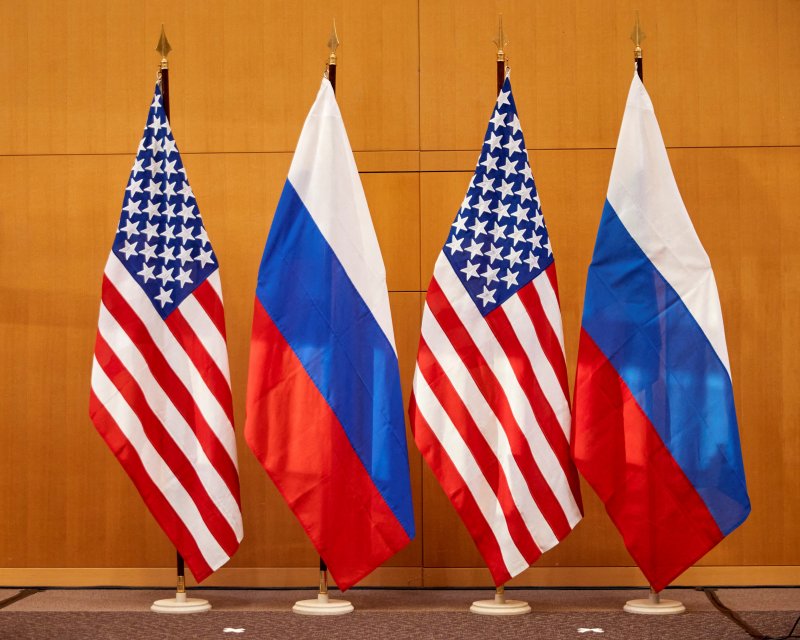
Russian and U.S. flags are pictured before talks between Russian Deputy Foreign Minister Sergei Ryabkov and U.S. Deputy Secretary of State Wendy Sherman at the United States Mission in Geneva, Switzerland January 10, 2022. REUTERS/Denis Balibouse
Energy front: A 30-day pause?
Particular attention was paid to attacks on energy infrastructure. The two sides agreed to a 30-day moratorium on strikes against energy facilities, effective March 18. The protected list includes power stations, substations, oil and gas storage sites, nuclear plants, and dams. This move is not only a humanitarian gesture — it’s also a trust test: if either party breaks the deal, further agreements may not be worth the paper they're written on.
The American side, judging by its statements, sees this as “a step toward peace.” The Kremlin, typically more blunt, warned that if one side breaches the deal, the other is released from its obligations.
Kyiv: Cautious pragmatism and infrastructure focus
The Ukrainian delegation, led by Defense Minister Rustem Umerov and Deputy Head of the Presidential Office Pavlo Palisa, held separate talks with the U.S. Their main agenda: protecting critical infrastructure, ensuring maritime safety, returning deported children, and arranging prisoner exchanges. They also discussed a partial ceasefire in ports and river zones — including Kherson, Mykolaiv, and the ports of “Greater Odesa.”
Interestingly, Ukraine brought along energy experts and representatives of its Navy and Air Force — a sign of focused intent. Kyiv is acutely aware of its vulnerabilities and is working to minimize risks. At the same time, when it comes to territorial compromises, Ukrainian officials remain stone-silent — discussing such matters publicly during wartime is politically perilous.
Saudi Arabia: The new Geneva?
Riyadh’s selection as the venue was no accident. Saudi Arabia has long sought to act as a neutral mediator. It suits everyone: Washington, Moscow, and even Kyiv, which was allowed to hold a summit there last year. The Kingdom is crafting its image as the “new Geneva” — neutral, wealthy, and ambitious. To the U.S., it’s a partner; to Russia, it’s not the West; to Ukraine, it offers acceptable neutrality.
Washington as conductor and vendor of solutions
The format resembled classic shuttle diplomacy — one room, then the other, back and forth. As former Trump advisor Keith Kellogg described it, that’s exactly how the process played out. In this performance, the U.S. plays the roles of arbitrator, mediator, and architect of future settlements. This is not yet about surrender, peace treaties, or recognition. It's about technical de-escalation. And Washington appears to believe the sea is the best place to start — easier to monitor, with fewer emotional stakes.
According to the National Security Council, the next steps include discussing the front line and mechanisms for freezing hostilities. After that — security guarantees and even territorial arrangements. The idea of “land for peace” is only whispered in the background, but it’s already in the air.
Conclusion: A deal without a signature
No final agreements were signed — nor were they expected. The goal was to probe positions and identify areas for potential convergence. Was it achieved? In some ways, yes. The 30-day moratorium, discussions on a grain corridor, and acknowledgment of third-party roles are not empty gestures. They are building blocks of a future framework — fragile and shaky, but full of potential.
The key point: the participants did not walk away in anger. So what took place in Riyadh was not a breakthrough, but a cautious thaw. And if nothing disrupts it — we may see a continuation in April. Without illusions, but not without hope.
(If you possess specialized knowledge and wish to contribute, please reach out to us at opinions@news.az).


Similar news