Sri Lankan energy giant LTL Holdings conquers the African market


In today's world, where energy instability is a growing concern and sustainable solutions are in high demand, electricity companies are pushing to broaden their reach and secure stronger footholds in global markets. LTL Holdings, a Sri Lankan company recognized for its innovative approach and expertise in the energy sector, is setting its sights on Africa. The company is making a bold move by opening a new plant in Tanzania and planning to enter the independent power producer (IPP) market, aiming to expand its influence and bring advanced technologies to developing regions.
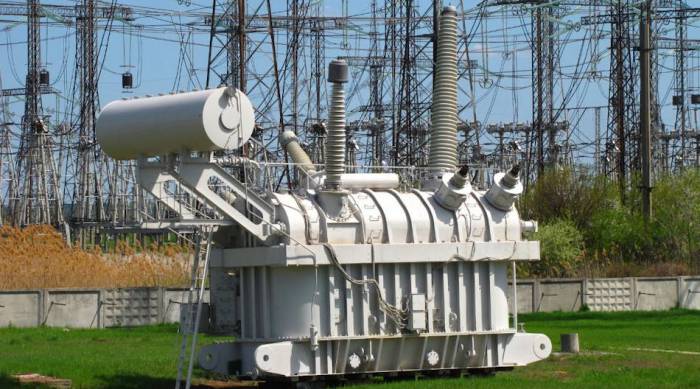
LTL Holdings is actively pursuing growth in Africa's energy sector and exploring opportunities as an IPP, as reported by the Daily Mirror on September 5 . As a key part of its strategy, the company is investing $2.2 million to establish a transformer assembly plant in Tanzania.
“We are opening a transformer assembly plant in Tanzania to serve this region, and the next step will be to enter the power generation market,” said Mohamed Jalaldeen Mohamed Nuhuman Marikkar, CEO and Executive Director of LTL Holdings.
The new Tanzanian plant, with a capacity to produce 1,000 transformers annually, aims to cater to the increasing demand for transformers not only in Tanzania but also in neighboring countries like Uganda, Kenya, Mozambique, and Ethiopia, according to the Daily Mirror.
Initially, the facility will operate as an assembly unit, utilizing transformer components imported from Sri Lanka. However, over the next two years, it is planned to evolve into a complete assembly plant, with potential to become a fully operational manufacturing unit in the future.
In addition to its expansion in Africa, LTL Holdings recently launched Sobadhanavi, Sri Lanka's first gas-fired power plant near Colombo. The company has also entered into a Memorandum of Understanding (MoU) with India's Petronet LNG Limited (PLL) to supply liquefied natural gas (LNG) to the Sobadhanavi plant. The LNG will be transported from PLL's terminal in Kochi, Kerala, to Sri Lanka using a combination of transport modes and ISO containers.
Sobadhanavi, managed by LTL Holdings' subsidiary Lakdhanavi Limited, aligns with the government's strategy to develop sustainable and cost-effective energy solutions. The plant is expected to contribute an additional 350 MW to the national grid by early 2025.
LTL Holdings is actively pursuing growth in Africa's energy sector and exploring opportunities as an IPP, as reported by the Daily Mirror on September 5 . As a key part of its strategy, the company is investing $2.2 million to establish a transformer assembly plant in Tanzania.
“We are opening a transformer assembly plant in Tanzania to serve this region, and the next step will be to enter the power generation market,” said Mohamed Jalaldeen Mohamed Nuhuman Marikkar, CEO and Executive Director of LTL Holdings.
The new Tanzanian plant, with a capacity to produce 1,000 transformers annually, aims to cater to the increasing demand for transformers not only in Tanzania but also in neighboring countries like Uganda, Kenya, Mozambique, and Ethiopia, according to the Daily Mirror.
Initially, the facility will operate as an assembly unit, utilizing transformer components imported from Sri Lanka. However, over the next two years, it is planned to evolve into a complete assembly plant, with potential to become a fully operational manufacturing unit in the future.
In addition to its expansion in Africa, LTL Holdings recently launched Sobadhanavi, Sri Lanka's first gas-fired power plant near Colombo. The company has also entered into a Memorandum of Understanding (MoU) with India's Petronet LNG Limited (PLL) to supply liquefied natural gas (LNG) to the Sobadhanavi plant. The LNG will be transported from PLL's terminal in Kochi, Kerala, to Sri Lanka using a combination of transport modes and ISO containers.
Sobadhanavi, managed by LTL Holdings' subsidiary Lakdhanavi Limited, aligns with the government's strategy to develop sustainable and cost-effective energy solutions. The plant is expected to contribute an additional 350 MW to the national grid by early 2025.


Similar news