What does Nikol Pashinyan's victory mean for Armenia?


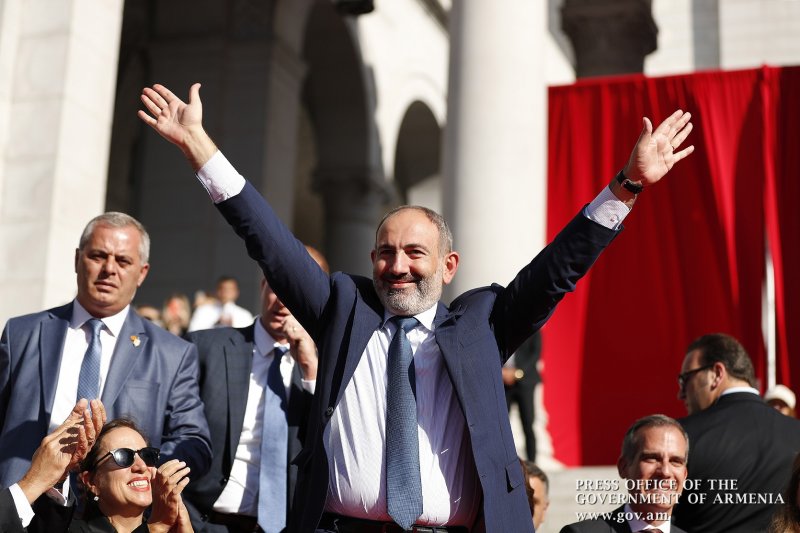
The election victory of Armenian Prime Minister Nikol Pashinyan represents a defining moment in Armenia's political development. Coming at a time when the country is undergoing significant political, economic, and institutional transformation, the result provides important clues about how Armenian society views its future.
For many voters, the election was less about personalities and more about the direction Armenia should take over the coming years. Questions about economic growth, democratic reforms, governance, corruption, social development, investment, migration, and state modernization were at the center of public debate, News.az reports.
RECOMMENDED STORIES
Pashinyan's victory suggests that a large segment of Armenian society remains willing to support his vision despite the challenges facing the country.
The result gives the government renewed legitimacy and provides an opportunity to pursue reforms that could shape Armenia's future for years to come.
Why is Pashinyan's victory significant?
Pashinyan's victory is significant because it provides political continuity during a period when Armenia is attempting to modernize its institutions and strengthen its economy. Elections often serve as a test of public confidence in government performance, and the outcome suggests that many Armenians believe the current administration should continue leading the country.
Political continuity can be especially important for countries pursuing long term reforms. Changes in government frequently interrupt economic programs, investment plans, and institutional reforms. By re-electing the current leadership, voters have given the government an opportunity to continue policies already underway rather than beginning a completely new political cycle.
The result also demonstrates that Armenia's electorate remains engaged in shaping the country's future through democratic processes. Regardless of political preferences, voter participation and electoral competition remain important indicators of political development.
Does the result strengthen political stability?
One of the immediate consequences of the election is increased political stability. Elections often create uncertainty, particularly when the outcome is unclear or highly contested. A decisive victory helps reduce uncertainty and allows both government institutions and businesses to plan for the future with greater confidence.
Political stability is not simply a matter of government survival. It affects economic planning, public administration, foreign investment, and social confidence. When political systems become unstable, investors often delay projects, businesses postpone expansion plans, and government institutions struggle to implement reforms.
A stable government with a fresh electoral mandate is generally better positioned to make long term decisions and pursue ambitious policy initiatives. This does not mean that opposition voices disappear, but it does provide a clearer governing framework for the years ahead.
For Armenia, stability may prove especially valuable as policymakers attempt to address economic and demographic challenges that require sustained attention rather than short term solutions.
What does the victory mean for Armenia's democracy?
Many observers are likely to view the election as another important chapter in Armenia's democratic evolution. Since the political transformation of 2018, democratic governance has become one of the defining themes of Armenian politics.
The election demonstrates that political legitimacy continues to be determined through the ballot box. This matters because strong democratic institutions help create accountability, transparency, and public trust in government.
Democracy also influences how a country is perceived internationally. Governments, investors, and international organizations often pay close attention to governance standards when making decisions about cooperation, aid, or investment.
At the domestic level, democratic competition encourages political leaders to remain responsive to public concerns. Citizens expect elected officials to deliver results, and governments that fail to meet expectations can be challenged through future elections.
Pashinyan's victory therefore reinforces not only his political position but also the broader democratic framework within which Armenian politics operates.
What impact could the election have on Armenia's economy?
Economic performance will likely be the most important factor determining how Pashinyan's new term is ultimately judged. While elections generate headlines, voters often evaluate governments based on jobs, wages, inflation, investment, and living standards.
The election result may improve economic confidence because it reduces uncertainty about the country's immediate political future. Investors generally prefer predictable environments where government policies are likely to remain consistent.
The administration is expected to continue focusing on economic modernization, digital transformation, infrastructure development, and support for entrepreneurship. Armenia has developed a growing reputation as a technology and innovation hub, particularly in software development and information technology.
A stable political environment could help attract additional foreign investment. Investors are more likely to commit resources when they believe policies will remain predictable and institutions will function effectively.
At the same time, economic challenges remain substantial. The government must continue addressing inflationary pressures, improving productivity, creating high quality jobs, and ensuring that economic growth benefits a broad segment of society rather than a limited group of citizens.
Will reforms accelerate after the election?
One of the key questions facing Armenia is whether the government will use its renewed mandate to accelerate reforms.
Election victories often provide political capital that allows leaders to pursue difficult policies. Governments tend to be strongest immediately after securing a mandate from voters, making this period an important window for reform initiatives.
The administration may focus on improving public services, modernizing state institutions, increasing transparency, and reducing bureaucratic inefficiencies. Reforms in areas such as education, healthcare, taxation, and public administration could become priorities.
Successful reforms often require political courage because changes can create short term disruptions even when they generate long term benefits. A fresh mandate may give policymakers greater confidence to pursue ambitious initiatives.
However, implementation remains the critical challenge. Many governments around the world announce reform agendas, but fewer succeed in translating plans into measurable outcomes. The effectiveness of Armenia's reform program will ultimately determine whether the election produces meaningful changes for ordinary citizens.
What does the result mean for corruption and governance?
The fight against corruption has been one of the defining themes of Pashinyan's political career. Many of his supporters continue to view improvements in governance and transparency as among the most important achievements of recent years.
The election result may be interpreted as public support for continuing efforts to strengthen accountability and improve state institutions. Citizens generally expect governments to manage public resources effectively, reduce corruption risks, and ensure that laws are applied fairly.
Improved governance has practical economic implications. Transparent institutions help attract investment, increase public trust, and improve the efficiency of government programs.
The challenge for the administration will be maintaining momentum. Anti-corruption initiatives often become more difficult over time as governments confront entrenched interests and institutional resistance.
Voters are likely to expect not only continued anti-corruption rhetoric but also measurable progress in improving public sector performance and service delivery.
How could the election affect Armenia's younger generation?
Young voters have played an important role in Armenia's political evolution over the past decade. Many young Armenians are particularly interested in issues such as education, employment opportunities, technological innovation, entrepreneurship, and international competitiveness.
The election result may encourage the government to place greater emphasis on policies designed to retain talent and create opportunities for younger citizens. One of Armenia's major long term challenges has been preventing emigration among educated and skilled workers seeking better opportunities abroad.
Investment in education, technology, research, and innovation could become increasingly important components of government policy. Armenia's growing technology sector offers opportunities to create high value employment and strengthen economic competitiveness.
Younger generations are also generally more connected to global trends and expectations. They often demand efficient institutions, transparent governance, and modern public services. Meeting these expectations will be essential for maintaining long term public support.
Could the victory help reduce emigration?
Population decline and emigration remain important concerns for Armenia. For many years, policymakers have sought ways to encourage citizens to remain in the country and build their futures at home.
Political stability and economic growth can contribute to this goal by creating a more attractive environment for employment, investment, and family life. Citizens are generally more likely to remain in their country when they believe opportunities exist for personal and professional advancement.
The government may use its renewed mandate to strengthen programs aimed at supporting businesses, expanding housing opportunities, improving education, and creating jobs. Such measures could help reduce incentives for outward migration.
At the same time, reversing demographic trends is a complex challenge that requires long term commitment. Success will depend not only on government policies but also on broader economic conditions and societal developments.
What challenges does Pashinyan still face?
Although the election strengthens his political position, numerous challenges remain.
Economic expectations are perhaps the most pressing. Citizens expect tangible improvements in living standards. Economic growth must translate into better wages, employment opportunities, and quality of life.
Institutional modernization remains another major task. Many public institutions still require modernization and increased efficiency. Reforming state structures is often a slow and politically difficult process.
Demographic concerns continue to raise questions about Armenia's long term development prospects. Population decline and emigration remain difficult issues that cannot be solved quickly.
Social inequality also requires attention. Economic growth alone is not enough if its benefits are distributed unevenly. Policymakers must address disparities in income, opportunity, and regional development.
Public trust is another critical factor. Governments must continuously earn public confidence through performance. Electoral success creates expectations that citizens will expect to see fulfilled.
What does the result mean for Armenia's future?
The election result provides Armenia with an opportunity to focus on long term development rather than short term political uncertainty. With a renewed mandate, the government has a chance to pursue policies aimed at strengthening institutions, improving economic competitiveness, modernizing infrastructure, and creating opportunities for future generations.
Whether this opportunity is fully realized will depend on the government's ability to transform political support into practical achievements. Success will be measured not by election results but by improvements in the daily lives of Armenian citizens.
If the administration can deliver economic growth, stronger institutions, better public services, and expanded opportunities, the election may eventually be viewed as a turning point in Armenia's development. If expectations remain unmet, political support could erode despite the current victory.
Conclusion
Nikol Pashinyan's victory represents more than an electoral success. It is a renewed mandate to continue shaping Armenia's political, economic, and institutional future. The result strengthens political stability, supports continuity in governance, and provides an opportunity to accelerate reforms that many voters believe are necessary for the country's development.
The greatest impact of the election will likely be felt not in political rhetoric but in the government's ability to address economic challenges, strengthen democratic institutions, improve governance, create opportunities for young people, and build confidence in Armenia's future.
Ultimately, the significance of Pashinyan's victory will depend on whether his administration can convert electoral support into lasting progress for Armenia and its citizens.
By Faig Mahmudov


Similar news