Strikes on SOCAR and the collapse of the CIS: How Russia is escalating hostility toward Azerbaijan


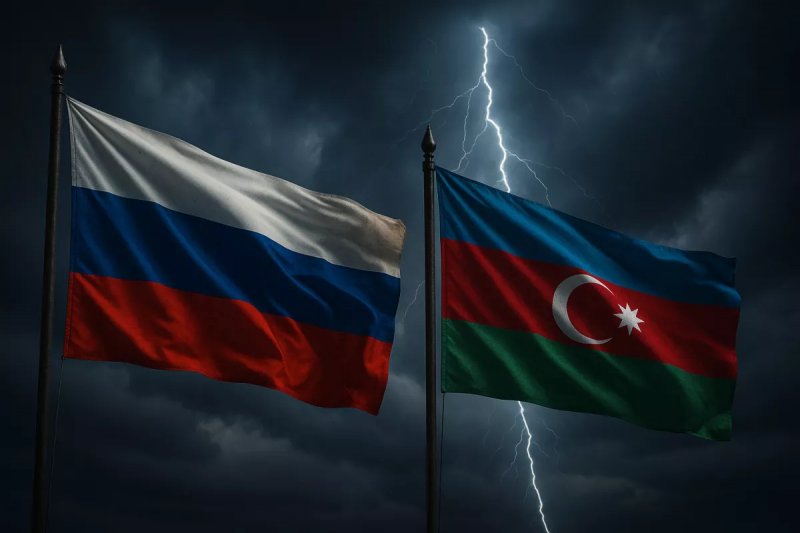
Repeated missile strikes on the gas infrastructure near Odesa — a key route for Azerbaijani oil exports — as well as the targeting of a SOCAR gas station, are not isolated incidents. These acts are increasingly seen as deliberate and overt manifestations of Russia’s growing hostility toward Azerbaijan. Especially given that such incidents have occurred more than once.
Previously, a missile landed near Azerbaijan’s embassy in Kyiv, and later another struck near SOCAR’s office in Ukraine. These events can no longer be explained as “collateral damage” of the war. Rather, they reflect a pattern — an attempt by Moscow to exert pressure on Baku for its independent foreign policy, strategic alliance with Türkiye and the West, and its unwavering support for Ukraine’s territorial integrity.
Economic pressure as a tool of political coercion
Targeting gas infrastructure, SOCAR facilities, and diplomatic sites appears to be part of a broader campaign to damage Azerbaijan’s economic interests in Ukraine and send a clear message: “Moscow is displeased.” But such actions have failed to produce the desired effect — instead, they only strengthen Azerbaijan’s resolve to chart its own path, free from Russian coercion.
SOCAR is not just a national oil and gas company — it is a symbol of Azerbaijan’s growing economic presence abroad. Russia’s attacks on SOCAR facilities are a direct assault on Azerbaijan’s energy diplomacy and an attempt to curtail its role in regional and global markets.
Missile strikes and the downing of an aircraft: Episodes of the same campaign
Beyond attacks on infrastructure, Azerbaijan has suffered even more alarming incidents. The downing of an Azerbaijani passenger aircraft and the recent events in Yekaterinburg, where Azerbaijani citizens were targeted, appear to be part of the same strategy — a campaign of intimidation, coercion, and hybrid pressure.
This approach is consistent with Russia’s broader behavior. The same country that commits atrocities against the Ukrainian people — bombing cities, schools, and hospitals — is applying similar tactics against other neighbors. The international community should not be surprised.
Russia: The new occupying power of the post-Soviet space
Since the 2008 invasion of Georgia — and more clearly after the 2014 annexation of Crimea — Russia has fully embraced the role of an occupying power. Today, only Armenia rivals Russia in its legacy of unlawful occupation, following its decades-long illegal presence on Azerbaijani territories. Moscow’s interference in the internal affairs of sovereign states — be it Ukraine, Moldova, Georgia, or Belarus — is part of a consistent pattern of neo-imperial behavior.
Azerbaijan, however, is resisting. Unlike some post-Soviet states that continue to waver between Moscow and the West, Baku has demonstrated clarity and strength. It has chosen sovereignty, development, and international cooperation based on mutual respect — not pressure.
The disintegration of the CIS reflects the collapse of Russia’s regional ambitions
One of the clearest signs of Russia’s diminishing influence is the disintegration of the Commonwealth of Independent States (CIS). Moldova has officially withdrawn from the organization. Azerbaijan no longer participates in CIS activities. A telling example was the recent decision by Azerbaijani Deputy Prime Minister Yakub Eyyubov to ignore the CIS Economic Council meeting — a clear signal that Baku no longer views the bloc as relevant or constructive.
The CIS, once envisioned by Moscow as a mechanism of soft power and control, is now a hollow structure. Its agenda is ignored not only by Azerbaijan but increasingly by Central Asian nations as well. Even Russia’s closest allies are adopting multi-vector foreign policies and distancing themselves from Moscow when it suits their national interests.
Time for Russia to rethink its strategy — before it’s too late
If Moscow still hopes to preserve any vestiges of trust among its neighbors, it must radically revise its policy. First and foremost, it must abandon aggression and predatory behavior. This includes ceasing hostile actions against Azerbaijani infrastructure, refraining from intimidation tactics, and recognizing Baku’s legitimate economic and diplomatic interests — especially in Ukraine and beyond.
Russia must respect international law and act accordingly. If it fails to do so, it risks losing even those countries that have maintained pragmatic relations with it thus far.
Azerbaijan has repeatedly shown a willingness to cooperate — but only as an equal. Coercion, threats, and military posturing will not bring partners closer. On the contrary, they will only deepen divisions and accelerate Russia’s growing isolation in the post-Soviet space.
By Tural Heybatov


Similar news