Moscow needs Beijing more than Beijing needs Moscow


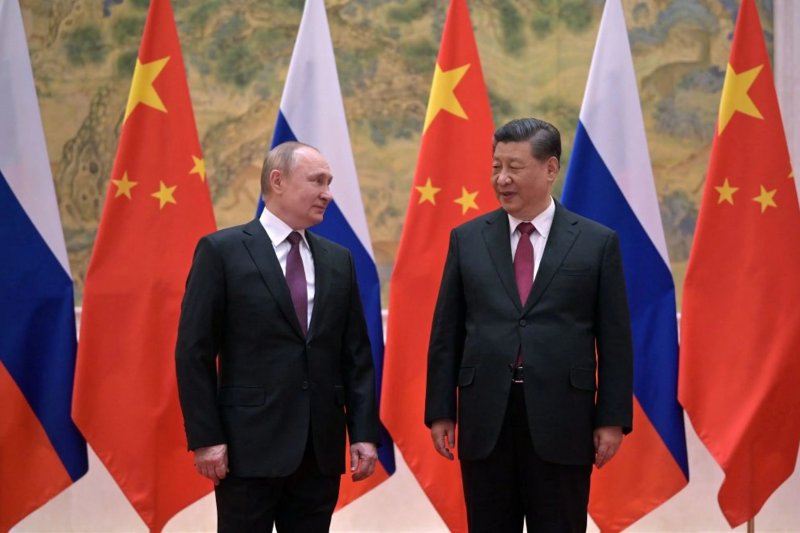
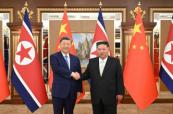
Russian President Vladimir Putin’s visit to China on May 19–20 has become one of the key international events of the week. Formally, it is about continuing the strategic dialogue between Moscow and Beijing. In political terms, however, the trip goes far beyond routine bilateral diplomacy. It comes at a time when global politics is once again entering a rigid triangular phase: the United States, China and Russia are trying to redefine the limits of influence, economic dependence and political maneuvering.
It is especially important that Putin arrived in China shortly after Donald Trump’s visit. This makes his talks with Chinese President Xi Jinping not only a Russia-China event, but also part of a much larger game over the future of the global order. According to Reuters, this is Putin’s 25th visit to China, while the meeting itself comes as Beijing seeks to present itself as a stable global player following its contacts with Washington.
For Moscow, this visit carries special significance. Since the start of the war in Ukraine, Russia has found itself under intense Western pressure, sanctions, technological restrictions and a sharp narrowing of economic opportunities in the European direction. In this situation, China has become not merely an important partner for Russia, but effectively its main external economic window. Russian oil, gas, coal, metals, food products and new logistics routes have all been gradually redirected eastward. If Moscow once tried to balance between Europe and Asia, that balance has now largely been lost. China has become the central market on which Russia is increasingly dependent.
RECOMMENDED STORIES
Yet this is precisely where the main paradox of today’s relationship lies. In their public rhetoric, Moscow and Beijing speak of an equal strategic partnership, a multipolar world and resistance to Western pressure. But in economic reality, the balance of power is gradually shifting in China’s favor. Russia needs the Chinese market, Chinese technologies, Chinese industrial goods, Chinese financial mechanisms and China’s diplomatic support. Beijing, for its part, treats the Russian track pragmatically: it receives energy resources, expands its influence in Eurasia, strengthens its hand in negotiations with the West, but at the same time, avoids going too far in order not to expose itself to a direct blow from secondary sanctions.
This is why Putin’s visit to China should not be seen as a meeting between two fully synchronized allies. It is a meeting between two powers that need each other, but have different levels of capability and different strategic horizons. For Russia, China is the main partner in its confrontation with the West. For China, Russia is an important, but far from exclusive, element of its global strategy. Beijing is simultaneously talking to Moscow, bargaining with Washington, strengthening ties with the Global South, developing relations with Europe where possible, and trying to preserve access to global markets.
Energy is undoubtedly one of the central topics of the talks. After the sharp deterioration of relations with Europe, Russia began redirecting more of its raw material flows toward China and India. For Russia, this is a matter of survival for its export model. For China, it is an opportunity to secure resources on favorable terms and strengthen its own energy security. Energy remains the foundation on which a significant part of the Russia-China rapprochement is built.
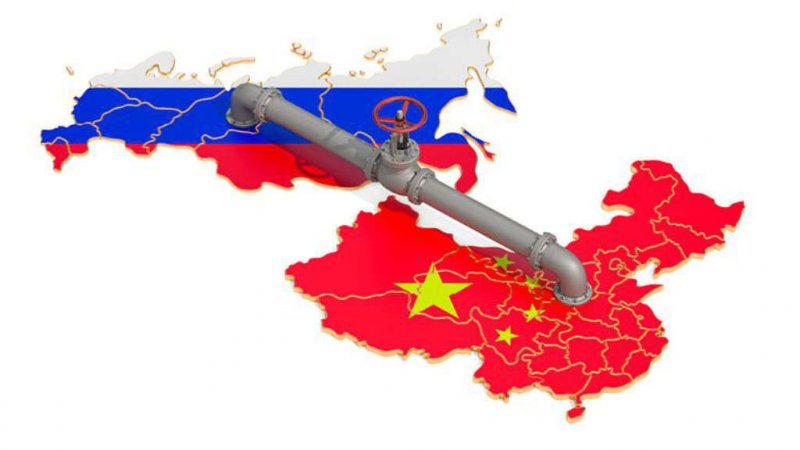
The Power of Siberia 2 gas pipeline occupies a special place in this context. The route is expected to run from Russia to China through Mongolia and could potentially become one of the largest energy projects in Eurasia. Reuters has reported that the project could supply up to 50 billion cubic meters of gas per year, while the Kremlin has serious expectations for Putin’s trip to China, including discussions on major economic and energy issues.
But here, too, the asymmetry is clear. Russia wants to secure new long-term supply routes as quickly as possible in order to compensate for the loss of the European market. China, however, is in no hurry. Beijing understands that it holds the stronger negotiating position and can push for the most favorable price, flexible terms and additional infrastructure advantages. For Moscow, Power of Siberia 2 is a strategic necessity. For Beijing, it is one option among several for diversifying energy supplies.
Trade between Russia and China has become one of the clearest indicators of how deeply the geo-economic map of Eurasia has changed since the beginning of the war in Ukraine. Just a few years ago, bilateral trade turnover was significantly below today’s levels. By 2024, however, it had reached a historic high. According to Chinese customs data cited by Reuters, trade between Russia and China reached a record 1.74 trillion yuan in 2024, or around $244.8 billion. In yuan terms, that represented a 2.9% increase compared with 2023.
These figures matter not only in themselves. They show that Russia and China have created a powerful economic link in a short period of time — one that has become a response to Western sanctions pressure. Chinese goods have occupied a vast space in the Russian market, from cars and electronics to industrial equipment, household appliances, machine tools and components. After many Western brands left Russia, it was Chinese companies that filled much of the vacuum.
However, 2025 showed that this growth is not unlimited. According to China’s General Administration of Customs, trade between Russia and China fell by 6.9% in 2025 to $228.1 billion. This was the first notable decline after several years of rapid expansion. The reasons were linked not only to the broader economic environment, but also to falling Russian demand for Chinese cars, payment difficulties and a decline in the value of Russian energy exports due to changes in price conditions.
Nevertheless, the start of 2026 showed a recovery in momentum. In January–March 2026, trade between Russia and China rose by 14.8% year-on-year to $61.25 billion. Chinese exports to Russia during that period increased by 22.1% to $27.66 billion. Even fresher data for January–April 2026 show growth of 19.7%, reaching $85.24 billion. This means that after the correction of 2025, the economic link between Moscow and Beijing not only survived, but began gaining momentum again.
At the same time, the structure of Russia-China trade still reflects a clear asymmetry. Russia mainly supplies China with raw materials — oil, gas, coal, metals, timber and agricultural products. China, in turn, supplies Russia with cars, electronics, industrial equipment, machinery, household appliances, components and consumer goods. In other words, Russia is increasingly acting as a supplier of resources and a sales market, while China is acting as the industrial and technological base. This does not destroy the partnership, but it does make it unequal.
The political dimension of the visit is no less important. Ahead of the trip, Putin said that Russia and China were ready to support each other on issues related to the protection of sovereignty and national unity. Reuters reported that the Russian leader described relations between the two countries as having reached an “unprecedented level” of trust and mutual understanding. For Moscow, such wording has direct significance in the context of Ukraine, sanctions and Western pressure. For Beijing, it resonates with Taiwan, technological confrontation with the United States and American policy in the Indo-Pacific region.
Yet China continues to play a more cautious game on Ukraine. Beijing has not joined Western sanctions against Russia, has not condemned Moscow in the form demanded by the United States and Europe, and has continued economic cooperation. At the same time, China officially tries to preserve the image of a neutral player that supports negotiations and a political settlement. The West, especially the United States, has repeatedly argued that China is providing Russia with economic and technological support, including dual-use goods. Beijing, for its part, rejects accusations that it is supplying lethal weapons.
For Xi Jinping, talks with Putin after Trump’s visit are an opportunity to demonstrate that China does not intend to choose between Washington and Moscow according to someone else’s rules. Beijing wants to show that it is capable of maintaining dialogue with the United States while deepening its partnership with Russia. This is the essence of China’s balancing model: not becoming a junior partner of any camp, not allowing full dependence on the West, but also not turning itself into a hostage of Russia’s confrontation.
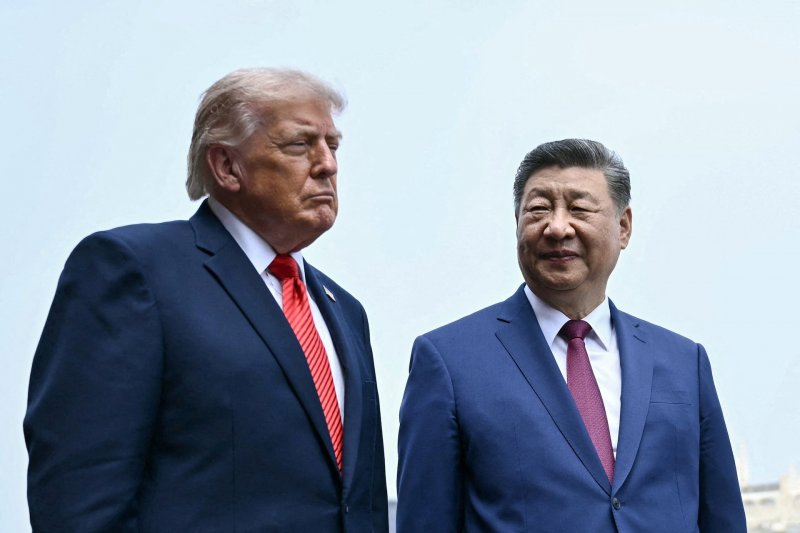
The United States, meanwhile, is watching these contacts closely. For Washington, the Russia-China rapprochement remains one of the main strategic challenges. If Russia provides China with a resource base, military experience and political support at the UN Security Council, China provides Russia with a market, technologies, diplomatic cover and an economic lifeline. Together, they do not form a classic military alliance, but they create a stable anti-Western coordination across many areas. That is what worries the United States most.
At the same time, China has its own limitations. Beijing is not interested in a complete collapse of relations with Europe and the United States, because the Chinese economy still depends on exports, technology, investment and global markets. China can support Russia, but in a measured way. It can buy Russian oil and gas, but it will bargain over the price. It can speak about multipolarity, but it will not automatically assume all of Moscow’s risks. For Russia, therefore, this visit is not only a demonstration of friendship, but also an attempt to obtain more concrete commitments from China on energy, trade, finance, logistics and political support.
The main outcome of this trip will probably not lie in loud statements, but in how far Beijing is prepared to deepen practical cooperation with Moscow under pressure from the United States. Russia wants to show that it is not isolated. China wants to show that it is an independent center of power, capable of receiving both Trump and Putin without changing its strategic line.
But behind the outward display of unity lies a more complex reality. Moscow needs Beijing more and more. Beijing is using this dependence more and more actively in its own interests. And the longer Russia’s confrontation with the West continues, the more room for maneuver China gains. That is why Putin’s visit to China is not simply a meeting between two leaders. It is a reflection of a new balance of power, in which Russia is looking for support, China is expanding its influence, and the United States is trying to prevent the final formation of a Eurasian bloc capable of challenging Western dominance.


Similar news