Poland instead of Moscow: Magyar’s first visit strikes at Orbán’s legacy


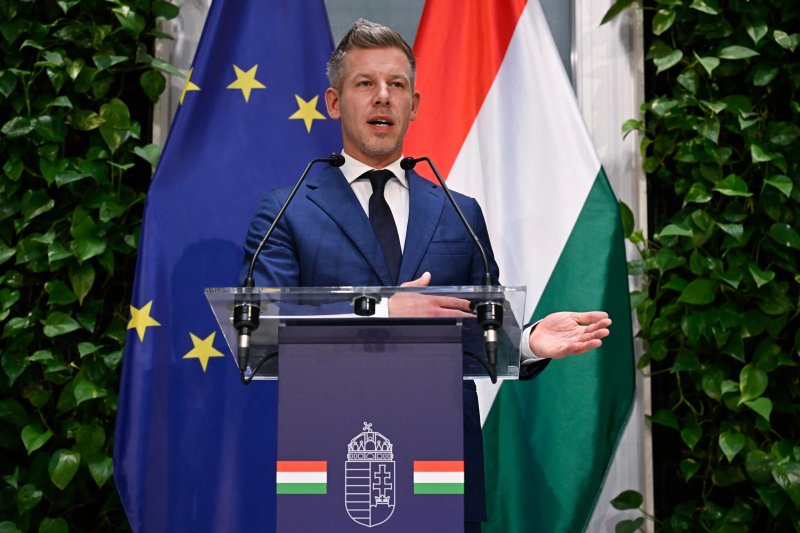
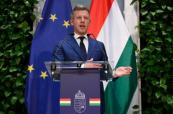
Hungary’s new Prime Minister Péter Magyar has chosen Poland for his first official foreign visit — a move that is far more than a matter of diplomatic protocol. The trip, which began on May 19, marks the first major foreign policy signal from Budapest after Magyar’s election victory over Viktor Orbán and the end of a 16-year political era that had reshaped Hungary’s relations with the European Union, Poland, Ukraine and Russia.
For years, Hungary under Orbán was seen in Brussels as the EU’s most difficult member state — a country that repeatedly clashed with European institutions over rule of law, media freedom, corruption, migration, sanctions against Russia and support for Ukraine. Budapest often blocked or delayed EU decisions, while Orbán maintained unusually close political and economic ties with Moscow even after Russia’s full-scale invasion of Ukraine. That policy deeply damaged Hungary’s relationship with Poland, once one of its closest regional partners.
Now Magyar is trying to send a different message: Hungary wants to return to the European mainstream, rebuild trust with Warsaw and Brussels, and reposition itself as a constructive Central European player.
RECOMMENDED STORIES
According to Reuters, Magyar’s two-day visit includes Kraków, Warsaw and Gdańsk. He is expected to meet Polish Prime Minister Donald Tusk and President Karol Nawrocki. The agenda includes relations with the EU, support for Ukraine, energy cooperation, transport infrastructure and Hungary’s efforts to unlock frozen European funds.
The symbolism of the trip is clear. By choosing Poland before Brussels, Vienna or Berlin, Magyar is pointing to the Polish experience as a possible model for Hungary. Donald Tusk also returned to power after years of confrontation between Warsaw and Brussels under the previous conservative government. Since then, Poland has worked to repair its relations with the EU, restore credibility in European institutions and unlock access to funds that had been frozen over rule-of-law concerns.
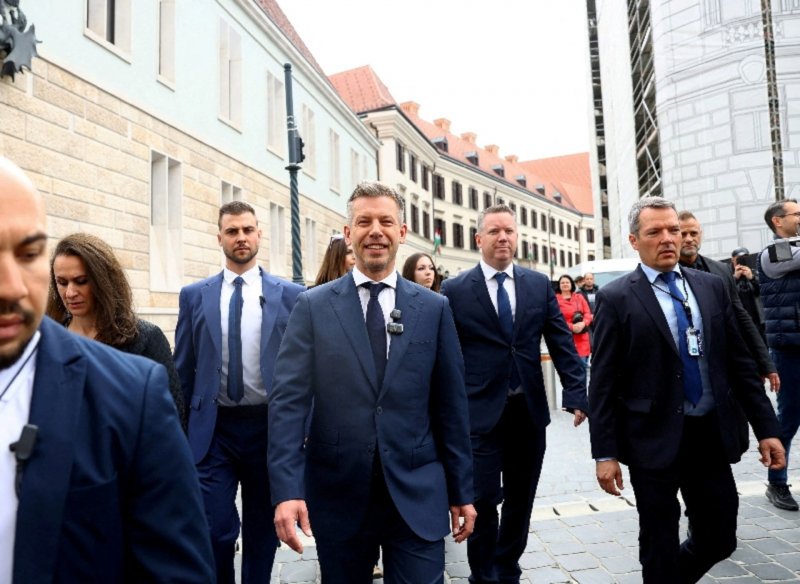
For Magyar, this experience is politically useful. Hungary faces a similar challenge, but with even higher stakes. Reuters reported that Budapest has started a new round of talks with the European Commission to unlock €10.4 billion in post-pandemic recovery funds. Magyar has said his government needs to secure these funds before the August 31 deadline, as Hungary faces a high budget deficit and weak economic growth.
This financial issue is central to the new government’s strategy. For years, EU funds were one of the main pressure points in the relationship between Brussels and Budapest. The European Commission froze large amounts of funding over concerns about corruption, judicial independence and the misuse of public money. Magyar came to power promising an anti-corruption drive, institutional reform and a break with the state-capture model associated with Orbán’s rule.
His visit to Poland is therefore not only about foreign policy. It is also about domestic transformation. Magyar wants to show Hungarian society, European partners and financial markets that his government is capable of restoring confidence quickly. In this sense, Warsaw is not just a diplomatic destination. It is a political signal.
The new Hungarian prime minister has also made clear that he wants to dismantle parts of Orbán’s institutional legacy. AP reported that Magyar’s center-right Tisza party won a two-thirds parliamentary majority, giving him broad power to reform public institutions, the judiciary and state media. He has called for the resignation of key officials seen as Orbán allies and has pledged to investigate financial abuses from the previous era.
This is where the comparison with Poland becomes especially important. Tusk has faced serious obstacles in reversing the legacy of the previous Law and Justice government, particularly because of resistance from institutions filled with loyalists of the former ruling party. Magyar, by contrast, enters office with a stronger parliamentary mandate. But that also creates a risk: the new government must avoid replacing one dominant political system with another. If Magyar wants to present himself as a democratic reformer, his reforms must be fast but also legally careful.
The Ukrainian question is another major part of this visit. Under Orbán, Hungary was often accused by European partners of weakening the EU’s united front against Russia. Budapest criticized sanctions, blocked parts of EU assistance to Kyiv, and used the issue of the Hungarian minority in Ukraine’s Zakarpattia region as a reason to obstruct Ukraine’s Euro-Atlantic path.
Magyar is now trying to change that tone. AP reported that Hungary and Ukraine have agreed to begin consultations on the rights of the Hungarian minority in Ukraine, a step that could help ease years of tension between Budapest and Kyiv. Hungarian Foreign Minister Anita Orbán, who is not related to Viktor Orbán, said expert-level negotiations would begin soon, while Ukraine’s foreign minister expressed readiness to open a new chapter in relations.
This does not mean Hungary will immediately become one of Ukraine’s strongest supporters. Magyar will still have to balance domestic opinion, economic concerns and national minority issues. But the political direction is changing. Budapest no longer wants to be seen as the EU capital closest to Moscow. Instead, it is trying to re-enter the Central European consensus, where Poland has played a leading role in supporting Ukraine and warning against Russian expansionism.
Energy is another key dimension of the Poland visit. Hungary remains heavily dependent on Russian energy, especially gas and oil. Reuters reported that Magyar’s agenda includes cooperation aimed at reducing dependence on Russian energy by 2035. One of the issues under discussion is possible Hungarian access to U.S. liquefied natural gas through Poland’s planned Gdańsk terminal.
This point is extremely important. Energy dependence has been one of the main reasons why Orbán’s Hungary resisted a tougher line on Russia. If Magyar wants to change Hungary’s foreign policy, he must also change the country’s energy structure. Poland could become part of that transformation by helping Hungary diversify routes and sources of supply. In practical terms, this may involve LNG, regional interconnectors, rail links, electricity cooperation and EU-funded infrastructure projects.
The infrastructure agenda also has broader geopolitical meaning. Magyar’s visit to Kraków, Warsaw and Gdańsk underlines his interest in regional connectivity. Better transport links between Hungary and Poland could strengthen the north-south axis in Central Europe, connecting the Baltic Sea, Central Europe and the Balkans. This fits into wider European discussions about resilience, supply chains, military mobility and energy security.
The political contrast with Orbán could hardly be sharper. Orbán built his image on sovereignty, resistance to Brussels and pragmatic ties with Moscow and Beijing. Magyar is trying to build his image on European reintegration, anti-corruption reform and regional cooperation. Orbán often treated Poland under Tusk as an ideological opponent. Magyar is treating Poland as a partner and model.
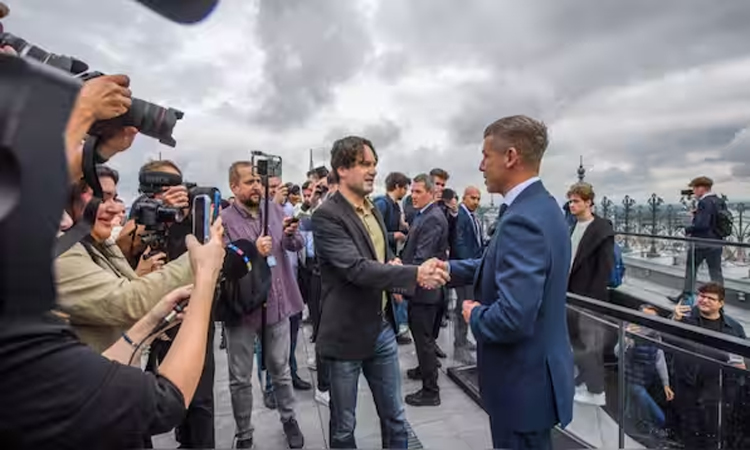
Donald Tusk, for his part, has already framed Magyar’s rise as part of a broader European trend. After the Hungarian election, Tusk said Europe was not doomed to authoritarian and corrupt governments, adding that the region had seen political change in Warsaw, Bucharest, Chisinau and now Budapest. This statement can now be read as the political background to Magyar’s visit.
For the EU, the visit is also significant. A pro-European shift in Hungary would change the internal balance of the Union. For years, Brussels had to deal with a Hungary that often blocked consensus on Ukraine, sanctions, migration and rule-of-law issues. If Magyar succeeds in turning Hungary into a cooperative member state, the EU could gain a more unified position on Russia and enlargement.
However, the transition will not be easy. Hungary’s economy is fragile, the budget deficit is high, parts of the state apparatus remain influenced by the old system, and Orbán’s political network has not disappeared. Magyar may have won power, but he now has to prove that he can govern, reform and deliver results quickly. The release of EU funds will be one of the first major tests. So will relations with Ukraine, energy diversification and the restructuring of state institutions.
That is why his first foreign visit matters so much. It shows where the new Hungarian government wants to belong. Not between Brussels and Moscow. Not as a spoiler inside the EU. Not as an isolated Central European state playing different powers against each other. Magyar is signaling that Hungary wants to return to the European center, and he has chosen Poland as the first stage of that return.
The message from this visit is clear: Budapest is trying to reset its foreign policy, rebuild trust with Warsaw, unlock its European future and move beyond Orbán’s era of permanent confrontation with Brussels. Whether Magyar can succeed will depend not only on speeches and symbolism, but on reforms, institutions and money. But the direction has already changed. Hungary’s new foreign policy begins in Poland, and Europe is watching closely.
By Murad Samedov


Similar news