The Karabakh vacations of the Minsk Group
- 18 May 2026 13:12
- 18 May 2026 13:13
- 1059399
- Analytics
-
Share
https://news.az/news/the-karabakh-vacations-of-the-minsk-group
Copied
In March 2021, Richard Hoagland, who at the time served as the acting US co-chair of the OSCE Minsk Group, published an article on the website of the International Conflict Resolution Center reflecting on the fate of the group, its role, and its relevance.
At that moment, the American diplomat could hardly have known that Russian peacekeepers would leave Azerbaijan a year earlier than scheduled, that the Minsk Group would eventually be dissolved, and that Azerbaijan would fully restore its sovereignty. Nevertheless, Hoagland reached one central conclusion: the OSCE Minsk Group had achieved nothing.
It failed to produce results for many reasons. One was the completely opposing positions of the conflicting parties, as neither Baku nor Yerevan was willing to make concessions. Another was the role of external actors interested in prolonging the conflict. Hoagland revealed details that had not previously been discussed publicly, particularly regarding Russia’s position, arguing that Moscow merely created the appearance of mediation while in reality benefiting from the continuation of the conflict. The same, however, could also be said of the other co-chair countries.

Source: Trend
Four months after the end of the war, the American diplomat was still searching for an answer to whether the Minsk Group would retain any role after the events of 2020. The three global powers had been unable to bring the conflict to an end. Their activity largely consisted of visits to the region, meetings with leaders, and endless discussions of issues for which no compromise existed. Armenia did not want to return the occupied territories and insisted on “independence” for Karabakh, while Azerbaijan had no intention of accepting the consequences of occupation or surrendering its territories. Hoagland admitted that he had long concluded the conflict had only a military solution.
Most likely, the other co-chairs shared the same understanding, but they could not say so openly. Instead, Azerbaijan spent a quarter of a century hearing that there was no military solution. “There is no military solution to this conflict,” international mediators repeatedly told Baku, while many privately understood that only war could ultimately resolve the issue.
The Minsk Group was created to prevent another war and to limit Baku’s ability to resolve the issue in accordance with the three UN Security Council resolutions. Stretching the so-called peace process indefinitely benefited everyone except Azerbaijan. Armenia gained time to consolidate the status quo and hoped Baku would eventually make concessions.
And what did the mediators themselves gain? One example was Andrzej Kasprzyk, the Polish diplomat who served as the personal representative of the OSCE Chairperson-in-Office on Karabakh from 1996. Kasprzyk occupied a highly comfortable position, and one can imagine how reluctant he must have been to part with it once Baku compelled Yerevan to appeal to the OSCE regarding the dissolution of the Minsk Group. Years of highly paid inactivity, official visits to the region, and the privileges associated with diplomatic status had come to an end.
Hoagland described this reality in his article while attempting to remain restrained and diplomatic.
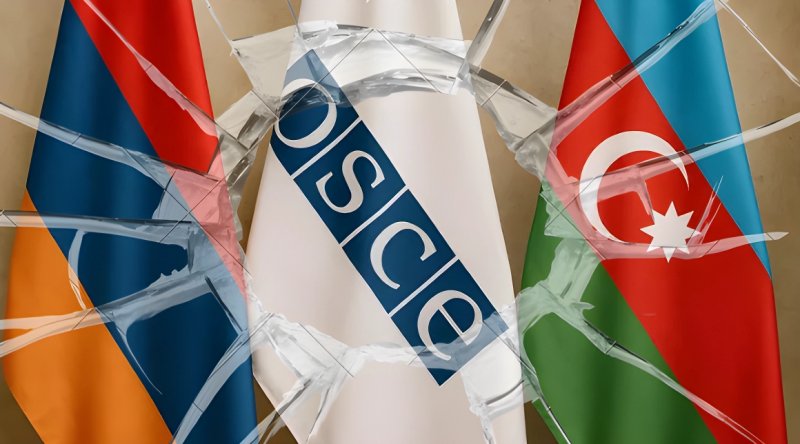
“We stayed in five-star hotels where we were usually given executive floor suites that provided access to separate dining rooms and bars free of charge. We always searched for the best restaurants in the cities where we travelled. We lived well, displaying the OSCE flag and reminding Baku and Yerevan of the existence of the Minsk Group. But frankly speaking, very, very little was achieved,” the American diplomat wrote.
The Minsk Group co-chairs enjoyed all the privileges provided by diplomatic status and the OSCE mandate. Everything was conducted at the highest possible level, and this continued for 25 years. While benefiting from these privileges, the diplomats maintained the appearance of searching for a peaceful settlement to the conflict, although many understood that such a solution was unlikely under the existing circumstances. Drinking Armenian cognac and attending lavish receptions in occupied Khankendi, they appeared largely unconcerned that their visits were producing no tangible progress.
On the contrary, the tacit support of the co-chair countries encouraged Armenia to harden its position further, making war increasingly inevitable. International mediators who were formally tasked with bringing peace ultimately presided over a process that failed to prevent conflict. How could the process have led to any other outcome if the roadmap developed within the framework of the OSCE Minsk Group envisaged “self-determination” for Armenians as the final resolution of the conflict?
:max_bytes(150000):strip_icc()/american-and-french-flag-pair-on-a-desk-over-defocused-background-913980748-5c703a8ccff47e0001b1e2f2.jpg)
Source: thoughtco
In his article, Hoagland emphasised Russia’s role, but his own country also made considerable efforts that contributed to the Armenian occupation lasting for almost three decades. This is without even mentioning the role of France. If Russia was guided by its own geopolitical interests in preserving the conflict, the policies of the United States and France were heavily influenced by Armenian diaspora organisations and lobbying groups.
As a result, throughout the years of negotiations, the Minsk Group co-chairs largely focused on pushing Baku towards compromises and acceptance of Armenian control over territories that Azerbaijan regarded as its historic lands.
The seven surrounding districts occupied by Armenian forces were effectively treated as bargaining chips, and even then not all of them were envisaged for return, with Kalbajar and Lachin excluded. Azerbaijan could not accept such an arrangement because its objective was the restoration of its territorial integrity, while granting certain rights and preferences to the Armenian population within Azerbaijan and nothing more. Any notion of independence was entirely unacceptable to Baku.
The 2020 war shattered the plans of both Armenia and the Minsk Group. For a time, this "cartel" still attempted to preserve its role, but the events of September 2023 fundamentally changed the situation, and the very subject of the dispute effectively ceased to exist. Azerbaijan abolished the so-called “Nagorno-Karabakh” administrative entity, removed illegal armed formations, and raised its flag over Khankendi. The local Armenian population, unwilling to live under Azerbaijani jurisdiction, voluntarily relocated to Armenia.
By the time the Second Karabakh War began, Richard Hoagland was no longer serving as the US co-chair of the Minsk Group. Reflecting on the events and the fate of the institution as an outside observer, he was able to openly acknowledge that even during his tenure he had seen no realistic solution to the conflict other than a military one. What could not previously be said publicly could now be stated openly.
In December 2020, the Minsk Group co-chairs, alarmed by the prospect of losing their long-enjoyed privileges and relevance, arrived in Baku. President Ilham Aliyev received them coldly and remarked:
“I did not invite the Minsk Group to visit. But when I was informed that the Minsk Group wanted to come, I said: let them come, I do not object. Perhaps they have something to tell me. If you want to say it on camera, then please do so. If you do not want to, then I will tell them to leave. As you wish. Please, I am listening to you.”
Hoagland was fortunate not to be serving as co-chair at that moment. The diplomats representing three global powers — and, by extension, the powers themselves — were publicly rebuked by a small country whose fate they had sought to manage for almost three decades.
Baku gave the Minsk Group no opportunity to preserve its role, reinvent itself, or adapt to the new reality. The co-chairs were no longer part of the process. Although Yerevan attempted to keep the Minsk Group alive, it lacked the political leverage to do so. Following Azerbaijan’s anti-terrorist operation in September 2023, Armenia effectively accepted the new reality and, together with Azerbaijan, appealed to the OSCE to dissolve the Minsk Group in light of the conflict’s end. On 1 September 2025, the OSCE Ministerial Council adopted a decision to close all institutions connected with the Minsk process on the Karabakh settlement.
Undoubtedly, Mr Kasprzyk and others involved in the process are likely to miss their long years of diplomatic engagement around Karabakh — a period critics argue coincided with the effective paralysis of international law on the conflict.
Undoubtedly, Mr Kasprzyk and the others will greatly miss their Karabakh vacations, during which they effectively buried international law.