Taissiya Marmontova: “$4.2 billion in trade shows the Middle Corridor’s rapid growth” – INTERVIEW


By Maria Zhigadlo
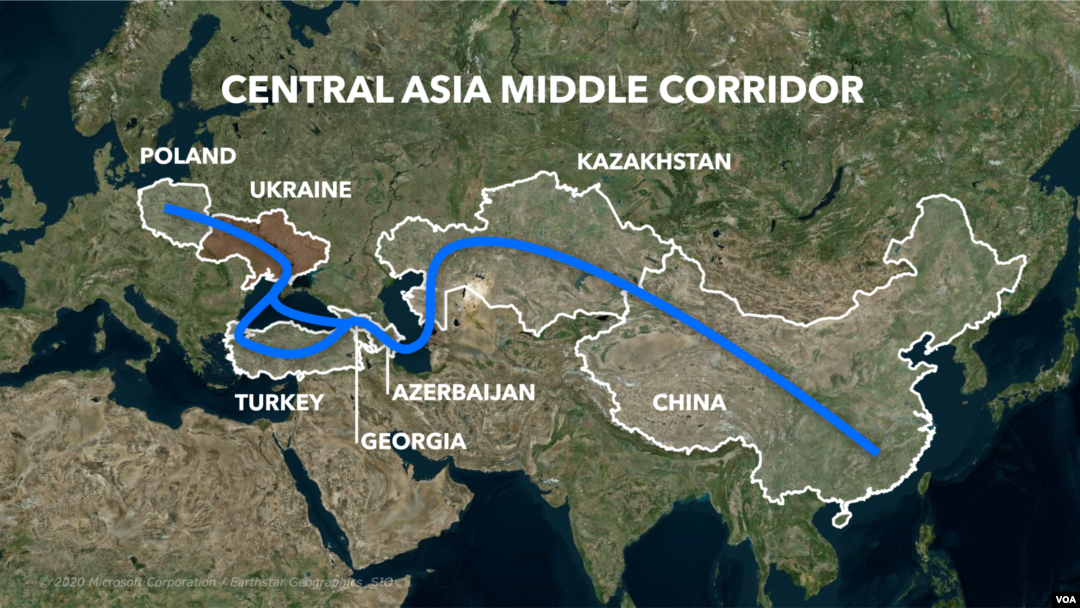
Amid shifting global trade dynamics and geopolitical uncertainty, alternative transport routes are gaining increasing attention. The Middle Corridor, a trans-Eurasian transport route connecting China with Europe via Central Asia, the Caspian Sea, the Caucasus, and Türkiye, has emerged as a crucial alternative to the Northern and Southern corridors. As global players seek more diversified and resilient trade routes, the strategic importance of the Middle Corridor continues to grow.
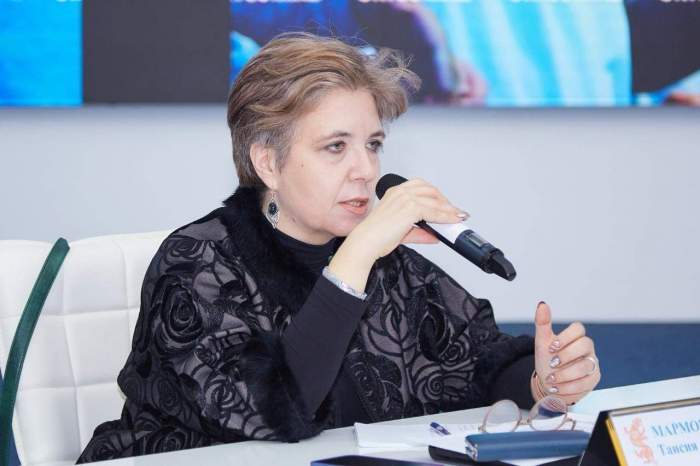
To explore the prospects and challenges of this ambitious project, News.Az spoke with Taissiya Marmontova, PhD in History and Scientific Director of the Center for Analytical Research "Eurasian Monitoring", Associate Professor "Astana" International University. In this exclusive interview, she discusses the corridor’s development, the key beneficiaries of its expansion, and the geopolitical and economic implications of its rise as a major trade artery.
- How do you assess the development of the Middle Corridor project, and which Eurasian countries benefit the most from its implementation?
- As for the prospects of the Middle Corridor, I would express cautious optimism. I would not claim that this route will take a decisive place in Eurasian logistics in the near future, but undoubtedly, in the face of instability and challenges related to sanctions barriers, it could become a viable alternative.
This route may also prove beneficial for certain Chinese goods. Kazakhstan will undoubtedly direct some of its export flows through this corridor, as it is emerging as one of Eurasia's largest logistics hubs.
However, competing with the North-South Corridor and the Belt and Road Initiative (BRI) routes is practically impossible. Nevertheless, considering its logistical advantages, transportation costs, and overall economic feasibility, the Middle Corridor can be viewed as one of the promising routes, including for Kazakhstan.
What can be said about the Middle Corridor? It is a promising route, but it remains an alternative to the Belt and Road Initiative projects and the North-South Corridor. Why an alternative? Simply look at the cargo volumes passing through this route. So far, they are incomparable to the volumes transported through Chinese transport corridors or even those transiting through Russia, despite the pressure of sanctions.
Although discussions about the Middle Corridor began around ten years ago, it is in the past two to three years—amid increasing global economic instability and worsening geopolitical conditions—that interest in alternative supply routes has grown significantly.
The Middle Corridor is gaining importance as a strategic route connecting East and West. Amid global logistics restructuring, this transport corridor is becoming an important alternative to traditional routes that face geopolitical and economic challenges. Which countries and players benefit the most from its development?
Kazakhstan plays a central role in the Middle Corridor, as key transport routes pass through its territory. Infrastructure development and railway modernization make the country one of Eurasia’s main logistics hubs. Kazakhstan is strengthening its role as a bridge between China and Europe, increasing transit volumes and creating new economic opportunities.

Azerbaijan is also a key player in the development of the Middle Corridor. Its geographical position allows the country to act as a link between Central Asia and Europe. The Baku port, railway networks, and modern logistics centers make Azerbaijan a crucial node in the region’s transport system. The country is actively investing in infrastructure development to enhance its competitiveness in the transit transport market.
Georgia plays an important role in the Middle Corridor thanks to its ports and transport infrastructure. The ports of Batumi and Poti provide maritime access, linking transit routes to the Black Sea and further into Europe. Investments in railway connections and port modernization strengthen Georgia’s position as a transit hub.
Türkiye has become a critically important link in the Middle Corridor, providing a connection to European markets. The country's geographical location makes it an integral part of the route, allowing cargo from China and Central Asia to reach Europe faster. Türkiye is actively developing its transport network, increasing the capacity of its railways and ports.
The Middle Corridor is also attracting growing interest from global players such as the European Union and China. For China, this route is becoming an important alternative to traditional transport pathways, especially given logistics challenges through the Panama Canal and instability in the Black Sea. Meanwhile, Europe is keen to diversify supply routes, increasing the significance of the Middle Corridor as a reliable and efficient freight corridor.
However, it is important to consider that land routes will always be more expensive than maritime ones, no matter how much we try to reduce their costs. Nevertheless, Kazakhstan clearly understands its benefits: in 2023, an international company managing Middle Corridor pathways was registered at the Astana International Financial Centre (AIFC), and it is expected to become fully operational by the end of 2024.
The Caucasian states also benefit from this corridor, as the diversification of transport flows strengthens their economic stability. Meanwhile, China finds new delivery routes, and Europe addresses the logistical challenges arising from 15 already implemented sanction packages, with a 16th currently in preparation.

- How do you assess the prospects for expanding the Middle Corridor through new investments and the involvement of major international players? Could it become a key supply route between Asia and Europe given the instability of traditional trade routes?
- Moreover, I would add that there are certainly development prospects for the Middle Corridor. According to forecasts by the European Bank for Reconstruction and Development (EBRD), by 2040, about 10–11 million tons of cargo will be transported through this route.
In this context, Kazakhstan gains significant advantages. It is not just a transit link but also an active participant in supply chains, as it has its own export products. These are primarily raw materials and low-processed goods, but they remain in demand in Europe, especially as some countries have stopped importing similar products from Russia. As the saying goes, “a holy place is never empty,” and Kazakhstan has something to offer its partners if they reach out with the appropriate requests.
Additionally, Türkiye is also actively developing its infrastructure. For example, modernization work is underway on the Baku-Tbilisi-Kars railway, as well as extensive projects in the port of Poti. These are just a few examples of the efforts being made to improve logistics and turn the Middle Corridor into a convenient and efficient supply route.
The development of the Middle Corridor is supported by concrete figures. Last year, the volume of shipments through this route amounted to $4.2 billion, whereas just recently, it was only $2.76 billion. This clearly demonstrates the growth in cargo flow and the increasing demand for this route. Consequently, its use is beneficial for all participating countries.
- What role does Kazakhstan play in the development of the Middle Corridor, and what concrete steps is the country taking to improve the infrastructure and logistics of the route? What investment projects is Kazakhstan implementing to enhance the Middle Corridor’s transit potential? Are there plans to expand cooperation with other participating countries?
- Kazakhstan is actively working on infrastructure development, including modernizing facilities in the Caspian region to accommodate increasing transportation volumes. However, attention should be given to the role of European partners. They are undoubtedly interested in a convenient supply route but are reluctant to invest significant funds. Analyzing the composition of consortia and project participants reveals that Europe’s contribution is minimal—essentially, they offer only expensive loans.
As the saying goes, "you borrow someone else's money temporarily, but you give back your own forever." Therefore, it is worth considering the search for domestic resources or more affordable investments. Nevertheless, work on developing the corridor continues, the number of key logistics links is increasing, and consequently, the volume of goods flowing through it is also rising.
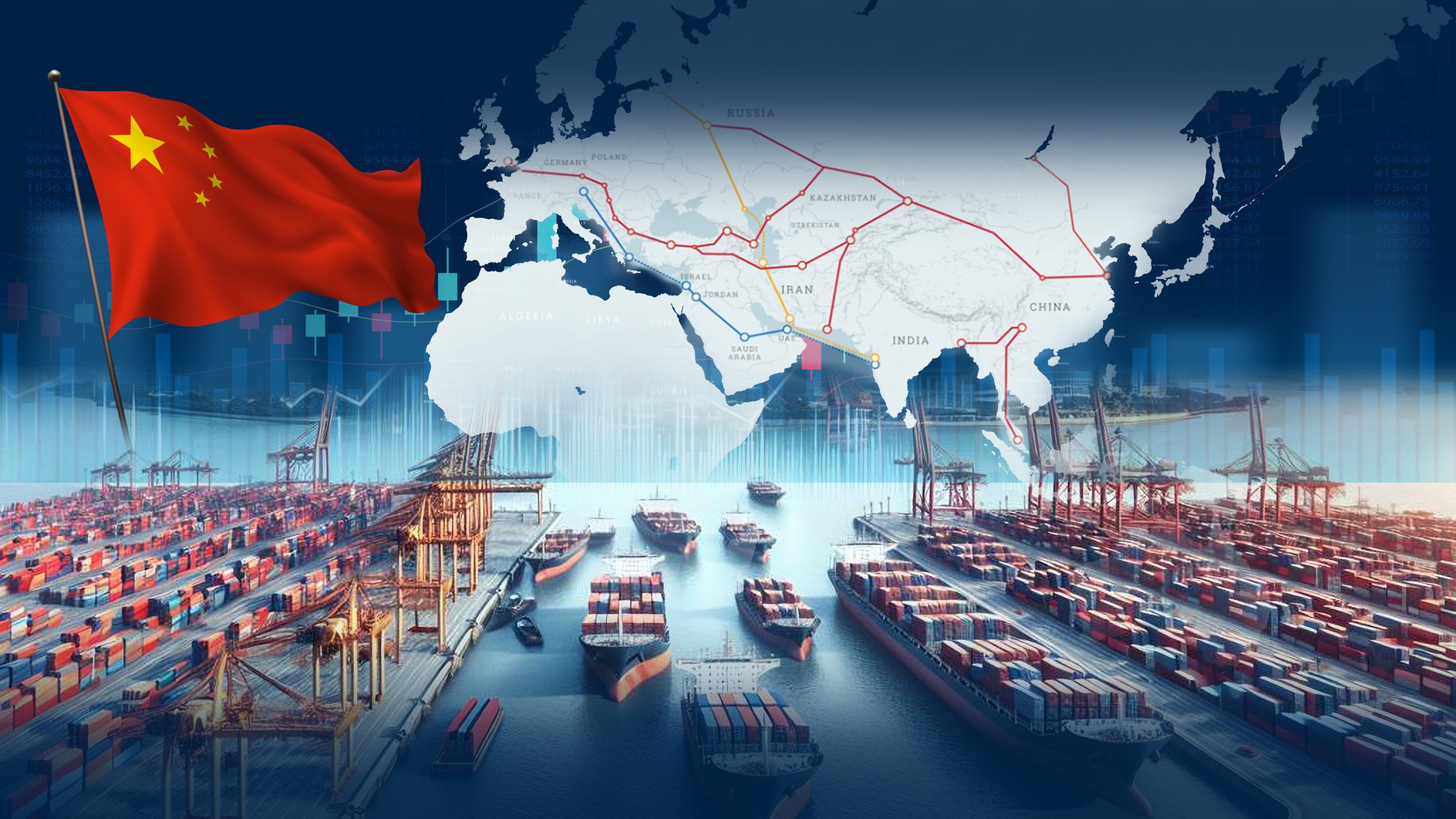
- What economic and strategic benefits can China gain from the development of the Middle Corridor? Could this route become a viable alternative to the Northern and Southern corridors in China’s trade strategy? How does the Middle Corridor fit into the Belt and Road Initiative? How interested is China in its development?
- China is actively interested in Türkiye’s railways. There are statistics confirming its interest, including participation in the modernization of Türkiye’s tourist railway projects. Additionally, Chinese trains are already present in Istanbul’s metro system.
Overall, China is open to cooperation and has concrete plans to engage with Türkiye. Why? Because this route is crucial for delivering goods to Europe via the Middle Corridor. What evidence supports China's interest? First, its investments in constructing a deep-water port in Georgia. Second, the launch of a railway project connecting China, Kyrgyzstan, and Uzbekistan.
All these factors indicate that China sees potential in the Middle Corridor’s development. In numerical terms, China is prepared to redirect up to 20% of its trade with the EU through this route. This explains the scale of its investments.
Even Turkish officials acknowledge that China is ready to invest around $60 billion in Türkiye’s railways. This primarily shows that China seeks to finance modern and efficient transport routes to make the Middle Corridor one of the key channels for delivering its goods to Western markets.
At the same time, publicly available data indicates that the condition of railway lines, including those used for tourism, could be problematic. Naturally, if large freight flows begin to pass through this route, any disruption or failure could lead to significant losses.
In general, the volume of Chinese investments in Türkiye’s infrastructure alone confirms that China is ready to engage with Türkiye and considers the Middle Corridor one of its alternatives. However, this does not mean that China intends to shift all its trade with Europe exclusively to this route.


Similar news