The Gaza games: Why the United Nations has failed again


The ongoing tragedy in Gaza has once again highlighted the inability of the United Nations to deliver meaningful solutions to one of the world’s most entrenched conflicts.
Efforts to resolve the Palestinian issue during the current landmark anniversary session of the UN General Assembly have ended in failure, dashing hopes for any breakthrough.
On September 23, a high-level meeting on the Palestinian problem took place at the UN headquarters in New York under the chairmanship of Donald Trump. The meeting brought together leaders of Türkiye, Qatar, Jordan, Pakistan, and Indonesia, as well as the foreign ministers of Egypt, Saudi Arabia, and the United Arab Emirates. Despite the high-profile and representative nature of this gathering, it produced no tangible results. The absence of the main “culprit” — Israel — was a glaring omission. Discussing the future of Gaza without Israel is as meaningless as trying to end the war in Ukraine without the participation of Russia.
Trump has publicly advocated for ending the war in Gaza and securing the release of hostages. However, he has simultaneously criticized European countries for their decisions to recognize a Palestinian state. According to media reports, in response to the moves by several European nations to recognize Palestine, the American leader is preparing to support the legalization of Israeli settlements in the West Bank. The Israeli leadership has gone even further, announcing its intention to fully annex Palestinian territories and categorically prevent the establishment of a Palestinian state.
According to The Times of Israel, on September 29, Israeli Prime Minister Benjamin Netanyahu plans to meet with Trump at the White House to discuss the issue of annexation directly. This indicates that the American president has essentially confirmed his position: in the Palestinian question, he stands firmly on the side of Israel and is ready to take tough measures to neutralize international pressure on Tel Aviv.
Yet, despite the United States’ continued dominance in global politics, analysts believe that Trump’s support alone may no longer be sufficient for Israel in today’s multipolar environment. The wave of recognitions of a Palestinian state is a vivid testament to this shift. In earlier times, European nations would never have dared to act against Washington’s wishes. For many years, the Israeli-Palestinian conflict remained a constant on the global agenda, with leading European states adhering to a common Western approach. Today, that consensus has fractured, revealing deep divisions within the West.
Source: www.un.org
As of now, 157 UN member states have recognized the State of Palestine, including the Vatican. On September 21, Canada, Australia, the United Kingdom, and Portugal announced their recognition. The very next day, France, Monaco, Luxembourg, Malta, and San Marino followed suit. Denmark and the Netherlands have also signaled their intention to recognize Palestine, but only under specific conditions: the release of Israeli hostages, the disarmament of Hamas and its exclusion from governance in Gaza, progress on reforms within the Palestinian Authority, and assurances of a future demilitarized Palestinian state.
Italian Prime Minister Giorgia Meloni made Rome’s position crystal clear. Italy will only recognize Palestine if two key conditions are met: the release of all Israeli hostages and the complete removal of Hamas representatives — a group designated as terrorist by both the United States and the European Union — from any position of authority. Speaking to journalists on the sidelines of the UN General Assembly in New York, Meloni, as cited by the Italian news agency ANSA, stressed that political pressure must be directed primarily at Hamas rather than Israel, since Hamas initiated the war and continues to obstruct its end by refusing to free hostages.
Significantly, Palestinian Authority President Mahmoud Abbas also came out against Hamas’s involvement in governing Gaza. The U.S. denied him a visa to attend the General Assembly in person, so he addressed the session via video link. Abbas declared that Hamas, which is recognized as a terrorist organization by both the United States and the EU, along with other armed groups, must lay down their weapons and submit to legitimate state authorities. Radio Free Europe/Radio Liberty quoted Abbas as saying: “Hamas will play no role in the governance of state institutions.”
Abbas took care to distance himself from the October 7, 2023 Hamas attack, the deadliest in Israel’s history. “These actions do not serve the interests of the Palestinian people and do not reflect their just struggle for freedom and independence,” he emphasized. At the same time, Abbas condemned Israel’s military operation in Gaza, calling it “one of the most horrific humanitarian tragedies of the 20th and 21st centuries.” It is worth noting that Hamas has controlled Gaza since 2007.
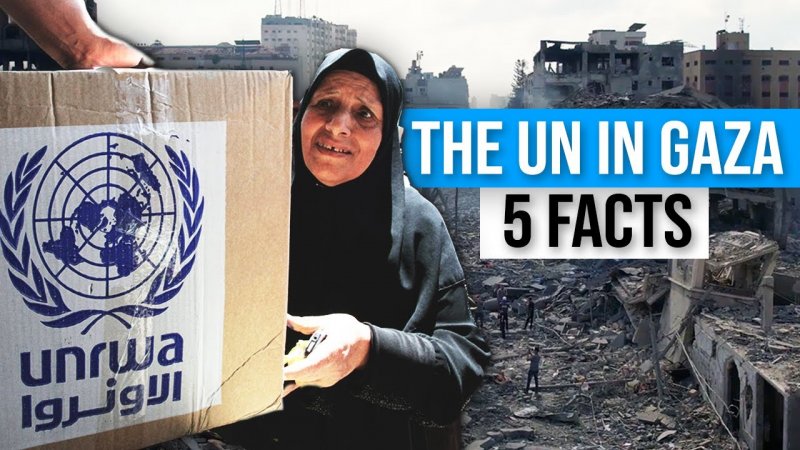
UN Secretary-General António Guterres, addressing a General Assembly session devoted to the Middle East, warned the international community that nearly two years after the October 7 terrorist attacks by Hamas and Israel’s devastating military response, the world is witnessing “one of the darkest chapters of the Israeli-Palestinian conflict.” Guterres stressed that nothing can justify collective punishment, starvation, or any form of ethnic cleansing.
According to analysts cited by the BBC, the UN conference and the Trump administration’s reaction signal the deepest rift in decades between Washington and its European allies over how to resolve the Middle East conflict. European leaders feel they have been left with no alternative, given the escalating crisis in Gaza. Israel has deployed a third division to the territory, and every day brings new Palestinian casualties. Hamas continues to hold nearly 50 hostages, many of whom are believed to be dead. Meanwhile, violence by settlers and the expansion of Israeli settlements in the West Bank continue unabated.
This lack of coordination between key international players has created an overwhelming sense of chaos. The world, as always, looks to Washington for decisive action, but expectations for the UN have collapsed. It has become clear to everyone that the UN is incapable of delivering a breakthrough.
U.S. Secretary of State Marco Rubio, speaking on Fox and Friends, bluntly stated that the UN “plays no role whatsoever” in resolving either the war in Ukraine or the conflict in Gaza. When asked about reports in the American press that Hamas had allegedly sent a letter to Donald Trump, Rubio’s response was deliberately vague: “Hamas did not send a letter to France, nor to any other country. Apparently, Hamas sent one to Trump. Because even a group as sinister as Hamas understands that only Trump has the real levers of influence and the potential to bring about a solution.”
Whether or not such a letter actually exists remains unclear. If no letter was sent, Rubio’s comments are reduced to pure political posturing. If a letter was indeed sent, why did the secretary of state use the word “apparently,” casting doubt on its authenticity?
This ambiguity perfectly captures the broader reality of today’s diplomacy. Around Gaza, there are far more geopolitical games than genuine efforts to change the situation. While leaders maneuver for political advantage, the suffering of millions of people continues. Gaza has become less a humanitarian tragedy and more a chessboard for global powers, with its people treated as mere pawns.
The world’s leaders keep playing their games. And Gaza continues to burn.
By Tural Heybatov


Similar news