The hidden agenda: Who's really behind the Trump-Zelensky conflict?


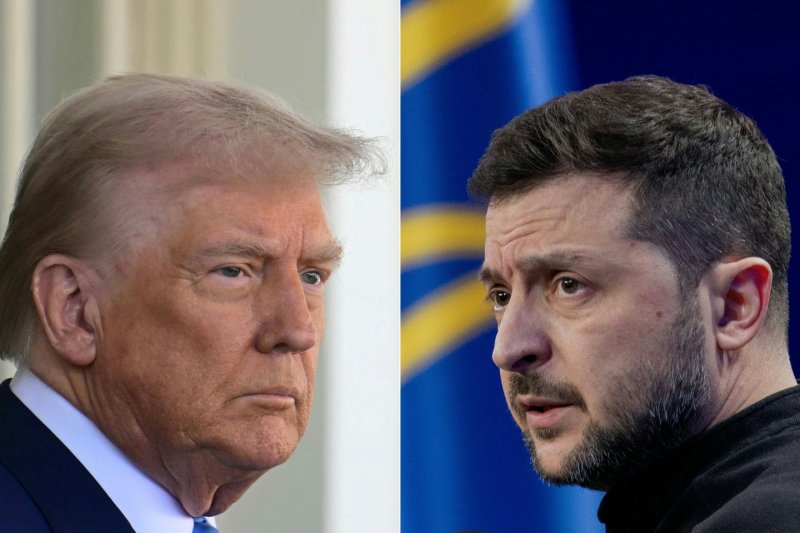
News.Az presents an exclusive interview with Pavel Klachkov, the Director of the branch of the Financial University under the Government of the Russian Federation. In this conversation, Klachkov offers a detailed analysis of the ongoing scandal involving U.S. President Donald Trump and Ukrainian President Volodymyr Zelensky, examining its impact on Ukraine's international standing and the broader geopolitical landscape.
Klachkov discusses the hidden dynamics behind the scandal, arguing that it reflects not just a bilateral conflict but a larger confrontation between Trump and globalist forces in Europe. He also explores the potential consequences for Ukraine if Zelensky refuses to engage in negotiations, warning of severe economic, political, and social repercussions. Furthermore, Klachkov outlines the leverage the United States could wield to compel Ukraine to the negotiating table, emphasizing Washington's ability to shift the balance of power in the region.

- How will the Trump-Zelensky scandal impact Ukraine's international standing?
- The scandal involving Trump and Zelensky significantly undermines Ukraine's international position. However, I would suggest looking at it from a different angle. Zelensky is not an independent figure, and it is no coincidence that he immediately rushed to London. This unplanned visit appears to be a return to his patrons.
Essentially, the scandal in the White House is not merely a conflict between Trump and Zelensky but a confrontation between Trump and the so-called globalists, who currently hold influence in London and represent a certain faction of the European Union. Trump deliberately humiliated and sidelined these forces through Zelensky's figure, and he did so with full awareness.
I am confident that Trump will continue to act methodically and decisively. Anyone who stands in his way, including Zelensky and those backing him, risks a great deal. In my view, their prospects look quite grim.

Source: Reuters
- What are the possible implications of the Trump-Zelensky scandal for conflict resolution prospects?
- The consequences of this scandal, I believe, should primarily be seen as a conflict between a part of the European Union and Trump. They attempted to use Zelensky as a tool to pressure Trump, pushing him toward a compromise. However, Trump has demonstrated that they currently lack sufficient leverage to influence him.
As a result, both the EU and those supporting Zelensky may face quite concrete measures — both economic and political. The United States clearly does not intend to make further concessions to either Zelensky or those who express solidarity with him.
Consequently, their positions will weaken, and, in due time, these forces may lose their influence. It is quite likely that power will slip from their hands.

Source: The Washington Post
- What consequences might Ukraine face if Zelensky refuses to negotiate?
- I believe that Zelensky will still attempt to resume negotiations, but now everything will depend on Trump — whether he agrees or not. However, more and more signs are emerging that Trump would prefer to see a completely different leader in Ukraine — someone more reasonable, adequate, and capable of engaging in rational dialogue rather than emotional exchanges.
Currently, there is a certain excitement in Ukraine over the idea that Zelensky was supposedly able to communicate with Trump on equal footing. However, in the long run — over six months to a year — if the Ukrainian side continues to ignore Trump's position, it could face extremely severe consequences, including military, economic, and social collapse.
- What tools might the U.S. use to force Zelensky to negotiate?
- The U.S. does not need to resort to any new tools of pressure — it is enough to simply turn off the existing ones. For example, disconnecting Starlink, as well as financial and military aid, which is already beginning to dwindle. Considering that the United States has invested hundreds of billions of dollars in Ukraine, it still has plenty of leverage.
In essence, Washington does not need to take any new actions — it is enough to simply stop doing what it has been doing. In that case, Ukraine is unlikely to see any negotiations: it will simply have to follow whatever Trump dictates.
Of course, for some time, Europe, which opposes Trump or attempts to do so, will likely continue to provide some support to Ukraine. However, this is unlikely to change the overall picture. Most likely, Trump will not take any special measures to force Zelensky to the negotiating table. On the contrary, he will probably tighten his policy until he achieves his goal.


Similar news