The high price of saving hostages


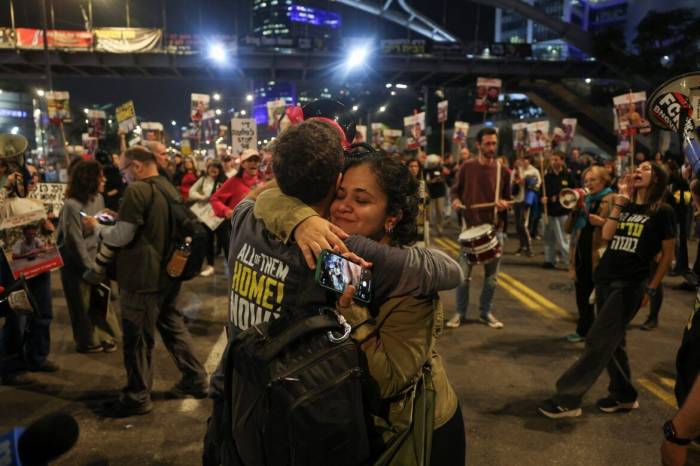
Supporters of Israeli hostages, who were kidnapped during the deadly Oct. 7 2023, attack by Hamas, react to a Gaza ceasefire deal as they attend a protest in Tel Aviv, Israel, Jan. 15, 2025, that was organized to demand a deal to bring every hostage
Editor's note: Roman Gurevich is an Ambassador of the World Jewish Agency "Sokhnut", Israeli political scientist and journalist. The article expresses the personal opinion of the author and may not coincide with the view of News.Az .
The announcement of an agreement involving Israel, the United States, Qatar, and representatives of Hamas to release hostages held in Gaza is a critical and emotionally charged development. This agreement, coming at a time of heightened tension and despair, represents both a moral imperative and a strategic gamble for Israel. The nation’s guiding principle has always been the sanctity of human life, but at what cost?The plight of the 98 hostages currently held by Hamas underscores the urgency of the situation. Among them are soldiers captured during their duty and civilians, including elderly individuals, children, and even a baby. These innocent lives, torn from their homes and families, now endure the harsh conditions of captivity. For some, the challenge is not only physical but psychological—an enduring trauma inflicted by their captors.
Winter's arrival intensifies the crisis. The cold, coupled with the uncertain and likely dire conditions in captivity, significantly reduces the hostages' chances of survival. For their families and for Israel as a nation, the clock is ticking.
Israel has always placed the safety and well-being of its citizens at the forefront of its national priorities. The country’s moral obligation to bring its people home is deeply ingrained in its identity and reflected in public opinion. The overwhelming majority of Israelis, irrespective of political affiliation, support the release of the hostages. This is not merely a political issue—it is a humanitarian one. The unity of the nation in this regard is a testament to its values.
However, achieving this goal has not been without obstacles. The political landscape in Israel is fraught with division, and the negotiation process has been marred by internal sabotage. Some government officials, prioritizing political agendas over national unity, have actively disrupted talks. One minister openly admitted to undermining negotiations six months ago and even vowed to do so again. Such actions highlight the complexity of the political environment and the challenges of prioritizing humanitarian needs over partisan politics.
The agreement demands a painful concession from Israel: the release of convicted terrorists, including individuals with Israeli blood on their hands. For many Israelis, this aspect of the deal is a bitter pill to swallow. These individuals, once freed, could potentially return to a life of violence, posing a renewed threat to Israel's security.
In some cases, released prisoners will be transferred to third countries willing to accept them, while others may return home, depending on the severity of their crimes. This echoes the 2006 Shalit deal, in which 1,027 prisoners were exchanged for a single soldier, Gilad Shalit. Among those released was Yahya Sinwar, who later rose to a leadership position in Hamas and became a central figure in orchestrating attacks against Israel.
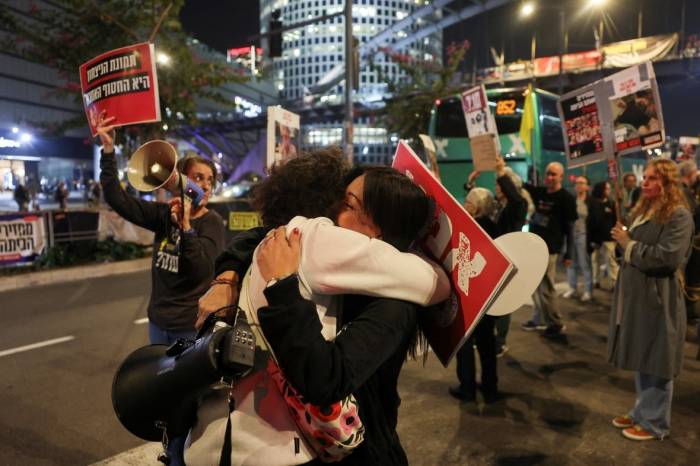
Supporters of Israeli hostages who were kidnapped during the deadly October 2023 attack led by Hamas react to news of a ceasefire deal in Tel Aviv, Israel on Wednesday. (Ronen Zvulun/Reuters)
The Shalit deal remains a painful memory for many Israelis, a reminder of the high cost of such exchanges. Yet, it also reflects a fundamental truth about Israeli society: the value placed on human life often outweighs the strategic risks. This moral principle, while noble, places Israel in a precarious position, as it must continuously navigate the fine line between protecting its citizens and safeguarding its long-term security.
Although Israel has significantly weakened Hamas's military capabilities, the group’s ideological roots remain deeply entrenched. Hamas continues to find financial and political support from external actors who share its vision of resistance against Israel. These forces, combined with the group’s ability to exploit the grievances of the local population, ensure that the threat persists.
The Israel Defense Forces (IDF) have made it clear that any violation of the agreement by Hamas will be met with swift and decisive action. Yet, military responses alone cannot eliminate the underlying causes of the conflict. Economic deprivation, political instability, and extremist ideologies create a fertile ground for groups like Hamas to thrive. Addressing these issues requires a coordinated regional and international effort, one that goes beyond military strategies and focuses on long-term solutions.
The hostage release agreement, while painful, represents a step toward a broader vision for peace and stability. Israel has consistently expressed its commitment to a long-term settlement that involves moderate regional partners. Countries like Egypt, Jordan, and Qatar have played pivotal roles in mediating and supporting efforts to de-escalate tensions. Their involvement is crucial not only in facilitating the release of hostages but also in working toward sustainable peace.
The immediate priority for Israel is the safe return of its citizens—both living and deceased. For those who have perished, Israel seeks to honor their dignity by ensuring they are laid to rest in their homeland. This sacred obligation underscores the nation's unwavering commitment to its people.
However, the road ahead is fraught with uncertainty. Hamas may attempt to derail the agreement, exploiting any opportunity to gain leverage. Israel must remain vigilant, prepared for all eventualities. The IDF’s readiness to enforce the agreement is a critical element of this strategy, ensuring that Hamas cannot act with impunity.
The agreement to release hostages in exchange for convicted terrorists is a stark reminder of the moral and strategic dilemmas Israel faces. It is a decision born of necessity, driven by a deep sense of responsibility to its citizens. Yet, it also carries profound risks, both immediate and long-term.
Israel's resilience lies in its ability to navigate these challenges while staying true to its principles. The sacrifices made today reflect a broader hope: that peace and security can eventually prevail in a region long defined by conflict. While the price is steep, it is a testament to Israel’s commitment to the values that define its society.
As the hostages’ families await the return of their loved ones, the nation collectively holds its breath. In these moments, Israel’s moral compass shines brightly, guiding it through one of the most challenging episodes in its history. The hope is that this painful chapter will bring not only the safe return of the hostages but also a renewed commitment to pursuing a future where such sacrifices are no longer necessary.
(If you possess specialized knowledge and wish to contribute, please reach out to us at opinions@news.az).


Similar news