The Riyadh negotiations: A potential turning point in U.S.-Russia relations?


Editor's note: Alan Cafruny is Professor of International Relations at Hamilton College. The article expresses the personal opinion of the author and may not coincide with the view of News.Az.
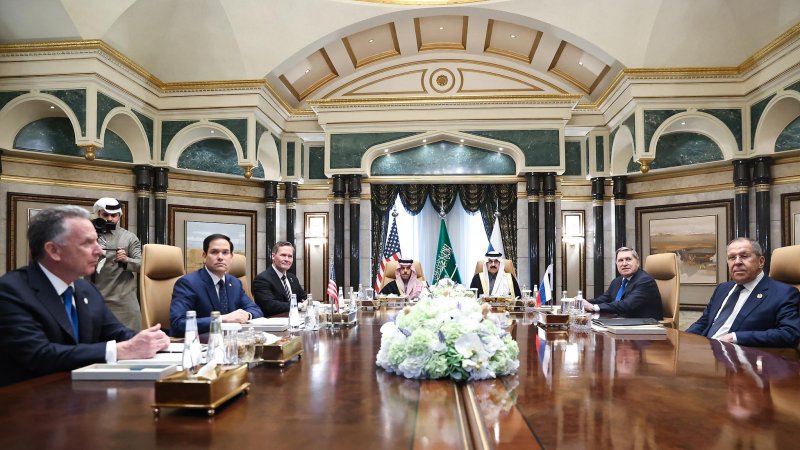
The recent meeting between Russian and U.S. delegations in Riyadh marked a significant moment in ongoing diplomatic efforts to address the Ukraine conflict. While framed as an exploratory dialogue, this initial session laid the groundwork for what could become a broader transformation of U.S.-Russia bilateral relations, potentially reshaping the European security architecture.
Monday’s discussions, held without Ukrainian or European representation, set the stage for further negotiations in the coming days and possibly weeks. The ultimate goal appears to be a high-level summit that could establish not just a peace settlement for Ukraine but also redefine the relationship between Washington and Moscow. The conciliatory tone leading up to the meeting, reflected in Kremlin spokesperson Dmitry Peskov’s call for restoring the "entire complex of U.S.-Russia relations" and the U.S. State Department’s expressed willingness to "reduce irritants," suggests a significant shift in diplomatic rhetoric.
A key aspect of these talks is economic cooperation. Russia’s sovereign wealth fund head, Kirill Dmitriev, emphasized that U.S. investors have suffered losses amounting to $300 billion due to sanctions, arguing that American oil majors, which have previously benefited from Russian partnerships, will eventually return. Russian President Vladimir Putin also signaled flexibility, stating his readiness to negotiate with Ukrainian President Volodymyr Zelensky "if necessary."
However, despite these conciliatory gestures, Russia maintains non-negotiable conditions for a settlement. Foreign Ministry spokesperson Maria Zakharova firmly ruled out territorial concessions and insisted that NATO must disavow its 2008 membership promise to Ukraine. Putin echoed this stance, emphasizing the need to "eliminate the root causes" of the conflict.
Russia’s core demands remain unchanged since the abandoned Istanbul agreements of March 2022: Ukrainian neutrality, renunciation of NATO membership, limitations on its armed forces, guarantees for the rights of ethnic Russians, and formal recognition of Russian-held territories. These conditions align closely with recent statements from former U.S. President Donald Trump and his allies, including Defense Secretary Pete Hegseth, who endorsed many of Moscow’s stipulations during the Munich Security Conference.
The geopolitical calculus suggests that the longer negotiations persist, the stronger Russia’s position becomes, given its continued military advances. However, Washington retains significant leverage, particularly through economic pressure and control over energy markets. The European Union, while currently marginalized in negotiations, still possesses the option to confiscate Russian sovereign assets—though such a move could carry severe financial repercussions and provoke further discord within the Western bloc.
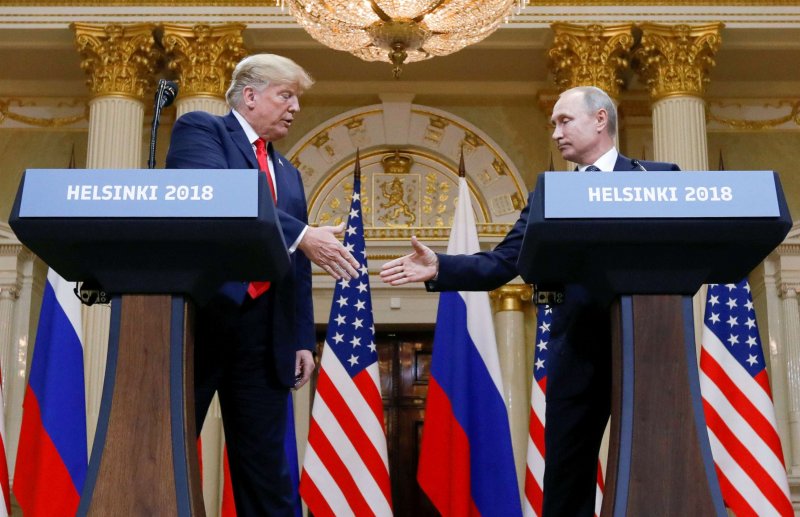 US President Donald Trump and Russia's President Vladimir Putin shake hands during a joint news conference after their meeting in Helsinki, Finland, July 16, 2018. Photo: Kevin Lamarque/Reuters
A summit between Trump and Putin appears increasingly likely, though it would likely be the final step in cementing pre-agreed terms. The role of the European Union in these negotiations remains a critical point of contention. Despite U.S. reassurances that European partners will be consulted in any final settlement, the EU’s exclusion from direct talks underscores its diminished influence in geopolitical affairs. French President Emmanuel Macron’s emergency meeting following the Munich conference resulted in little substantive progress. His proposal for an EU peacekeeping mission in Ukraine gained only limited support, and Russia has categorically rejected any NATO presence on Ukrainian territory.
While Russia has expressed openness to Ukraine’s potential entry into the EU, such a development would take years and could ignite internal divisions within the European bloc. Still, EU acquiescence to a final agreement would be crucial, as it would reduce the likelihood of further military escalation and increase pressure on Zelensky to accept a negotiated settlement—especially given his increasingly precarious political standing at home.
One of the most significant yet underreported aspects of these negotiations is the economic factor—particularly regarding Ukraine’s vast mineral and agricultural resources. Last week, U.S. Treasury Secretary Scott Bessent traveled to Kyiv to discuss a “minerals-for-arms” agreement, which would grant American companies access to Ukraine’s rich deposits—some of which are in Russian-held territories—in exchange for economic and potential military aid. Though Zelensky ultimately declined to sign the agreement, the United States’ long-term interest in exploiting Ukrainian resources is evident and could lead to growing tensions within the transatlantic alliance.
European policymakers are already expressing concern over a U.S.-Russia settlement that might leave the EU shouldering the financial burden of rebuilding Ukraine while Washington secures economic benefits. EU foreign policy chief Kaja Kallas’s statement—“It cannot be that Russia gets the Ukrainian territories, the USA the natural resources, and Europe pays the price for securing peace”—highlights the fractures within the Western alliance over Ukraine’s future.
Trump’s proposed peace initiative represents not just a transformation of transatlantic relations but a major shift in U.S. domestic politics. He faces the formidable challenge of curtailing the influence of the neoconservative foreign policy establishment, which constrained his administration during his first term. A durable peace settlement with Russia would likely necessitate a significant consolidation of Trump’s power, reflected in strategic appointments across key institutions such as the FBI, CIA, State Department, and National Security Council. Whether this internal power shift will materialize remains uncertain.
The Riyadh negotiations mark a critical juncture in U.S.-Russia relations and the broader geopolitical landscape. While these talks remain at a preliminary stage, their trajectory suggests a fundamental reordering of transatlantic and global politics. Whether a final agreement materializes will depend not only on diplomatic maneuvering but also on economic interests, military realities, and shifting political dynamics within both Washington and Moscow. Regardless of the outcome, one thing is clear: the post-Cold War order is undergoing a profound transformation.
(If you possess specialized knowledge and wish to contribute, please reach out to us at opinions@news.az).


Similar news