The road to war: Iran, the U.S., and the coming storm in the Middle East


Editor's note: Russian military-political analyst, expert in the field of strategic security, specialist in the Middle East and Africa Vladimir Bekish. The article expresses the personal opinion of the author and may not coincide with the view of News.Az.
Every day, the world wakes up anxiously awaiting news from the White House — expecting new “historic” steps and announcements from Donald Trump, on which the well-being and security of many countries truly depend.
Much can be said about Trump — what he does, how he does it, and how effective his actions really are. Many argue that his sensational and dramatic statements often lack substance, and that the effectiveness of his actions so far has been minimal, if not entirely absent.
 Source: Al Amhar
Promises to end the war in Ukraine, to expel all undocumented migrants, to turn Gaza into a luxury resort — many grandiose announcements have been made, but few have materialized. These failures are not lost on Trump or his inner circle. They understand that the current “picture” must change. Bold, swift actions are needed — ones that clearly serve American interests and demonstrate that Trump delivers on his promises.
And now, it appears that Iran may be the next target of such a move — a troubling prospect.
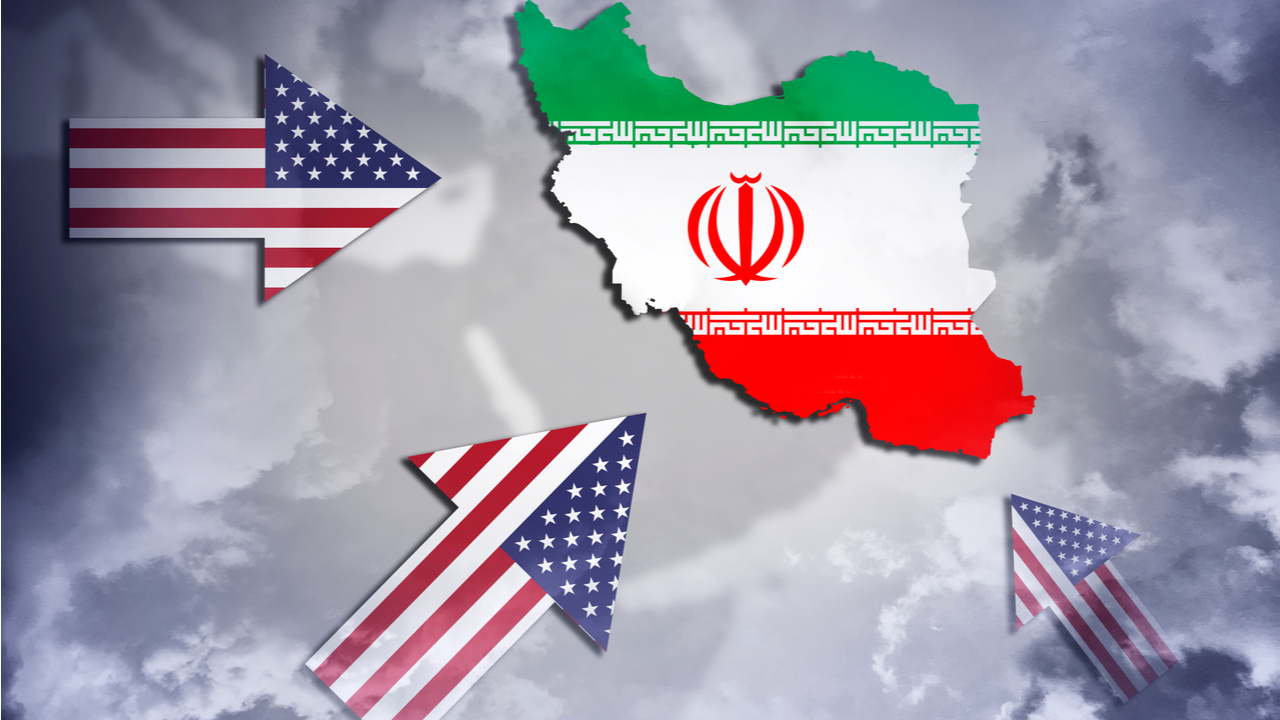
As we know, Trump has effectively issued an ultimatum to Iran regarding its nuclear program. He has demanded that Tehran sign a new agreement within two months to limit and monitor its nuclear activities — or face a devastating U.S. military strike.
Iran’s response has been categorical. Supreme Leader Ayatollah Ali Khamenei has firmly rejected any negotiations with “intimidating” powers, stating that Tehran will not engage in dialogue designed to impose foreign demands. This was a direct rebuttal to Trump’s recent letter inviting negotiations for a new nuclear deal. “Their true goal is not to solve problems, but to exert pressure,” Khamenei said. “Iran will not live up to such expectations.”
 Source: France 24
The situation is now escalating — and quickly. Not just between the U.S. and Iran, but involving a third party: Israel. Israeli officials have warned that Iran's nuclear facilities could be targeted even before Trump’s two-month deadline expires — potentially in a joint operation with the United States.
Meanwhile, the U.S. military buildup in the region continues at a rapid pace. More than 40,000 American troops are now deployed near Iran. The USS Harry S. Truman is operating in the Red Sea, while the USS Carl Vinson is reportedly en route to reinforce the naval presence.
Satellite images confirm that six B-2 Spirit stealth bombers are currently stationed at Diego Garcia — a remote U.S. base in the Indian Ocean.
Strategic bombers, including B-52Hs, remain at Al Udeid Air Base in Qatar. In recent days, five C-5M Super Galaxy cargo aircraft have delivered shipments to the same base — likely including Patriot or THAAD missile defense systems. Additional C-17 transport flights have reportedly delivered Patriots to Isa Air Base in Bahrain.
On Friday, sources reported that the U.S. and South Korea had agreed to temporarily redeploy Patriot missile systems from the Korean Peninsula to the Middle East — a sign of Washington’s increasing military readiness. American forces are clearly repositioning assets to shield bases in anticipation of potential Iranian retaliation.
Iran, meanwhile, shows no signs of backing down. It has long been the target of Israeli strikes, and in October, Israeli air raids reportedly disabled the last of Iran’s Russian-supplied S-300 air defense systems. According to U.S. and Israeli sources, Iran’s remaining S-300s were destroyed in earlier attacks — including one in April 2024.
Yet despite these setbacks, Iran is not acting like a nation cowed by threats. Former U.S. General David Petraeus recently warned that Iran still possesses significant retaliatory capabilities, including a vast missile arsenal — even though Israeli strikes have significantly slowed its production of solid-fuel rocket engines.
Iran’s Islamic Revolutionary Guard Corps (IRGC) Aerospace Force has also expanded its network of "Ghadir" over-the-horizon early warning radars, with new installations near Tabriz and along the Persian Gulf. These systems can detect incoming aircraft, cruise missiles, and ballistic missiles at long range, enhancing Iran’s air defense network. Many analysts believe these radars are based on Russia’s "Rezonans-N" system, which has been exported to Iran and likely adapted locally.
In recent days, Iranian officials have issued direct threats. They have warned that if attacked, Tehran will retaliate against American interests in the region — including the Diego Garcia base.
More alarmingly, Iranian MP Mohammad Matamedizadeh claimed that enriching uranium to weapons-grade levels would be “as easy as drinking water.” He added: “If we choose to develop nuclear weapons, we can do so effortlessly.”
Ali Larijani, senior adviser to Supreme Leader Khamenei, went even further. In an interview on March 31, he stated that if Iran’s nuclear facilities were attacked by the U.S. or Israel, Tehran would be left with no choice but to pursue nuclear weapons. “If you pressure us, it will find secondary justification. The people will demand that we build nuclear arms for national security,” he said.
More developments are expected soon. Mohammad Eslami, Iran’s Vice President and Head of the Atomic Energy Organization, has announced a high-profile event on April 9 where the country will unveil over 100 new scientific and technological achievements — a clear signal of Iran’s defiance and ambition.
What will happen next? Will there be strikes against Iran? Will Tehran make last-minute concessions to delay the confrontation? Personally, I find it unlikely that Trump will back down. The rhetoric will intensify, and the strikes may indeed happen — and soon. But what happens next, and where — in the Persian Gulf, in Israel, or even on U.S. soil — remains uncertain. What is clear is that something is coming.
(If you possess specialized knowledge and wish to contribute, please reach out to us at opinions@news.az).


Similar news