Trump revives Biden’s India–Europe Corridor to Undermine China’s trade power


By Tural Heybatov
Europe is once again advocating for a project that failed to materialize two years ago — the so-called India–Middle East–Europe Economic Corridor (IMEC).
European Commission President Ursula von der Leyen recently voiced support for its implementation, posting on social media platform X that there is now a "historic opportunity to bring the India–Middle East–Europe corridor to life" — a project that, she claims, will “unite us like never before.”
This is not the first time von der Leyen has made such a claim. At the EU–Central Asia summit in Samarkand, she similarly praised a proposed transit route through Armenia, saying it would “bring Europe and Central Asia closer than ever before.” The Commission President is clearly an optimist — but her approach also reveals that the EU does not fully appreciate the routes it already has access to.
Source: The Statesman India
Europe already benefits from the well-established and promising Middle Corridor. China’s Belt and Road Initiative (BRI) offered enormous opportunities for Europe — opportunities that were ultimately abandoned under U.S. pressure. In December 2023, Italy became the latest country to withdraw from the BRI. In place of China’s initiative, the Biden administration proposed the hypothetical India–Europe corridor. Although the EU’s primary trade flows remain linked to China, Washington sought to sideline Beijing by replacing it with India — and Brussels did not dare object.
What is most striking, however, is that the new U.S. administration — despite rejecting nearly all of Biden’s policies — has now embraced IMEC.
According to Reuters, U.S. President Donald Trump and Indian Prime Minister Narendra Modi have agreed to create a new international trade route connecting India and the U.S. via the Middle East and Europe. The route will pass through India, the UAE, Saudi Arabia, Jordan, Israel, and Italy, using a combination of maritime transport, rail networks, and subsea infrastructure. During his meeting with Modi, Trump made no secret of the fact that he sees this corridor as an alternative to China’s Belt and Road.
It is unlikely that Trump would have revived a project that Biden once promised to fund with $500 billion — if Modi hadn’t brought it up. Though the project was presented as an Indian initiative, the memorandum signed at the G20 summit in New Delhi in September 2023 was widely viewed as a U.S.-backed effort to counter China.
Today, as Washington wages an all-out trade war against Beijing, some believe the time is ripe to return to this legacy plan. The U.S. has no real economic interest in IMEC — it was conceived from the outset as a geopolitical strike against China and its Belt and Road.
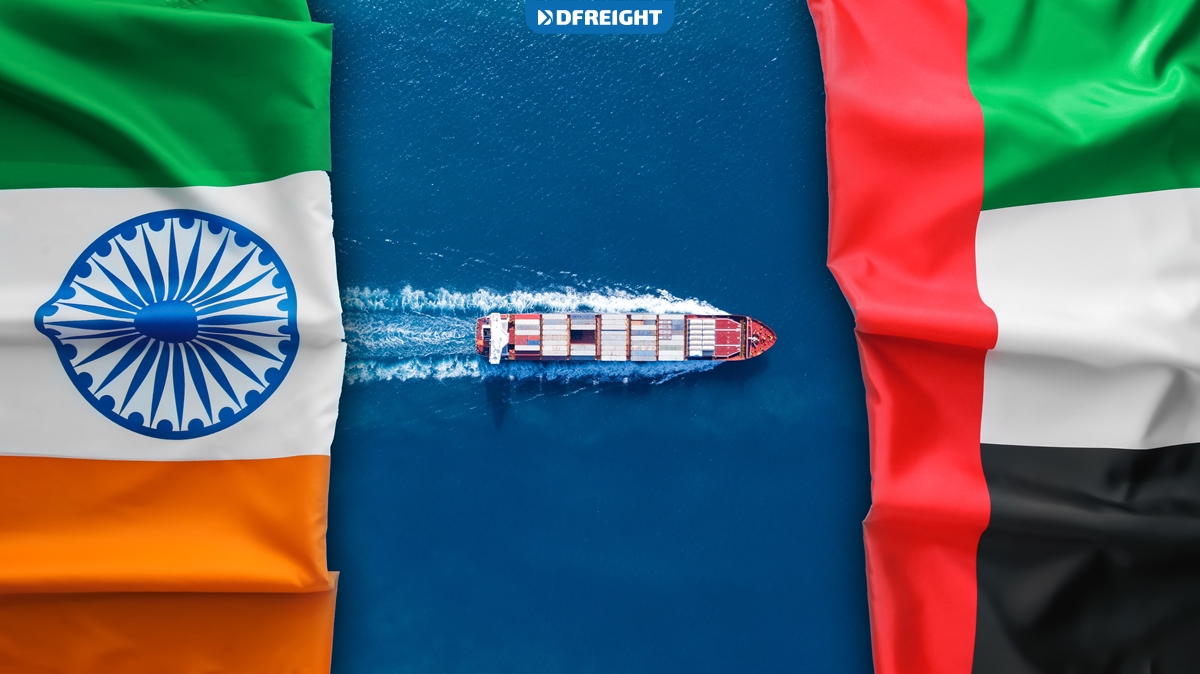
Source: Dfreight
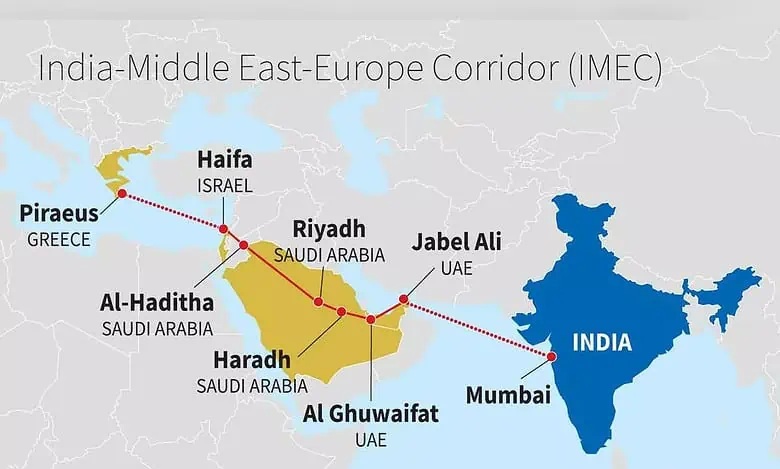
According to the original plan, Indian goods would be shipped from Mumbai to Jebel Ali in the UAE, then transported by rail through Saudi Arabia to Israel, and finally sent by sea from Haifa to European ports such as Piraeus (Greece), Marseille (France), and Messina (Italy). The memorandum was signed just days before the Hamas attack on Israel — but experts believe the project was unlikely to succeed even before tensions escalated in the Middle East.
Even if one sets aside political risks and strained relations among the countries along the route, the infrastructure simply doesn’t exist. Greece’s railway network is underdeveloped. In Saudi Arabia and the UAE, rail infrastructure would have to be built from scratch. Moreover, the project also envisions electric cables, green hydrogen pipelines, and other large-scale infrastructure. Several years would be required just for planning — and many experts doubt construction will ever begin.
Despite this, references to the corridor have been resurfacing more frequently. It’s worth noting that the memorandum was signed in the same year as the 10th anniversary of the Belt and Road Initiative — hardly a coincidence. It was a clear message from the Biden administration to Beijing: the U.S. intends to push China out of its role as the moderator of global trade. The message was also aimed at Türkiye — and Ankara got the hint. Soon after the IMEC agreement was signed, Turkish President Recep Tayyip Erdoğan announced plans to create a competing trade corridor involving Iraq, the UAE, and Qatar. “There can be no corridor without Türkiye,” he declared.
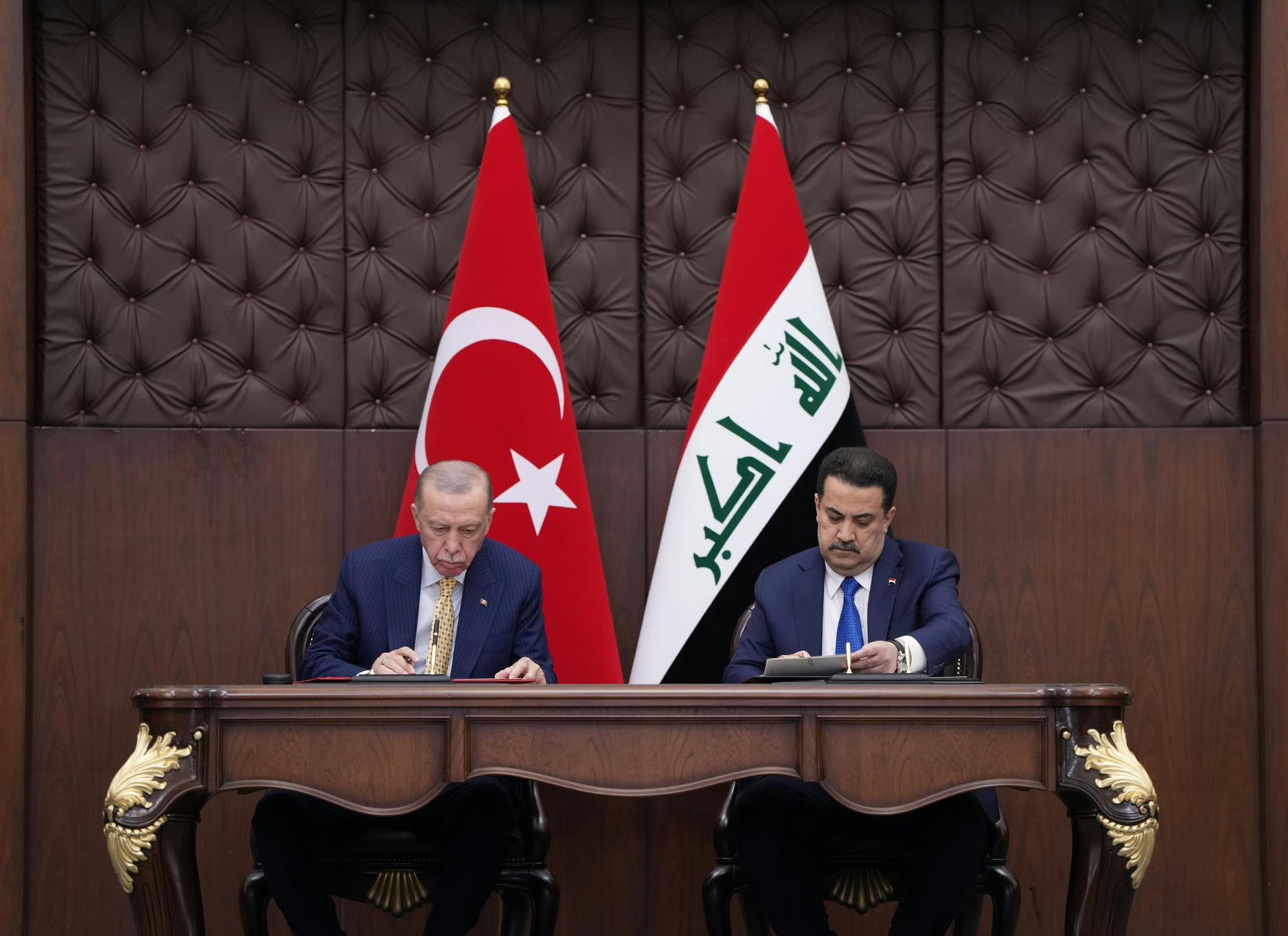
Source: Anadolu Agency
Consider this: trade turnover between Europe and India stands at approximately $135 billion. With China, the EU trades nearly $786 billion — the difference is stark. Furthermore, only a small fraction of Indian exports to Europe pass through the Persian Gulf and into the Mediterranean. The main reason? Lack of infrastructure. Most goods are still shipped via maritime routes — slower, but more cost-effective, even with disruptions caused by Houthi militants in the Red Sea.
To launch the project — a political maneuver by the Biden administration to undermine China — will take years and vast financial investment. India’s attempts to shift Europe’s attention toward itself may prove costly, especially since Trump has made it clear that he will pursue fiscal austerity and will not honor the previous administration’s financial commitments.
Which brings us to the central question: Who will pay for this grand plan? It is doubtful that anyone in Brussels or Washington has a clear answer.


Similar news