Trump touts Uzbek, Kazakh mega-deals boosting Middle Corridor


.png)
Editor's note: Faig Mahmudov is an Azerbaijan-based journalist. The article expresses the author's personal opinion and may not coincide with the view of News.Az.
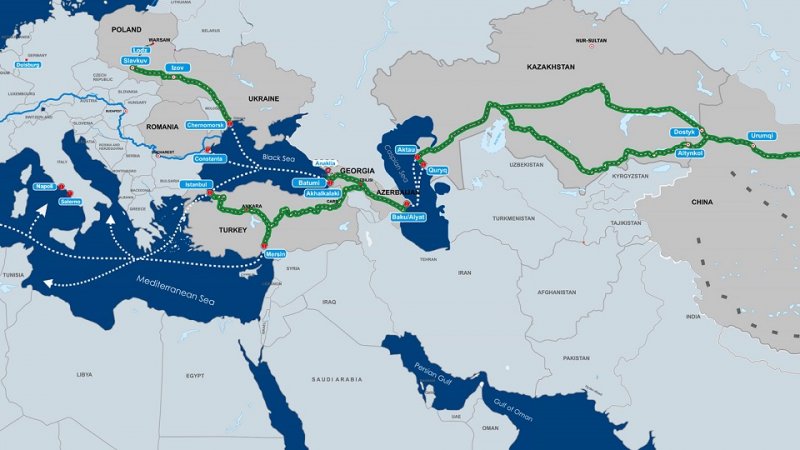
U.S. President Donald Trump publicly praised Uzbekistan’s Shavkat Mirziyoyev and Kazakhstan’s Kassym-Jomart Tokayev after both leaders sealed multibillion-dollar contracts with American companies. Uzbekistan Airways agreed to buy up to 22 Boeing 787 Dreamliners, while Kazakhstan Temir Zholy (KTZ) struck a $4.2 billion program with Wabtec for hundreds of next-generation locomotives and rail equipment. The announcements, made around the UN General Assembly in New York, could become the most significant boost in years for the Trans-Caspian International Transport Route, better known as the Middle Corridor, which links China and Central Asia with the South Caucasus, Türkiye and Europe.
Trump highlighted Uzbekistan’s deal with Boeing, describing it as a great contract that would support U.S. jobs, while also commending Kazakhstan’s partnership with Wabtec as a landmark development for the regional rail sector. His warm words came only weeks after his administration announced tariffs on imports from Kazakhstan, underscoring the paradox of economic pressure on one hand and strategic commercial partnership on the other.
The significance of these agreements lies in their direct impact on the Middle Corridor. Kazakhstan’s new locomotives strengthen the rail backbone of the route, boosting line-haul capacity, reliability and axle-load tolerance. They are expected to address key bottlenecks on the Central Asian steppe and improve schedule adherence across routes leading to the Caspian ports of Aktau and Kuryk. At the same time, Uzbekistan’s expansion of its long-haul fleet with modern 787s provides new airlift potential and wider connectivity for time-sensitive cargo, complementing rail and ferry transport across the Caspian. For a landlocked exporter, such aircraft are as much a strategic asset as rail or port infrastructure.

Source: Kazinform
Both governments have been pursuing ambitious integration policies. Tashkent has been investing in east–west trade governance and new logistics partnerships, while Astana has declared its goal of lifting throughput on the Middle Corridor to unprecedented levels. These deals fit directly into those plans. Meanwhile, Azerbaijan’s Alat port is building its role as a transit hub, which will benefit from stronger traction power and more reliable train schedules across Kazakhstan.
The winners of these agreements include Central Asian exporters and shippers, who will enjoy more reliable transport options, and American manufacturers Boeing and Wabtec, which gain valuable contracts and long-term service commitments. At the same time, Russia’s northern corridors may lose some freight volumes as more shippers choose the diversified southern route. For Kazakhstan and Uzbekistan themselves, the benefits are clear, but the financial burden of long-term, dollar-denominated deals will weigh on state budgets and foreign currency reserves.

Source: Timesca
Challenges remain. Washington’s tariff measures against Kazakhstan have not been resolved, raising questions about the durability of political goodwill. Beyond the hardware, non-rail bottlenecks such as ferry capacity on the Caspian, port congestion and customs procedures continue to slow the corridor’s competitiveness. Maintenance, spare parts and workforce training will determine whether the new locomotives deliver on their promise, while financing terms and delivery schedules will shape the actual timeline of impact for both the aircraft and rail orders.
Taken together, however, these contracts are more than ceremonial gestures. They signal a deepening American industrial presence in Central Asia at a time when governments and shippers seek alternatives to Russian routes. If Kazakhstan’s new locomotives and Uzbekistan’s long-haul fleet are matched with genuine reforms in port capacity and customs digitalization, the Middle Corridor’s long-promised scale-up may finally move from ambition to execution.
(If you possess specialized knowledge and wish to contribute, please reach out to us at opinions@news.az).


Similar news