Trump turns to Putin as Iran refuses to back down


Editor's note: Russian military-political analyst, expert in the field of strategic security, specialist in the Middle East and Africa Vladimir Bekish. The article expresses the personal opinion of the author and may not coincide with the view of News.Az.
All of Trump’s attempts to “put Iran in its place” over its nuclear program or pressure it into limiting support for the Houthis have failed—again. The word “again” could be applied to much of what Trump has declared to the world since entering the White House.
However, the situation with Iran is especially complex and alarming. So alarming, in fact, that Trump has reportedly sought help from Iran’s ally—Vladimir Putin. Help in pressuring Tehran. Help in finding a compromise that might make it possible to strike a deal. And let’s be clear: it would indeed be a deal. Because no country in the world rivals Iran when it comes to the art of negotiation and bargaining. That’s not a criticism, but rather an acknowledgment—one that evokes both envy and admiration. If a nuclear deal is ultimately reached, it will be through negotiation, not capitulation.
Iran’s nuclear program has long raised international concerns—stretching back to the 1950s. The idea of developing nuclear energy was championed by Shah Mohammad Reza Pahlavi, and interestingly, the United States was an early supporter. In 1957, the U.S. and Iran signed a cooperation agreement on nuclear energy. Just two years later, the Middle East’s NATO nuclear training center was moved from Baghdad to Tehran and set up at the University of Tehran.
By 1967, the university had received its first 5-megawatt research reactor from the U.S., along with 5.5 kilograms of uranium enriched to 93%. In 1969, the nuclear cooperation agreement was extended for another decade.
One could meticulously trace the development of Iran’s nuclear capabilities from that point on—there are many stages—but for now, let’s focus on the aspects directly tied to nuclear weapons concerns.
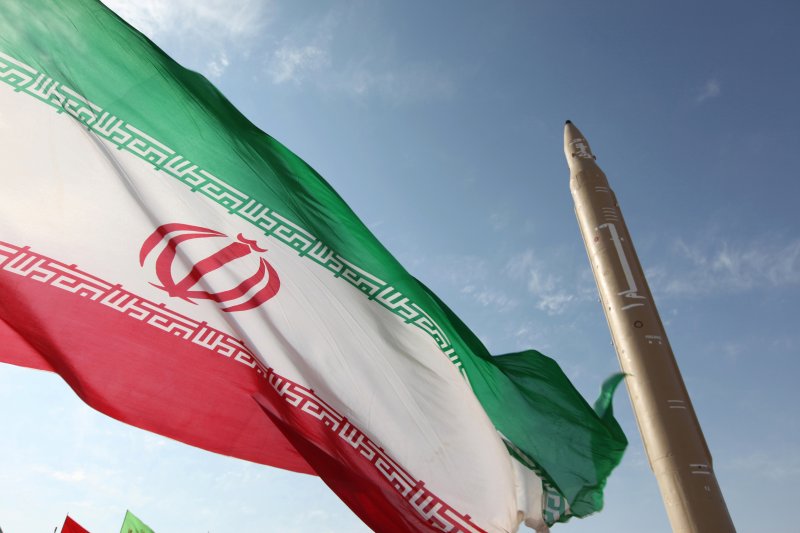 Photo: AFP
Despite signing most international treaties and conventions related to non-proliferation, Iran has consistently pursued activities associated with weapons development—particularly uranium enrichment and the acquisition of relevant technologies. Notably, Iran operated secret facilities at Natanz and Arak, undisclosed to the IAEA for years. When inspectors were finally granted access in 2003, they discovered active enrichment operations and stockpiles of enriched uranium. Shortly afterward, Iran admitted it had been enriching uranium with centrifuges for 18 years.
In January 2021, Iran resumed enriching uranium to 20% at the Fordow site. Just a month later, it halted compliance with IAEA safeguard agreements granting inspectors access. In April 2021, enrichment levels rose to 60% at Natanz. In 2022, Fordow also began producing uranium at 60% purity. By January 2023, IAEA inspectors found traces enriched to 83.7%—just shy of weapons-grade material.
Then came Trump’s ultimatums. Iran refused to yield, and bargaining resumed in April 2025. So far, those talks have gone nowhere. Iran has called Trump’s demands unrealistic and unachievable. Trump insists sanctions will stay in place and may even escalate, hinting at military strikes. Iran, meanwhile, maintains it has no intention of building nuclear weapons but will not abandon its nuclear program. Tehran insists all sanctions are illegitimate.
Faced with the prospect that Iran’s leaders might truly be able to build a bomb in mere weeks, Trump is reportedly rattled. That anxiety deepens with the knowledge that Israel stands ready to strike Iran’s nuclear and military facilities—an act that could set the entire Middle East ablaze.
Adding to Trump’s dilemma are the responses of Saudi Arabia and the UAE—both of whom have close business ties with him and will not tolerate a nuclear-armed Iran. Nor are they likely to accept the regional instability that a war involving Iran, Israel, the U.S., and others would bring.
So perhaps Trump had an idea: invite Putin to mediate. After all, Trump is trying to help Putin resolve the Ukraine issue—not to Russia’s detriment. And in return, he might ask Putin to use his influence to deal with Iran.
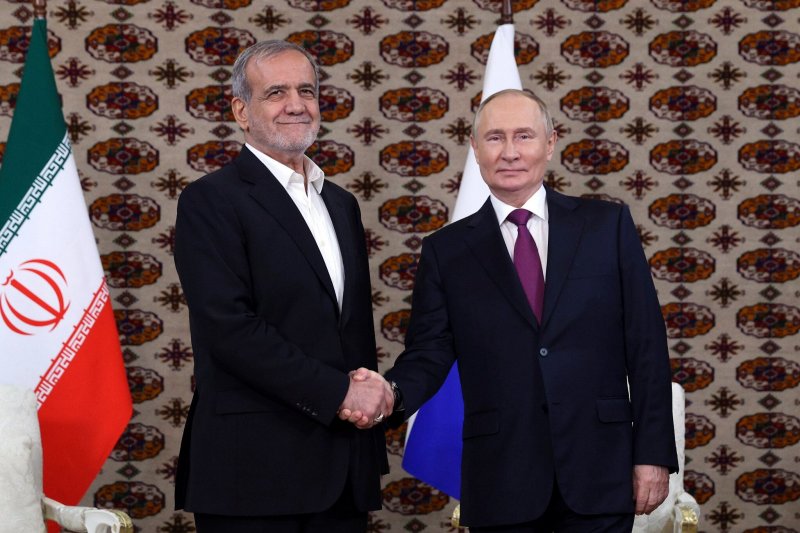 Photo: Kremlin
Russia and Iran maintain strong relations. President Putin and Iran’s President Pezeshkian have a solid rapport. Foreign Ministers Lavrov and Araqchi also share a good working relationship. Iran has supplied Russia with weapons during the Ukraine conflict; Russia, in turn, has supported Iran’s air defense and missile development programs.
It’s reasonable to assume Putin may have leverage in discussions with Tehran. But what Iran might ask in exchange for scaling back its nuclear activities remains a huge question. Because Iran does not respond to ultimatums or demands that run counter to its interests, values, or national pride—even from its closest allies.
I know many Iranians personally. And I have an idea of what might be going through their minds. Let me share an example.
Years ago, during another period of heightened tension between Iran and its regional rival, Saudi Arabia, I was speaking with an Iranian friend in Dubai. He told me that there were discussions—perhaps only theoretical—about launching a nuclear strike against Saudi Arabia. He described a scenario in which an airplane, carrying Iranian pilgrims to Mecca during the Hajj, would also carry a nuclear bomb. Upon arrival, the bomb would be detonated, killing everyone on board, including the knowingly sacrificial pilgrims.
Thankfully, this horrifying vision never materialized—and perhaps it was mere fantasy. But the fact that such ideas exist at all is deeply revealing. It speaks volumes about the desperation, determination, and mindset that can exist under the surface.
And so, it remains incredibly difficult to predict what Putin can offer that might lead Iran to accept U.S. terms. Even more difficult is imagining what Putin and Trump could offer in return for whatever Iran demands.
Let us hope—for everyone’s sake—that diplomacy prevails.
Let there be peace.
(If you possess specialized knowledge and wish to contribute, please reach out to us at opinions@news.az).


Similar news