Trump’s Asia tour: How the U.S. reclaimed its influence in the Pacific


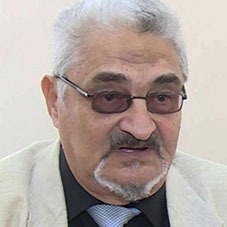
Moses Becker is a political commentator for News.Az. He holds a PhD in political science and specializes in interethnic and interreligious relations. The views expressed in this article are the author’s own and do not necessarily reflect the position of News.Az.
U.S. President Donald Trump's visit to Southeast Asia did not pass without drama. Just as Air Force One was preparing to land in Seoul, Pyongyang staged its own “salute.” On October 28, North Korea announced that it had tested cruise missiles - a calculated move to remind the world that Kim Jong Un still wields his deterrent with confidence. The message was aimed at Washington just as much as Seoul.
Yet the launch caused little alarm. For those familiar with Pyongyang’s cyclical theatrics, this was business as usual - a performance staged for attention. Ironically, only a day earlier, Trump told reporters he hoped to “restore the warm and friendly relationship” he once shared with Kim during his first presidential term.
Asked about the missile test, Trump responded with characteristic nonchalance: "Kim Jong Un has been launching rockets for decades, right? Just another rocket that was launched."
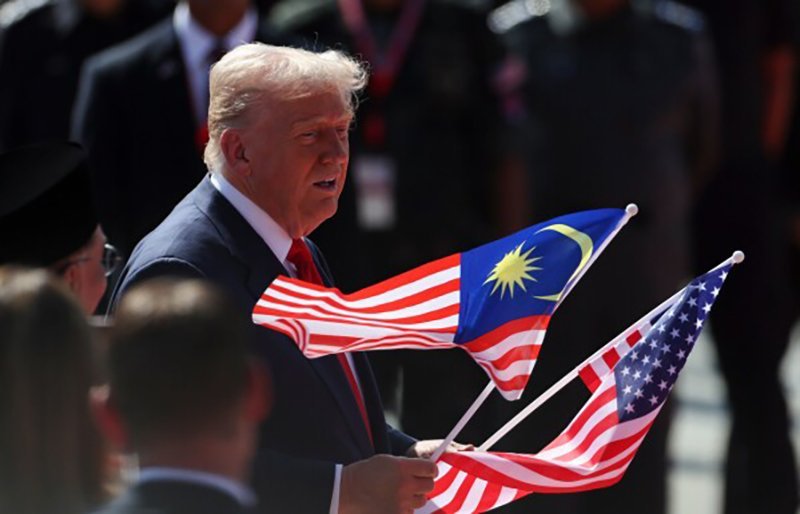
Source: Reuters
His tone reflected confidence and pragmatism. Trump appears to recognize that North Korea’s saber-rattling is as symbolic as it is strategic. “Whatever keeps the child entertained,” some might say, though even symbolic acts in this region can have consequences.
Still, Trump emphasized he maintained “very good relations” with Kim and hoped to meet him again “in the near future.”
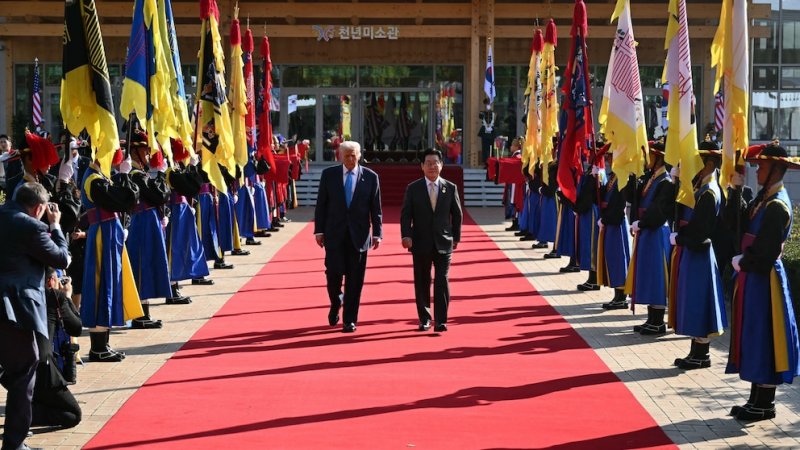
On October 29, Trump arrived in Seoul, where he met South Korean President Lee Jae-myung. His goal was clear: to secure $350 billion in investments in the United States. In return, Washington offered to reduce import tariffs on South Korean goods.
But the negotiation sparked friction. Officials in Seoul argued that most of the $350 billion would have to come in the form of loans and guarantees for South Korean firms investing in the U.S. Trump, in his familiar deal-making style, demanded that the entire sum be paid upfront - in cash or shares.
President Lee warned that such a massive outflow could destabilize South Korea’s financial market, calling the plan unrealistic. Professor Hyobin Lee of Sogang University later told DW that the U.S. administration must account for the fact that “South Korea’s political leadership has changed,” especially on trade. “The current administration will negotiate more assertively and confidently,” she said.
Trump is betting on a familiar strategy: project strength while courting compromise. “He wants to secure a major investment deal to reinforce his reputation as a master negotiator,” Professor Lee said, noting that Seoul’s approach will be guided by economic self-interest and strategic autonomy. Whether a deal emerges will depend on whether both sides see the terms as mutually beneficial rather than one-sided.

Source: Reuters
Despite earlier differences, the two sides eventually narrowed their disagreements. Washington agreed to reduce tariffs on Korean imports from 25% to 15%. In an interview with Bloomberg, President Lee confirmed that despite progress, contentious issues remain, including the size, timeline, and structure of the investments, and how losses and profits will be shared.
“The United States will, of course, seek to protect its interests,” Lee said, “but not to a degree that would lead to catastrophic consequences for South Korea.”
Trump later announced that the tariff agreement had been finalized and that Seoul had agreed to pay $350 billion to the U.S. in exchange for lower tariffs. In addition, South Korean companies pledged to invest $600 billion in the American economy.
“They agreed to purchase our oil and gas in huge quantities,” Trump said. “Investments from South Korean corporations will exceed $600 billion. Our alliance is stronger than ever, and I’ve authorized them to build a nuclear-powered submarine instead of their outdated diesel ones.”
The message was clear: Seoul’s security concerns remain tied to Washington’s goodwill. Kim Jong Un’s missile launch served as a reminder that without the U.S. security umbrella, South Korea would face serious risks. That fear likely contributed to Seoul’s willingness to accept an investment deal that, at first glance, appears more advantageous to the United States.

Source: Reuters
Of the $350 billion, $200 billion will be paid in cash, while $150 billion will go toward reviving the U.S. shipbuilding industry, with South Korea pledging direct assistance.
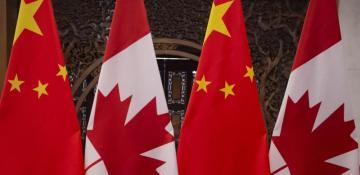
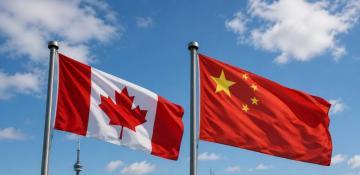
The defining moment of the trip came on October 30, when Trump and Chinese President Xi Jinping held their long-awaited bilateral meeting in Busan. “It was tremendous,” Trump told reporters. The meeting stretched to an hour and 40 minutes - far longer than scheduled. “On a scale of one to 10, I’d rate it a 12,” he said aboard Air Force One.
According to Trump, the U.S. will lower tariffs on all Chinese goods in exchange for China curbing exports of fentanyl components to the U.S. He didn’t disclose the new rate, but the atmosphere was strikingly positive.
Xi also expressed satisfaction, saying he wanted to continue working with Trump “for the prosperity of both nations.”
Trump called Xi a “long-time friend” and predicted “fantastic long-term relations” between the two countries. He announced a one-year trade agreement, renewable annually, that would be signed “very soon.” The U.S. then reduced tariffs on Chinese goods from 20% to 10%, lowering the overall rate from 57% to 47%. Both sides also resolved disputes over rare-earth metals, after Beijing had tightened export controls.
According to CNN, U.S. export restrictions on advanced technologies will remain in place, though future negotiations between Beijing and chipmaker Nvidia are expected. Taiwan was avoided entirely; Xi later said he was left with “warm impressions” from the meeting.
“While the U.S. and China do not always see eye to eye, they must remain partners and friends,” Xi said. He emphasized that China’s rise does not contradict Trump’s goal of “making America great again.” As quoted by Xinhua, Xi added, “Our countries can achieve prosperity together.”
Trump confirmed he would visit China in April 2026, with Xi scheduled to visit the U.S. shortly afterward.
Taken as a whole, Trump’s Asian tour underscored a strategic recalibration. The United States, under his leadership, eased tensions with China, reaffirmed its dominance on the Korean Peninsula, and assured Southeast Asian nations that they remain central to Washington’s regional agenda.
Through a mix of transactional diplomacy and economic persuasion, Trump showcased his distinctive brand of statecraft - one where commerce is a tool of power and deal-making becomes the instrument of peace. Whether these initiatives endure will depend on the balance between ambition and pragmatism. For now, Trump has placed the United States firmly back at the center of Asia’s geopolitical conversation.
(If you possess specialized knowledge and wish to contribute, please reach out to us at opinions@news.az).


Similar news