Trump's Asia tour: Will his trade and security push succeed?


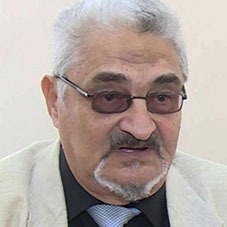
Moses Becker is a political commentator for News.Az. He holds a PhD in political science and specializes in interethnic and interreligious relations. The views expressed in this article are the author’s own and do not necessarily reflect the position of News.Az.
Following his inauguration, U.S. President Donald Trump has launched an energetic campaign to restore Washington’s global leadership. With his trademark vigor, he continues to demonstrate that age is no obstacle when a leader is fully committed to his mission. The half-hearted policies of the previous Democratic administration had weakened America’s global influence, and now a revival is underway.
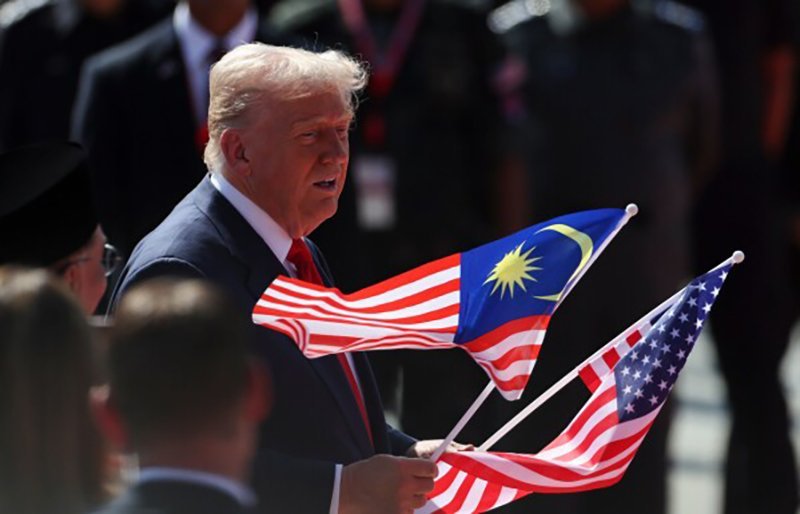
On October 26, Trump arrived in Kuala Lumpur, Malaysia, the first stop on his weeklong tour of Asia. During the trip, he is scheduled to attend two major regional summits - ASEAN in Malaysia and APEC in South Korea.
The centerpiece of his visit is expected to be a meeting with Chinese leader Xi Jinping. Trump’s focus on Asia is no coincidence: the region offers vast opportunities for investment and technological innovation, rich markets for resources and goods, and societies that continue to value cultural continuity.

Upon Trump’s arrival in Kuala Lumpur, the leaders of Thailand and Cambodia signed a peace agreement aimed at ending years of regional conflict. According to media reports, Trump personally insisted that the ceremony take place during the ASEAN summit. Earlier this summer, he helped halt fighting along the Thai–Cambodian border, one of eight conflicts he claims to have ended.
Trump’s presence at the ASEAN summit, which includes 11 member states, is seen as crucial, particularly because many of these nations rely heavily on exports to the United States. In the context of the ongoing global tariff war initiated by Trump himself, regional leaders view stable relations with Washington as a matter of economic survival.
ASEAN was founded in 1967 by Thailand, Indonesia, Malaysia, the Philippines, and Singapore, later joined by Brunei, Laos, Vietnam, Myanmar, and Cambodia. On Sunday, East Timor became the bloc’s 11th member. Collectively, ASEAN represents a market of around 600 million people with immense natural resource reserves.
Trump will also attend the Asia-Pacific Economic Cooperation (APEC) summit in South Korea, where, as in Malaysia, his meeting with Xi Jinping is expected to be the highlight.
Another key stop is Japan, where Trump is scheduled from October 27 to 29. His agenda includes a visit to the Imperial Palace to meet Emperor Naruhito and a meeting on October 28 with Japan’s new prime minister, Sanae Takaichi, the first woman to hold the position. A protégé of the late Prime Minister Shinzo Abe, Takaichi may leverage her ties with Trump in their discussions.
Earlier, Tokyo agreed to invest $550 billion in the U.S. economy in exchange for a reduction in U.S. tariffs on Japanese goods from 25% to 15%. Both sides are expected to reaffirm their commitment to this arrangement.
On October 27, ahead of his talks with Trump, Prime Minister Takaichi told the Japanese parliament that the U.S. alliance remains “the cornerstone of Japan’s foreign policy and national security.” She expressed her determination to build a trusting relationship with Trump and elevate bilateral relations. “We are pleased that, in addition to our agreement with Malaysia, we are signing or moving toward trade deals with many of our Indo-Pacific partners - from Cambodia to Japan and South Korea,” Trump said in Kuala Lumpur.
He highlighted energy, technology, artificial intelligence, critical minerals, and other industrial sectors as key areas of cooperation. In early September, Trump signed an executive order establishing a 15% baseline tariff on nearly all Japanese imports. In return, Japan agreed to expand market access for U.S. agricultural products, energy, and aerospace equipment, and to lift restrictions on American automobile imports.
The final leg of Trump’s tour will be South Korea from October 29 to 31, where he will participate in the APEC Summit, a forum uniting 21 Pacific economies to promote free trade. His official program begins with a meeting with South Korean President Lee Jae-myung to discuss trade and security cooperation.
A potential highlight could be a meeting with North Korean leader Kim Jong Un. During his first term, Trump attempted direct contact with Kim, though time constraints curtailed the effort. This time, Trump has said he is “100 percent open” to renewed talks, although U.S. officials insist no meeting is planned. Still, the possibility sends a signal to China that Washington can engage its closest partners independently.
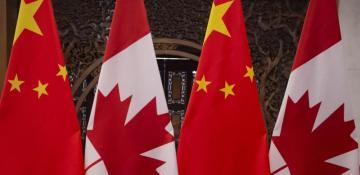
On October 30, Trump and Xi Jinping are expected to hold a bilateral meeting on the sidelines of the APEC summit, the climax of the U.S. president’s tour. The talks are critical amid the ongoing U.S.–China trade war. Following September negotiations in Madrid, both sides agreed to reduce reciprocal tariffs to 10–30%, but tensions rose after Beijing imposed export controls on rare earth metals, prompting Washington to threaten tariffs up to 100% on all Chinese imports.
Ahead of the summit, diplomatic efforts produced a fragile compromise. On October 26 in Kuala Lumpur, U.S. Treasury Secretary Scott Bessent and Chinese Vice Premier He Lifeng signed a framework trade agreement described by Bessent as “a very successful foundation.”
Under the deal, Washington dropped its 100% tariff threat, Beijing postponed rare earth export controls for a year, and agreed to resume substantial purchases of American soybeans, suspended since May 2025. Both sides also reached an understanding on combating the production of fentanyl precursors.
The upcoming Trump–Xi meeting is expected to formalize this framework at the highest political level and extend the fragile trade truce, set to expire on November 10. The U.S. pivot toward the Asia-Pacific region signals a defining shift in global trade, technology, and geopolitics.
(If you possess specialized knowledge and wish to contribute, please reach out to us at opinions@news.az).


Similar news