Trump’s potential impact on the South Caucasus: What Azerbaijan can expect


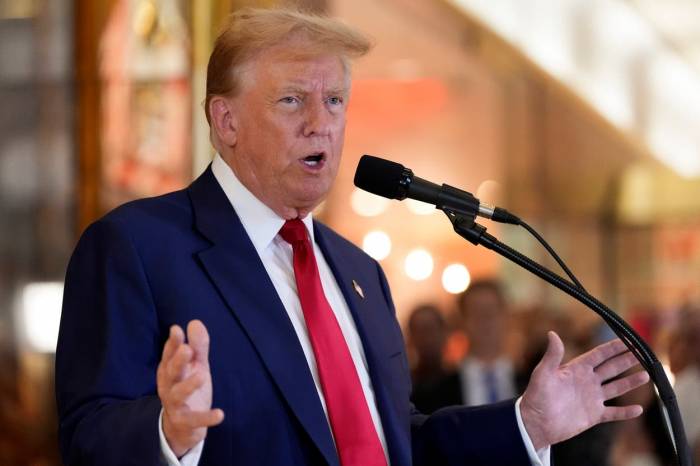
Trump Hush Money (Copyright 2024 The Associated Press. All rights reserved.)
By Asif Aydinli
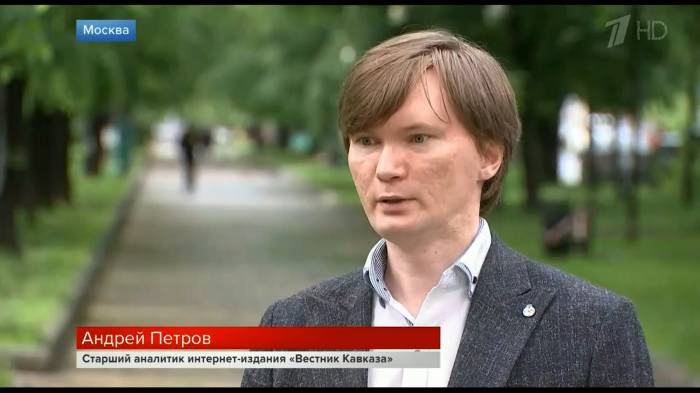
News.Az presents an interview with the Deputy Director General of the Information & Analytics Agency «Vestnik Kavkaza» Andrey Petrov.
- Should we expect changes in U.S. policy in the South Caucasus after Donald Trump assumes office?
- Donald Trump, as a businessman, approaches foreign policy from a financial perspective, emphasizing the reduction of U.S. spending on overseas programs and actions that do not yield direct benefits for the United States. Many countries where the Biden administration promoted costly and often destabilizing initiatives using American taxpayer money now anticipate that these activities will be curtailed under Trump. For instance, Georgian authorities have expressed hopes that the so-called protests on Rustaveli Avenue in Tbilisi will cease. Similarly, Azerbaijan expects positive changes under Trump’s administration.
When it comes to Azerbaijan and Armenia, there is another noteworthy aspect: Trump is closely aligned with the Jewish lobby in the U.S. and, unlike the Democrats, has minimal ties to the Armenian diaspora. Naturally, the Armenian diaspora will intensify its lobbying efforts with the new White House administration to maintain its influence. However, unless they offer significant financial incentives, Trump is unlikely to prioritize their interests.
Historically, Azerbaijan has enjoyed better relations with the U.S. under Republican administrations compared to Democratic ones, primarily due to the Democrats' strong connections with the Armenian diaspora and their tendency to disregard pragmatic approaches. The Democratic Party often creates obstacles to peace when it occupies the White House, while Republicans are generally more pragmatic, making negotiations with them easier.
As an optimistic analyst, I expect that relations will improve under Trump. However, this is not guaranteed, as Trump is a far more unpredictable politician than Biden. His administration, composed largely of business-oriented individuals, is likely to assess U.S. foreign policy based on where the greatest financial benefits can be derived. While this could lead to new challenges, they are difficult to predict at this stage.
Given Azerbaijan’s consistent approach of building foreign relations on mutual benefit, it is reasonable to expect that the next four years will see positive developments in Azerbaijan-U.S. relations.
- The Azerbaijani side insists on amending the Armenian Constitution, as its preamble references Nagorno-Karabakh. Recently, Armenian Prime Minister Nikol Pashinyan reiterated that Armenia's Constitution does not contain territorial claims against Azerbaijan. How would you assess this position of the Armenian authorities?
- Pashinyan’s reluctance—and that of the Armenian government as a whole—to acknowledge the presence of territorial claims in Armenia’s Constitution can be seen as an attempt by Yerevan to prolong the negotiation process. Broadly speaking, only two unresolved points remain in the peace agreement. These are the dissolution of the OSCE Minsk Group, which Armenia resists to preserve some level of Western influence in the South Caucasus through international organizations, and the removal of territorial claims from the Armenian Constitution.
Yerevan could easily resolve this issue by organizing a referendum to amend the Constitution and eliminate the reference to Azerbaijan’s Karabakh region. With sufficient political will, Armenia could conduct this referendum in just a few months, thereby clearing the path for signing the peace agreement and immediately benefiting from it.
However, Pashinyan continues to insist on delaying the process. I don’t think it’s because Armenia doesn’t want to remove the constitutional reference; the Armenian authorities know full well that Azerbaijan will never agree to a peace treaty while these claims remain. Attempts to defer or dismiss this issue are futile, as Azerbaijan will not compromise. References to Armenia’s Constitutional Court decisions hold little weight, as a future government or court could easily declare that the Constitution takes precedence over the peace agreement, thereby reviving territorial claims over Karabakh.
Armenia understands that Azerbaijan will not relent on this demand. Therefore, Pashinyan’s intransigence is merely a tactic to stall negotiations. He doesn’t want to sign a peace agreement at this time. One reason might be that once the peace agreement is finalized, Armenia’s relevance on the international stage could rapidly diminish.
As long as the Armenian-Azerbaijani conflict remains unresolved, Yerevan can continue to attract attention from major international players, offering them a role in resolving the situation. While Azerbaijan has rejected Western mediators, Armenia still uses this leverage to position itself geopolitically. Once lasting peace is established in the South Caucasus, Armenia risks becoming geopolitically insignificant. Thus, Pashinyan is reluctant to finalize the peace agreement, despite there being no substantial obstacles to doing so.
- Armenian Foreign Minister Ararat Mirzoyan recently told Finland’s Lännen Media that the CSTO's indifference to protecting Armenia’s sovereignty has led to widespread disappointment in this organization within Armenian society. Earlier, Pashinyan claimed that Armenia-CSTO relations had reached a "point of no return." Despite prolonged criticism of the CSTO, Armenian authorities have not hurried to withdraw, merely suggesting a "freeze" in ties. What is behind this strategy by Yerevan?
- Armenia's move to "freeze" its participation in the CSTO is part of a broader post-war reconfiguration of its international relations. During the years of the Karabakh conflict, Armenia's previous leadership prioritized deepening ties with Russia, often at the expense of developing relations with other countries.
Pashinyan came to power with the intention of changing this approach. However, as long as the Armenian-Azerbaijani conflict persisted, he had limited opportunities to shift foreign policy priorities. Maintaining the occupation of Karabakh and Eastern Zangezur required stable relations with Russia, as antagonizing Moscow could have tilted its support toward Azerbaijan's rightful demands, potentially accelerating Armenia's loss of Karabakh.
After the conclusion of the Karabakh war and the elimination of separatism in Khankendi, no such constraints remained, giving Pashinyan the freedom to reorient Armenia’s foreign policy. His motives seem straightforward: align with those who offer the most to Armenia.
Economically, Yerevan made some overtures to the West, but the limitations of these options soon became evident. The Russian market, open to Armenia through the Eurasian Economic Union (EAEU), remains irreplaceable, as neither the EU nor the U.S. seeks to provide an equivalent alternative. Western partners view Armenia primarily as a consumer market rather than an economic partner, leaving Armenia heavily reliant on the EAEU. Despite public criticism exchanged between Moscow and Yerevan over the past year, Armenia is unlikely to leave the EAEU, as it has no viable alternative.
The CSTO, however, is a different story. Here, Pashinyan can safely suspend cooperation with Russia and other post-Soviet partners without significant risk.
Contrary to the perception that distancing from the CSTO undermines Armenia’s security, Yerevan currently faces no external threats. Azerbaijan has no intention of attacking Armenia, nor do neighboring Turkey, Iran, or Georgia. This gives Armenia the freedom to experiment with closer ties to NATO or bilateral military cooperation with countries like France and the U.S., as Pashinyan sees potential gains with minimal risk.
Armenia's hesitancy to fully sever ties with the CSTO indicates that it has completed its assessment of the geopolitical landscape. Over the past year, Yerevan explored NATO integration options and held talks with Russia to gauge its reaction. Armenia realized that excessive enthusiasm for NATO integration could lead to complications.
This is why Armenia stopped short of fully breaking with the CSTO. Yerevan and Moscow likely agreed to maintain the status quo, avoiding further escalation. Armenia retains the option to rejoin CSTO activities, should Russia offer sufficient incentives. At the same time, bilateral economic ties between the two countries remain robust, even as military cooperation wanes. The current state of Armenia-Russia relations reflects this new balance: limited military alignment but sustained economic interaction.
-How do you assess the situation in Georgia? What is your forecast regarding the protests against the Parliamentary Election results?
-Paradoxical as it may seem, I consider the situation in Georgia to be entirely stable. Uncertainty prevailed only during the first four days of protests—Thursday through Sunday—when it was unclear how events would unfold.
However, it soon became evident that the protests lacked momentum. They followed the same script, occurring at specific times, mostly at night, with the same group of participants. The majority are young people supplied by the organizers with protective gear such as gas masks, face masks, and pyrotechnics. This indicates that the protests are artificial and lack the organic support of the general population.
In recent years, we have seen similar artificial protests in both Georgia and Armenia, which ended as soon as the organizers' funding dried up. I believe that as the opposition and its European sponsors exhaust their budgets, these protests will shrink, lose even their current minimal substance, and eventually fade away.
Currently, there is no widespread public dissatisfaction in Georgia to fuel further protests. The population does not believe the opposition's claims that the elections were stolen, as the majority voted for the Georgian Dream party. Even European observers have deemed the elections legitimate. With no substantial opposition to Georgian Dream, there is no reason for people to protest.
Moreover, the public understands that the temporary suspension of EU integration talks was initiated by Brussels, not the Georgian government. The authorities have emphasized their continued work on meeting the European Commission’s requirements for integration but have decided not to initiate new negotiations in the meantime to avoid being manipulated. This approach is reasonable and well-communicated to the public.
As a result, the population perceives no significant harm to Georgia's stability or its relations with Europe. The current challenges in Georgia-EU relations are viewed as part of a global wave of crises. The government remains legitimate, and the protests are seen as a manufactured effort by the opposition and their Western backers. Consequently, these protests are likely to diminish and eventually disappear.


Similar news