Tokayev proposes new roadmap to boost Kazakhstan-Cyprus ties


Editor’s note: Abulfaz Babazadeh is a scientist, a scholar of Japanese studies, a political observer, and a member of the Union of Journalists of Azerbaijan. The views expressed in this article are the author’s own and do not necessarily reflect those of News.Az.
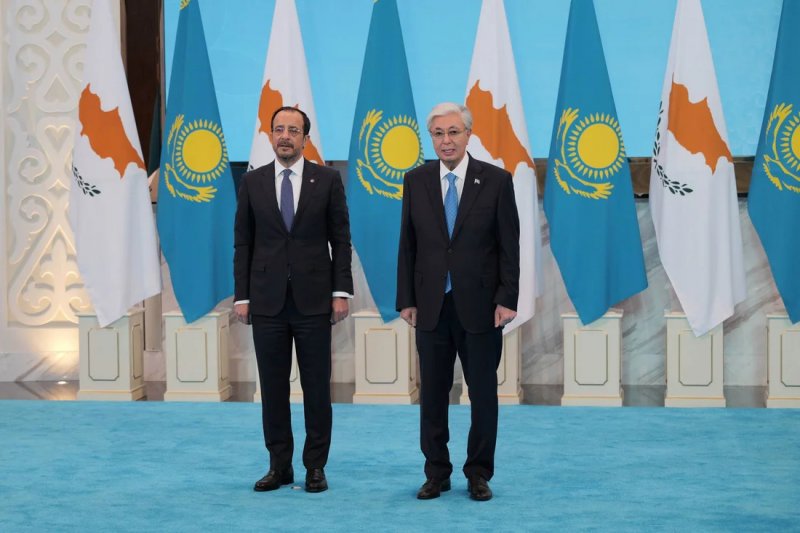
Cypriot President Nikos Christodoulides’ official visit to Kazakhstan has become an important political and economic signal for bilateral relations, which are now moving towards a more practical and institutionalised stage. Following talks in Astana, Kazakh President Kassym-Jomart Tokayev proposed developing a roadmap for economic cooperation between Kazakhstan and Cyprus through 2028, as well as establishing an intergovernmental commission on economic cooperation and a business council.
The Cypriot leader’s visit carries particular significance not only in the bilateral context but also in terms of strengthening Kazakhstan’s ties with the European Union. Christodoulides arrived in Astana on the first flight on the Larnaca–Astana route, symbolising the launch of regular direct air services between the two countries. This step could become an important factor in expanding business contacts, tourism, educational exchanges, and investment cooperation.
RECOMMENDED STORIES
- Rasul Kospanov: Interstate ties with Russia are more façade than reality - INTERVIEW
- Kazakhstan and Russia agree to fund Kazakhstan’s first nuclear power plant
- Putin says Russia remains one of Kazakhstan’s top trading partners
- Kazakhstan and Russia collaborate on 170+ projects totaling USD 53 billion
During the talks, Tokayev emphasised that Kazakhstan is interested in developing a multifaceted partnership with Cyprus and is ready to reach mutually beneficial agreements. According to him, relations between the two countries are developing steadily, supported by regular political contacts and cooperation between their foreign ministries. The mutual opening of embassies in Astana and Nicosia, the Kazakh leader noted, has created a solid institutional foundation for more systematic and practical engagement.
“We have just held substantive talks and reaffirmed our shared commitment to further developing bilateral cooperation. Kazakhstan is ready to conclude mutually beneficial agreements, as we highly value the traditional bonds of friendship with your country,” Tokayev said.
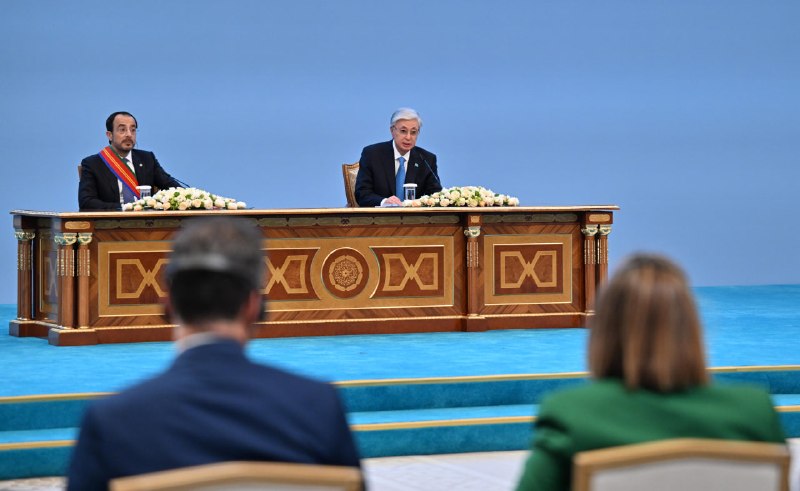
The President of Kazakhstan also noted that Christodoulides’ visit is taking place during Cyprus’ presidency of the Council of the European Union. Astana views this as an additional opportunity to expand cooperation not only with Nicosia but also with the European track more broadly. Kazakhstan has been consistently strengthening cooperation with the EU, which remains one of the country’s key economic and investment partners.
According to Tokayev, the current level of trade between Kazakhstan and Cyprus does not yet reflect the real potential of the two economies. That is why, he stressed, the main task for both sides is to move from political will to concrete economic results. In this context, the proposed roadmap through 2028 could become an instrument for identifying priority projects, implementation timelines, and responsible institutions.
The talks between the two presidents continued in an expanded format with the participation of official delegations from both countries. The sides discussed the development of trade, economic and investment cooperation, as well as prospects for collaboration in digitalisation, artificial intelligence, logistics, finance, tourism and education. Such a broad range of areas shows that Kazakhstan and Cyprus are seeking to move their relations beyond the traditional diplomatic agenda and give them concrete economic substance.
Special attention was given to investment. Tokayev said Kazakhstan welcomes Cypriot companies that are ready to invest and expand their presence in the country. He noted that creating favourable conditions for businesses and investors is one of the key priorities of Kazakhstan’s policy. According to the President, Cypriot companies can count on practical support from the Kazakh government in implementing investment projects.
For Kazakhstan, Cyprus is of interest not only as an individual partner but also as a member state of the European Union with a developed financial, business and legal infrastructure. For Cyprus, in turn, Kazakhstan can serve as an important gateway to Central Asia, a region that has been gaining increasing importance in international politics, logistics and energy in recent years.
President Christodoulides said Nicosia is interested in expanding bilateral cooperation and recognises Kazakhstan’s strategic role as a partner of the European Union. He emphasised that Cyprus can serve as a reliable gateway to the European market for Kazakh investors and companies.
“We recognise the geopolitical importance of Central Asia and Kazakhstan’s role in the world. Kazakhstan is a strategic partner of the European Union. Cyprus, as a member state of the European Union, can serve as a reliable gateway to the European market for investors and companies from Kazakhstan,” Christodoulides said.
According to him, Cyprus offers a predictable business environment fully aligned with EU standards. He named information and communication technologies, fintech, investment funds, shipping, tourism, education, renewable energy and infrastructure among the promising areas of cooperation. The Cypriot President also highlighted the significant potential for cooperation with the Astana International Financial Centre, particularly in financial services and green finance.
The importance of the visit is further reinforced by the launch of direct air services between Larnaca and Astana. For businesses, this means more convenient communication; for the tourism sector, new opportunities; and for diplomacy, an additional channel for rapprochement. The direct flight could contribute to an increase in mutual visits, the development of educational programmes, and stronger contacts between the business communities of the two countries.
The creation of an intergovernmental commission on economic cooperation could become an important element of the new agenda. Such a mechanism would allow both sides to regularly assess the implementation of agreements, remove administrative barriers, and coordinate the work of relevant agencies. A business council, in turn, could serve as a platform for direct dialogue between entrepreneurs, investors and government institutions in Kazakhstan and Cyprus.
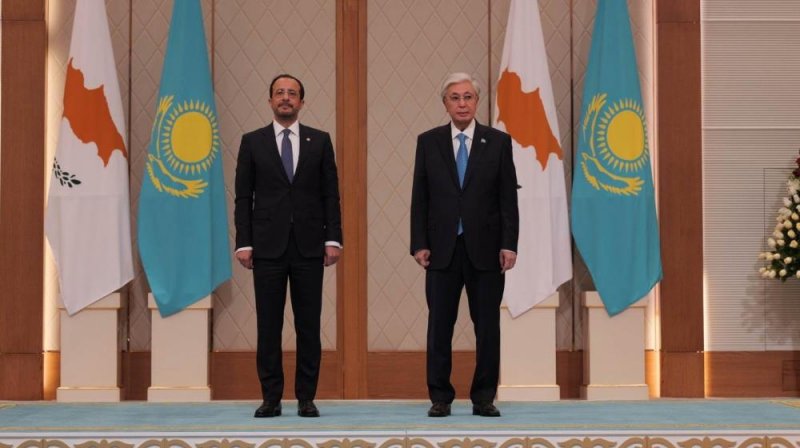
Interparliamentary ties are also of particular importance. Tokayev noted that they form a stable political and legal basis for further rapprochement between the two countries. This is especially important amid the expansion of the economic agenda, as many investment and trade projects require not only political support but also a reliable regulatory framework.
Following the talks, the sides confirmed their readiness to develop cooperation in trade, investment, transport and logistics, digital communications, artificial intelligence and finance. They also noted the potential for cooperation in culture, education, sports and tourism. In this sense, the Cypriot President’s visit to Kazakhstan may become a starting point for a more active and structured stage in relations between the two countries.
For Astana, strengthening its partnership with Nicosia fits into a broader strategy of diversifying foreign economic relations and expanding cooperation with the European Union. For Cyprus, Kazakhstan represents a key partner in Central Asia, a region where transport corridors, energy projects, digital solutions and financial instruments are becoming increasingly important.
The roadmap through 2028 proposed by Tokayev may become the main practical outcome of the current visit. If both sides fill it with specific projects, timelines and implementation mechanisms, Kazakhstan–Cyprus relations will gain new momentum, while political dialogue will be supported by tangible economic results.


Similar news