U.S.–Japan rare-earth framework: A strategic push against China


.png)
Editor’s note: Faig Mahmudov is a journalist based in Azerbaijan. The views expressed are the author’s own and do not necessarily reflect those of News.Az.
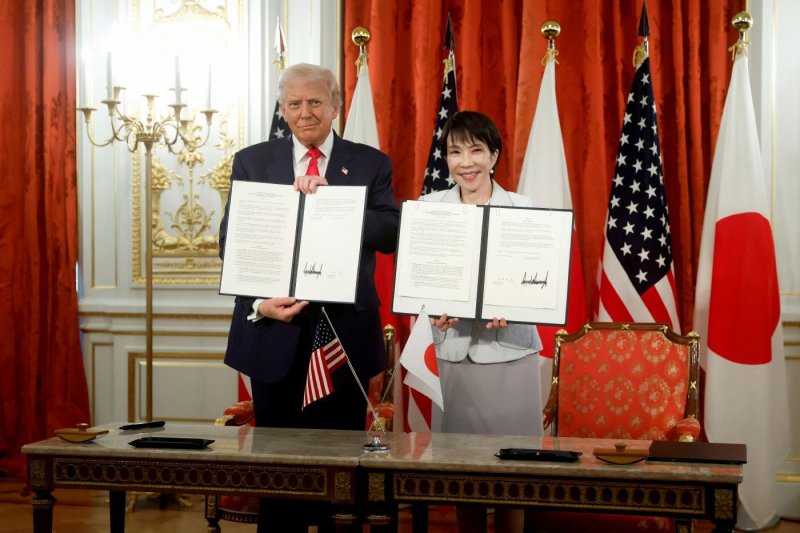
On October 28, 2025, U.S. President Donald Trump and Japan’s new prime minister, Sanae Takaichi, signed a framework agreement in Tokyo to secure supplies of rare earths and other critical minerals - an explicit effort to reduce dependence on China’s near-monopoly over processing and magnet production. The deal comes just days before a planned Trump–Xi meeting at APEC, giving it both economic and geopolitical significance.
While described as a "strategic framework" rather than a formal treaty, the agreement outlines several concrete initiatives. The two governments will jointly identify mining, processing, and downstream projects - such as magnets, batteries, catalysts, and optical materials - to close gaps in the supply chain.
They also commit to aligning standards and fast-tracking approvals to accelerate new capacity and expansions. Public financing, credit guarantees, and strategic stockpiling measures are expected within roughly six months, designed to de-risk private investment. The framework also links to a broader US–Japan economic agenda agenda, including increased Japanese investment in U.S. energy and industry, along with tariff discussions tied to that investment.
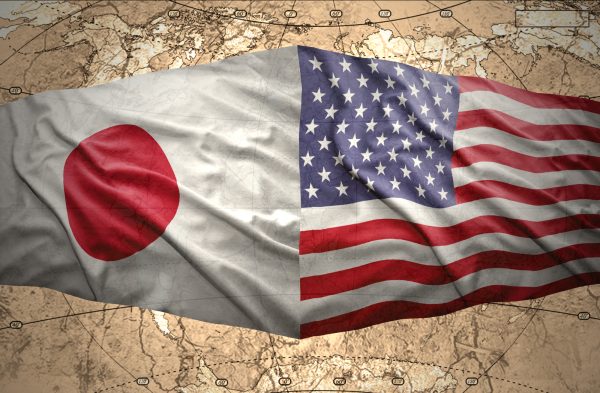
Source: The Diplomat
The logic behind the deal is clear. China currently controls the overwhelming share of global rare earth refining and magnet manufacturing, reinforced through export controls and licensing. The U.S.–Japan pact represents a direct response to that dominance. Japan, a major consumer of advanced magnets and a leader in high-tech manufacturing, relies heavily on stable supply. The United States contributes scale, capital, and security guarantees. Together, they seek to ensure resilient supply chains, particularly for sectors vital to defense and clean-energy technology.
The timing, just before a Trump–Xi meeting, adds diplomatic leverage, signaling that Washington and Tokyo have credible alternatives even as they negotiate other trade issues with Beijing.
Immediate beneficiaries are likely to include U.S. and Japanese magnet producers and automotive manufacturers. Multi-year offtake commitments and financing support can justify new production lines and secure feedstock from friendly suppliers such as Australia and the U.S. itself. Allied miners and processors also stand to gain, as aligned permitting rules and public-finance backing make previously marginal projects more viable. Defense supply chains, which depend on neodymium-based magnets for radar, guidance, and propulsion systems, could also see strengthened resilience.
However, there will be losers as well. Manufacturers in third countries without government support may face tighter markets and more volatile prices as long-term contracts absorb available supply. Chinese refiners, while not immediately affected, may lose customers as allied nations diversify.

Source: Lowyinstitute
Some elements of the deal can take effect quickly. Aligned environmental and product standards, fast-track permitting, and early financing commitments can begin within a year. Brownfield expansions of existing magnet plants in Japan and the U.S. are far easier to deliver than entirely new mines. Public institutions such as the U.S. Development Finance Corporation and Japan’s JBIC are expected to play key roles in early funding and insurance measures.
Other parts will take longer. Establishing new refining and separation facilities involves complex chemistry, waste management, and local approvals. These projects typically take years to complete, and the pact cannot change those fundamentals. Nor can it immediately match China’s cost advantage or integrated supply networks, which have been built over decades.
The agreement also fits into a wider energy and trade agenda. Japan is simultaneously seeking to diversify its energy sources, increasing LNG imports from the U.S. while reducing dependence on Russian and Australian supplies. That diversification underscores Tokyo’s goal of resilience rather than full decoupling.
Financial markets are already responding. The pact is seen as bullish for allied-bloc magnet and processing firms and for developers in Australia and North America with advanced permits. Strategic stockpiling and long-term contracts may lift average prices but will also stabilize supply chains. Together with similar U.S.–Australia initiatives, the deal signals a broader “friend-shored” minerals corridor linking the major democracies of the Indo-Pacific.
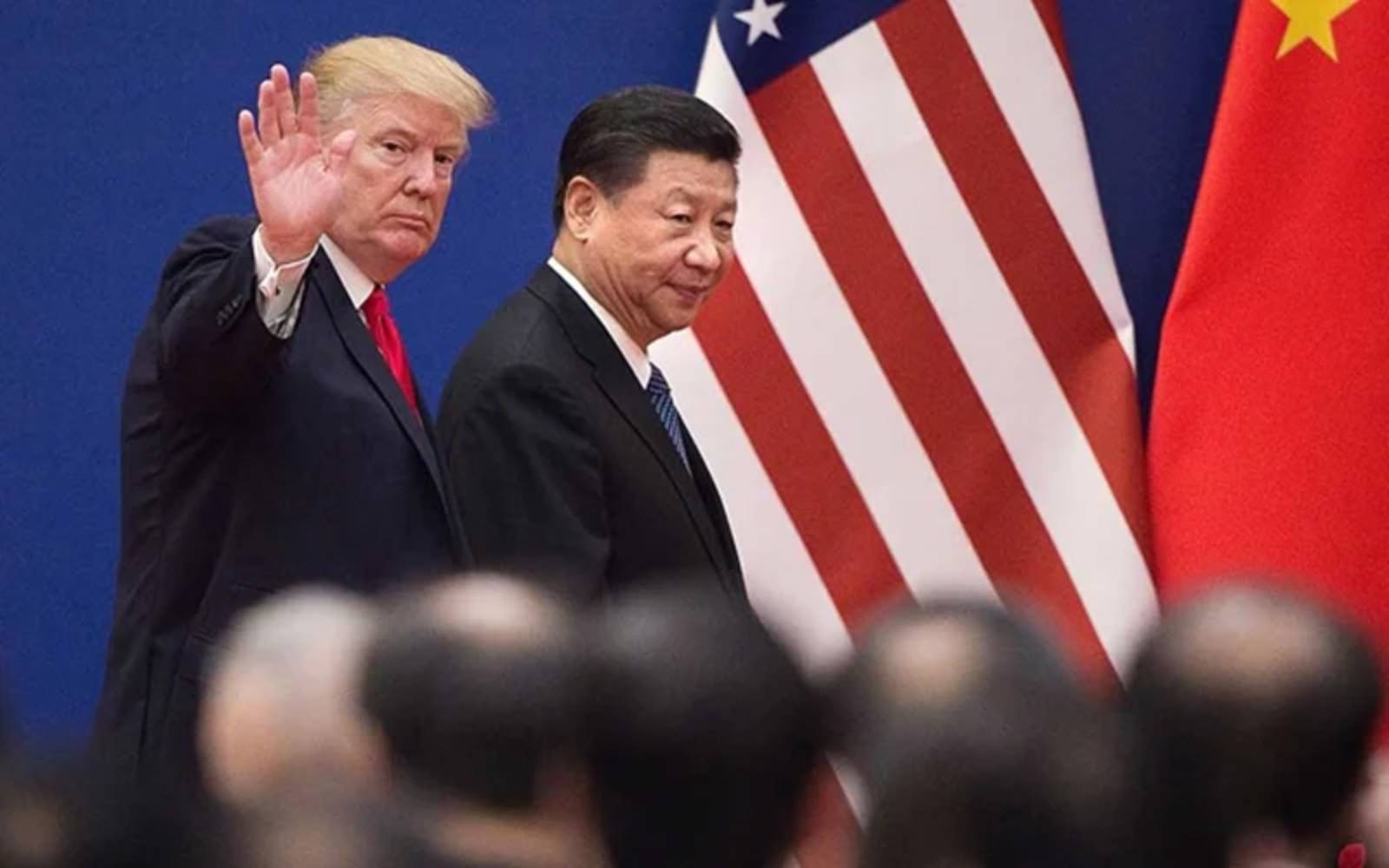
Source: Reuters
Still, the path ahead carries risks. Project execution challenges, cost overruns, and technical setbacks can delay progress. Environmental scrutiny remains intense, especially over radioactive waste in certain ores. Political shifts in either country could alter priorities or budgets. And China retains the capacity to respond by adjusting export policies or using pricing power to influence markets.
In the months ahead, observers expect a detailed project list, initial public-finance allocations, and a joint stockpiling roadmap. By 2026, at least one new allied separation facility may reach a final investment decision, and new magnet-production lines are likely to be announced. Outcomes from any Trump–Xi discussions at APEC could influence the pace of implementation but not its overall direction.
Ultimately, this pact is less about a single mining project and more about building the financial and regulatory architecture that can make a whole category of strategic resources investable. It will not displace China’s lead overnight, but it reduces the risk of future supply crises and deepens the economic foundation of the U.S.–Japan alliance. Its success now depends on turning framework promises into funded projects, harmonized standards, and long-term industrial commitments.
(If you possess specialized knowledge and wish to contribute, please reach out to us at opinions@news.az).


Similar news