US presidential election: Trump or Harris?


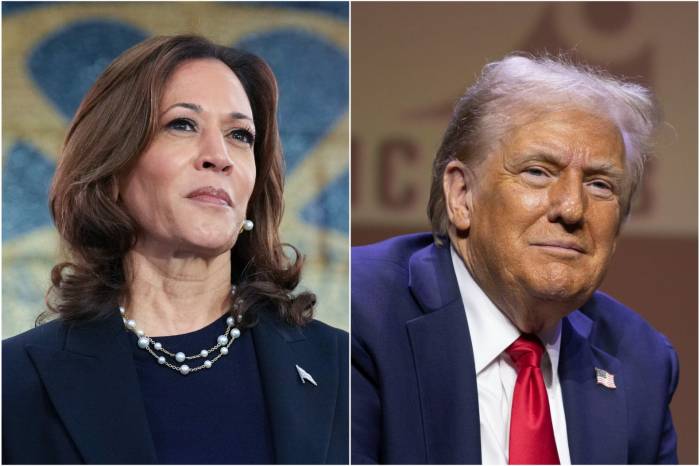
Editor's note: Ruslan Shevchenko is a political analyst from Moldova, Doctor of Historical Sciences. The article expresses the personal opinion of the author and may not coincide with the view of News.Az.
The "presidential" race in the United States is gradually approaching its conclusion. With less than three weeks remaining until its end (the election will take place on November 5), some conclusions can already be drawn.Compared to the 2020 election, where the Democrats’ "ace" that helped bring then almost 78-year-old Joe Biden into the White House was the Black Lives Matter movement, they no longer have such a "joker" in their hand today. Biden is still the sitting president, set to leave office in a few months. By nominating him, the Democratic Party made a fatal mistake: Biden, often slipping into senile moments, losing his sense of orientation, and forgetting where he is or with whom he is speaking, has become a laughingstock not only in the United States but worldwide. This is what happens when someone’s time comes too late. Had Biden become president 10 to 15 years earlier, he might have gone down in history as a dignified and respected leader of the world’s only superpower. Instead, the Democratic establishment’s decision to bet on Biden has significantly weakened the party's position.
In contrast, the Republican candidate Donald Trump , though only four years younger than Biden (he turned 78 this year), does not yet suffer from similar cognitive issues and tries to project decisiveness and confidence in victory. He has transformed into a truly charismatic leader of the Republican Party, one not seen since the days of Ronald Reagan. Although his opponents often view him as a shallow and superficial person, Trump has managed to show that he is capable of thinking on a larger scale.
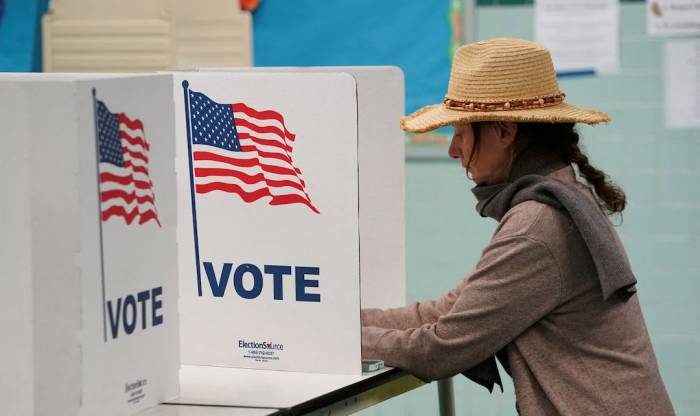
The Democratic electorate, which has long been based on the African American and Native American minorities, as well as immigrants from Mexico and other Central American countries, gradually lost faith in Biden during his presidency. The reasons for this include the withdrawal of troops from Afghanistan in 2021, which led to the Taliban regaining control and reinstating semi-medieval policies, and especially Hamas' attack on Israel on October 7, 2023. This event forced the Democratic Party to make an uncomfortable choice between Palestine, supported by a large portion of the African American and Native American population, and Israel, which has immense influence over the entire American political class. The Democrats' support for Israel, even if often reluctant, caused dissatisfaction among this part of the electorate.
At the same time, one of the Democrats' main "trump cards" that the Republicans have yet to outmatch remains their social policy: numerous benefits and support for minorities, assistance to the poor and disadvantaged (such as weekly unemployment benefits of $600 and a $200 monthly increase in social security), and the development of the nation's infrastructure (which has seen investments of up to $2 trillion since 2020). The minimum wage has significantly increased, and access to healthcare has notably improved. Taxes for corporations and high-income individuals are gradually rising. All of this attracts left-wing and centrist supporters, pensioners, and the unemployed to the Democrats' side.
The Democrats' second trump card is their immigration policy. By effectively dismantling the border barriers with Mexico, the Democratic administration has triggered a massive influx of refugees from Central American countries. This could lead to a situation in 2-3 electoral cycles (10-15 years) where the Democratic Party wins all elections due to the numerical advantage of their supporters. The third important argument in favor of the Democratic Party is their consistent stance on the Ukraine issue and their firm support for Ukraine, though it has been insufficient to secure a victory against the invading Russian forces.
The Republican electorate, which mainly consists of white and traditionalist Americans, was disheartened by the 2020 defeat and instead turned to other principles and ideas. These principles aimed to make the U.S. a nation independent of external influences, with a rapidly growing economy, a reduction of government interference, a powerful military-industrial complex, strengthened global leadership, the protection of national interests, and the preservation of traditional views on family and marriage, particularly their strong opposition to abortion. Republicans also advocate for retaining the death penalty and other similar conservative positions. Biden's and the Democratic Party’s failures have helped gradually restore the Republican Party's standing in society. As the 60th U.S. presidential campaign began, both parties appeared almost neck and neck in the polls.
Biden’s biggest problem has been his age and physical condition. During his nomination process, several key figures within his own party tried to dissuade him from running, but he refused to listen, as there was no real alternative at the time. As a result, Biden easily won the party’s primaries and was officially nominated along with Kamala Harris as the Democratic Party’s candidates for the U.S. presidency on March 12, 2024.
Trump, on the other hand, faced a more challenging situation this time. Although he remained the Republican frontrunner, he was challenged by several well-known and popular party figures, such as Florida Governor Ron DeSantis and former U.N. Ambassador Nikki Haley. Haley even managed to outpoll Trump in several key states. However, Trump’s authority and influence within the party ultimately prevailed, and on July 15, 2024, he was officially nominated as the Republican candidate for president. However, his unclear, conciliatory position on the Ukraine issue worked against him. His calls for compromise, willingness to negotiate with Vladimir Putin —an internationally recognized war criminal by the International Criminal Court—and attempts to mediate by suggesting Ukraine cede some of its territories to Russian aggressors caused confusion and disagreement both in Europe and the U.S. As a result, three assassination attempts were made on Trump’s life during the campaign, one of which, in July 2024, nearly ended in tragedy. However, Trump managed to turn the situation to his advantage, portraying himself as a victim of extremists that the ruling Democratic Party had failed to control.
The presidential debates on June 27, 2024, were an obvious defeat for Biden, even in the eyes of his own party members. Biden could no longer quickly grasp the situation and was more of a passive observer compared to the active and aggressive Trump, despite Trump’s usual habit of exaggerations and fabrications.
This situation caused confusion within the Democratic Party leadership. It became clear that despite Biden’s boasting that he would win again no matter what, this task was already becoming impossible for him. After significant pressure from the party leadership, Biden announced on July 21 that he was stepping down from the race in favor of his vice president, Kamala Harris. Although Harris lacks substantial political experience and was known more as a cheerful, fun-loving figure without any serious political agenda, Democratic voters were reinvigorated. The subsequent month saw a rise in the Democratic Party's popularity among the electorate.
The peak of this surge in popularity came during the televised debate between Kamala Harris and Donald Trump on September 10, 2024. Trump seriously underestimated his opponent. Realizing that she lagged significantly behind him in her knowledge of various aspects of life in the U.S., as well as domestic and foreign policy, Harris thoroughly prepared for these debates. Her efforts paid off: on many issues, Harris managed to put Trump in a difficult position, and, according to both the American media and polling services (the latter being 80-90% controlled by the Democratic Party), as well as the general public, she emerged as the winner. Trump, however, believed the opposite and thought he had won. As a result, he refused to participate in another presidential debate, agreeing only to a vice-presidential debate between J.D. Vance for the Republicans and T. Waltz for the Democrats. These debates, which took place on October 1, were won by J.D. Vance, albeit by a narrow margin.
Subsequent events revealed that the effect of the Democrats' decision to replace their presidential candidate was starting to wane. Harris' obvious lack of preparedness for the highest office, several unconvincing speeches, and her lack of practical political experience—especially in foreign policy—led to a situation where even polls that are generally sympathetic to the Democrats showed both candidates running almost neck and neck. In recent weeks, particularly in swing states, Trump has even begun to slightly overtake Harris. What works in Trump's favor is the ongoing war between Israel and Hamas and Hezbollah, as its escalation will force the U.S. to support Israel, thereby alienating minorities from the Democrats. Similarly, the war in Ukraine, from which both European politicians and the public, as well as figures in the U.S., have grown weary, is becoming a liability. More and more frequently, the U.S., EU countries, China, and India are signaling to both Russia and Ukraine that it’s time to wrap up the conflict and transition to a peace settlement. This shift also benefits Trump, as he has consistently called for a swift peace agreement in the Russia-Ukraine war.
It’s worth recalling that the 44-day war (September 27 – November 9, 2020), which occurred during Trump's Republican administration, did not provoke sharp condemnation from Washington of Azerbaijan’s actions. At the time, the U.S. mainly called for reconciliation and a quick ceasefire. In contrast, the swift operation to eliminate the remaining resistance of the separatist regime in Karabakh (September 19-20, 2023), and its final dissolution alongside the flight of the Armenian population from this Azerbaijani region, provoked open irritation and sharp criticism of Azerbaijan from President Biden’s Democratic administration. This says a lot to Azerbaijan.
Although no one can say for certain how the U.S. presidential election on November 5 will end, it is clear that the current foreign policy climate is not in favor of the Democratic Party. Both Biden, who remains in power, and his potential successor, Harris, will have to work hard to reverse this emerging negative trend and maintain their slight advantage over Trump in many states. Whether they succeed, we will find out in the very near future.
(If you possess specialized knowledge and wish to contribute, please reach out to us at opinions@news.az).


Similar news