Vasiliy Papava: Azerbaijan’s active neutrality helps prevent chaos in the South Caucasus - INTERVIEW


The South Caucasus and the Middle East are entering a period of heightened uncertainty, marked by rising tensions between Iran and Israel, shifting regional alliances, and mounting pressure on regional security frameworks. These risks increasingly intersect with energy security, strategic transport corridors, and internal instability within Iran, including political fragmentation and an acute water crisis.
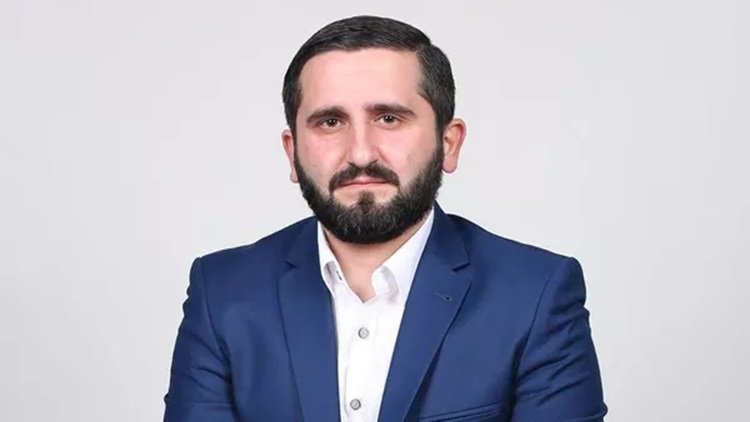
Against this complex backdrop, the News.Az analytical portal interviewed Georgian Iranologist Vasiliy Papava, who offered a detailed assessment of how these dynamics may reshape regional balances and affect countries such as Azerbaijan and Georgia in an increasingly volatile geopolitical environment.
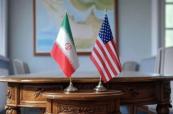
– The Axios portal reported that Israel warned the United States that Iran, under the guise of exercises by the Islamic Revolutionary Guard Corps (IRGC), may be preparing for an attack. At the same time, NBC News noted that Israel plans to inform Washington of its intention to strike Iranian targets and then proceed with attacks. How likely is such a scenario, and what risks could it pose for Azerbaijan?

Source: Reuters
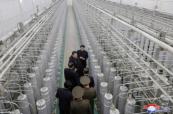
– The current escalation between Israel and Iran is a direct continuation of the large-scale confrontation of June 2025, the so-called “12-day war.” At that time, Israel, during Operation Rising Lion, and the United States, during Operation Midnight Hammer, carried out massive strikes on Iranian facilities. According to intelligence assessments, key sites in Natanz, Fordow, and Isfahan were almost completely destroyed, setting Tehran’s nuclear program back by years.
According to the latest Axios reports, Israeli intelligence and Chief of the General Staff Eyal Zamir personally warned the United States that recent IRGC missile exercises may not be mere maneuvers, but preparations for a sudden “retaliatory” strike. Although Israeli assessments place the probability of such a scenario below 50 percent, the Israeli Defense Forces’ level of alert is currently at its maximum. At the same time, U.S. intelligence has not yet confirmed signs of an imminent attack.
Meanwhile, according to NBC News, Prime Minister Benjamin Netanyahu is preparing to present President Donald Trump with options for new preventive strikes during a meeting on December 29. Israel is extremely concerned that Tehran is restoring ballistic missile production at record speed, with Iran reportedly aiming for up to 3,000 units per year, and repairing air defense systems damaged in June.
The likelihood of the described scenario, whether a preventive Israeli strike coordinated with Washington or an Iranian attack under the cover of exercises, remains moderate but persistently high. As sources in Axios and The Times of Israel note, the main trigger may not even be malicious intent, but mutual distrust and the risk of miscalculation. Israel, having gone through the traumatic experience of October 2023 and the June war of 2025, now demonstrates an extremely low tolerance threshold for any potential threats. In turn, Tehran is motivated to restore deterrence at any cost, both through its proxies and through direct missile capabilities.
The Trump administration, judging by the context, may well grant Tel Aviv political carte blanche or even limited military support. For Washington, containing Iran is an unconditional priority, although there is still no desire to be drawn into a full-scale escalation. Thus, a major war does not appear inevitable in the coming weeks, but it could materialize in 2026 if intelligence confirms a critical buildup of Iran’s missile arsenal.
For Azerbaijan, such a scenario creates a complex set of challenges, driven both by geographical proximity to Iran and by a deep strategic partnership with Israel. For years, Baku has been building a sophisticated security architecture, successfully combining pragmatic ties with Tehran in transit and energy with a close alliance with Jerusalem in military-technical cooperation, supplies of up to 40 percent of Israel’s oil imports, and intelligence sharing.
The events of June 2025 already tested this model. At that time, the Iranian side accused Baku of providing territory for Israeli operations, claims that the Azerbaijani Foreign Ministry firmly rejected. This led to demonstrative deployments of IRGC forces near the borders. A new wave of escalation would inevitably revive these accusations. Iran may attempt to exert pressure through hybrid tools, ranging from border provocations to information attacks.
From an economic perspective, risks are linked to potential destabilization of transport corridors and threats to energy infrastructure, including the Baku–Tbilisi–Ceyhan pipeline. At the same time, the current situation reinforces Azerbaijan’s status as a key ally of the West and Israel in the region, opening access to advanced defense technologies and strengthening Baku’s position as a guarantor of Europe’s energy security.
Under these conditions, Azerbaijan continues to pursue a policy of active neutrality. Baku not only avoids being drawn into the conflict, but also acts as a stabilizing factor, preventing regional chaos from destabilizing the South Caucasus. Despite the objective side effects of instability, Azerbaijan retains its role as the main transit and political hub, whose stance largely determines the resilience of the regional balance.
– Recently, Ali Akbar Velayati, adviser to Iran’s Supreme Leader on international affairs, stated that Tehran opposes the “Trump route” because it poses a serious threat to Iran’s security. Armenia’s Foreign Ministry declined to comment on this statement. Meanwhile, Armenian Deputy Speaker Ruben Rubinyan said that Armenia proceeds from the Iranian Foreign Ministry’s position on the “Trump route,” which notes that the project takes into account Tehran’s “red lines” and creates opportunities for Iran. How can these contradictions in Iranian policy be explained?

Source: IRNA
– The contradictions in statements by Iranian officials regarding the “Trump route,” a transport corridor through southern Armenia managed by private American companies, at first glance seem paradoxical. In reality, however, they reflect a deep internal divide within Tehran itself.
Ali Akbar Velayati, as the “eyes and ears” of the Supreme Leader, voices the position of the conservative wing and the IRGC. For him, any appearance of American structures near Iran’s northern borders is a geopolitical catastrophe. Velayati views this project not merely as a road, but as a NATO “Trojan horse” designed to permanently cut Iran off from Armenia and deprive Tehran of its status as a regional transit monopolist. His harsh rhetoric is a signal to Baku and Washington that Iran’s security structures are ready to sabotage the project if their interests are ignored.
At the same time, the diplomatic establishment under President Masoud Pezeshkian is forced to play the role of the “good cop.” Rubinyan’s references to Iran’s Foreign Ministry are understandable, as Yerevan benefits from emphasizing Tehran’s pragmatic line. Iran’s Foreign Ministry is trying to maneuver by referring to certain “red lines” in order to avoid total isolation during the project’s implementation.
In essence, we are witnessing a classic Iranian game on two boards: while diplomats try to bargain for economic preferences and participation in transit routes, conservatives threaten the use of force to raise the price of those very preferences.
Such divergence in emphasis is a hallmark of the Iranian political system. The Supreme Leader and his circle set rigid strategic frameworks, while the government and the Foreign Ministry maneuver within them, seeking tactical gains. Tehran is unyielding on one point: it categorically rejects any form of extraterritoriality or the presence of foreign military forces near its borders. However, behind this wall of principle there is always room for flexible negotiations if threats are neutralized by profitable deals.
The Armenian side, deliberately relying on the softer formulations of Iran’s Foreign Ministry, is attempting to solve its own task: reassuring Tehran and maintaining balance in relations with a powerful neighbor. Yerevan has a vital interest in avoiding instability on its southern border.
Ultimately, these “contradictions” within Iran’s leadership are not a sign of weakness or disunity, but a calibrated instrument. Through Velayati, Iran marks its red lines and readiness to escalate, while through the Foreign Ministry it keeps the door open for compromise. This is not chaos, but a complex diplomatic game in which every voice serves as a signal to external players.
– The year 2025 is coming to an end. Let us sum up the year in Georgian–Iranian relations. What stands out in this area?

Source: BBC
– The outgoing year 2025 marked a continuation of the trend toward deepening Georgian–Iranian relations, primarily in the economic and diplomatic spheres, against the backdrop of cooling ties between Tbilisi and the West and the ruling Georgian Dream party’s search for alternative partners.
Although key political contacts, including Prime Minister Irakli Kobakhidze’s participation in the inauguration of Iran’s new president, Masoud Pezeshkian, took place back in 2024, it was in 2025 that the sides focused on realizing the potential for cooperation. This continued a line established earlier through visits and statements highlighting Iran’s constructive role in the region. Throughout 2025, this approach drew criticism from the opposition and nongovernmental organizations, including Transparency International Georgia, which accused the authorities of excessive rapprochement with a nondemocratic regime.
By the end of 2025, economic turnover between the two countries demonstrated resilience, consolidating the results of the record year of 2024.
The economic dimension of bilateral relations showed remarkable stability. Trade turnover, which had already gained momentum in previous periods, not only held steady in 2025 but moved toward a new record. This was largely driven by active imports of Iranian construction materials, food products, and metal goods. Business statistics also deserve attention: by midyear, the number of companies registered in Georgia with Iranian capital exceeded 13,000.
At the same time, independent experts point to an anomalous concentration of hundreds of legal entities at identical addresses, reinforcing suspicions that these structures are being used to circumvent international sanctions.
Iranian capital continued to flow into the real estate, logistics, and tourism sectors. All of this unfolded against the backdrop of a continued visa-free regime, which noticeably revitalized tourism and added momentum to cultural contacts between Tbilisi and Tehran.
The final note of the year was the signing of a memorandum of understanding in the fields of motorsports, overland tourism, and road safety.
Overall, 2025 will be remembered as a period of transition from cautious engagement to a more substantive partnership. This drift toward closer ties was driven not by sentiment, but by harsh geopolitical realities and straightforward economic calculation. Naturally, this shift had domestic consequences within Georgia itself. Throughout the year, debate continued over whether Georgian Dream was risking the Western vector too heavily in favor of Eastern ties. How the situation develops further will depend on regional stability and the intensity of external pressure, but the foundation laid this year suggests that this course is unlikely to change in the near term.
– Iran has faced a serious water crisis. How could this factor affect the country’s internal stability?
Source: BBC
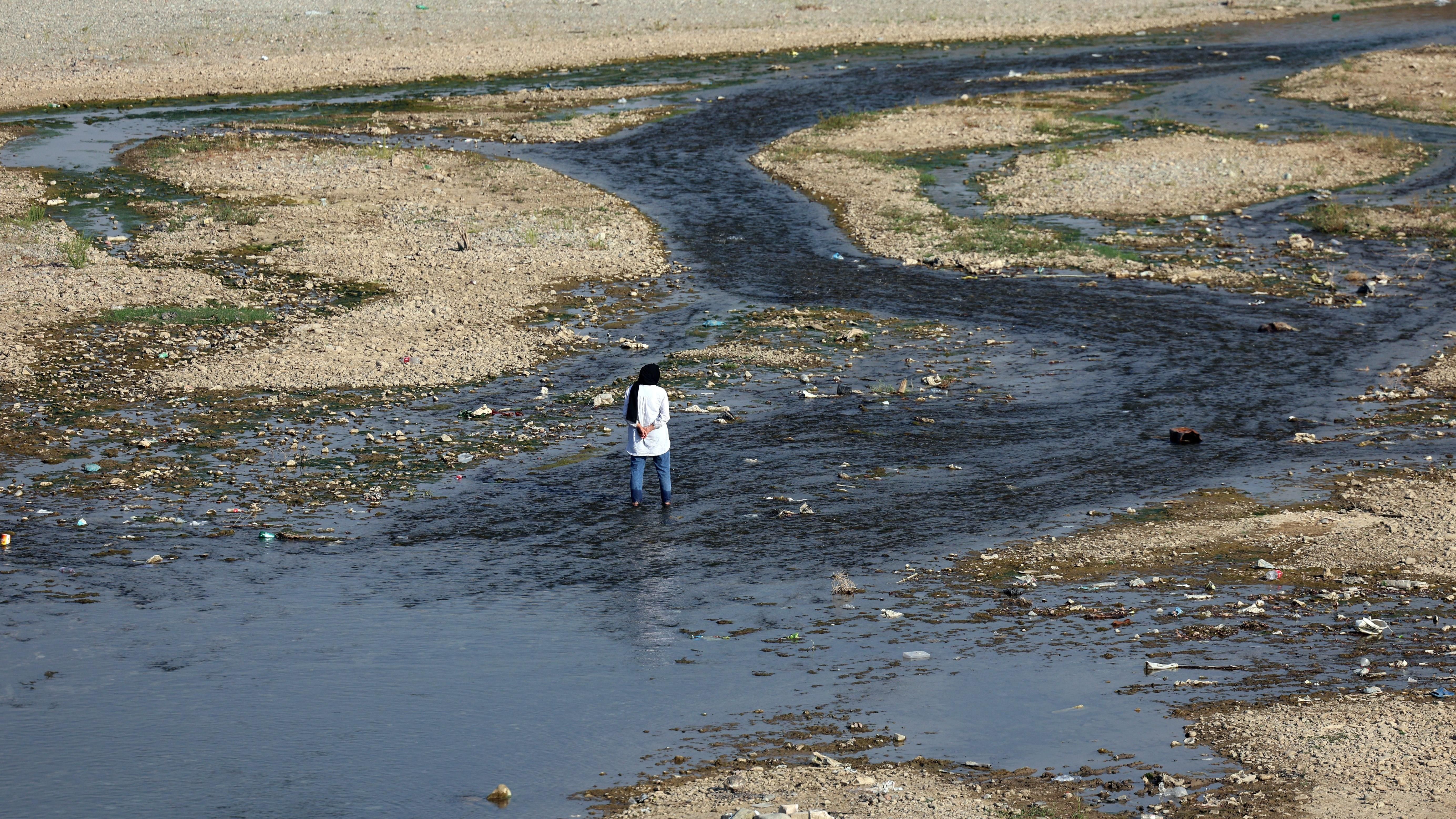
– The water collapse that engulfed Iran in 2025 is no longer merely an environmental issue, but a real-time threat to the foundations of state stability. Climate anomalies and decades of governance failures have converged. Prolonged drought has played its role, but the root of the problem lies in inefficient resource management, including reckless dam construction, reliance on water-intensive agriculture, and nepotism in water distribution. As a result, the country has entered a state of “water bankruptcy.” Once water-rich Lake Urmia and the Zayandeh Rud River have virtually disappeared from maps, leaving behind salt deserts and dust storms. This not only degrades the landscape, but literally forces people off their land, turning former farmers into “climate refugees” within their own country.
This crisis strikes at the most sensitive point: social cohesion. The mass exodus from villages to cities has already become a reality, as people flee drought and overload already strained urban infrastructure. This immediately drives up housing prices and intensifies tensions in the labor market. Farmers left without harvests or livelihoods find themselves on the brink of survival, inevitably fueling food price increases. Under conditions of harsh sanctions and runaway inflation, Iran is sinking ever deeper into dependence on food imports.
The crisis has not spared the energy sector. Empty reservoirs are not merely an environmental disaster; they also mean a sharp decline in hydropower generation. The result has been rolling blackouts, which became routine in 2025. When both water and electricity disappear from homes simultaneously, social discontent boils over, increasingly manifesting in local clashes and protests.
Most dangerous for the regime is the fact that water scarcity has become a trigger for street protests. Throughout 2025, Isfahan, Khuzestan, and other provinces repeatedly flared up, with people openly accusing Tehran of incompetence and unfair redistribution of water in favor of favored regions. In some cases, peaceful rallies quickly escalated into violent clashes with security forces and arson attacks on administrative buildings.
Tension is also rising in the capital itself. Student protests in Tehran amid nighttime water outages only add fuel to the fire. This is felt especially acutely on the periphery, among ethnic minorities, where the sense of injustice is already pronounced. Judging by public sentiment, Iranians no longer believe narratives about external enemies. Instead, blame for empty taps and dried-up fields is placed on internal corruption, which is steadily eroding the regime’s legitimacy.
In the long term, without radical reforms ranging from the introduction of modern agricultural technologies to genuine efforts to combat corruption in resource distribution, Iran risks systemic collapse. For now, protests remain localized, but the accumulated charge of discontent is enormous. Against the backdrop of sanctions and economic deadlock, water scarcity is becoming not just an environmental issue, but a direct challenge to the survival of the current political system.
By Asif Aydinli


Similar news