What's behind the Gazprom-SOCAR agreement?


By Faiq Mahmudov
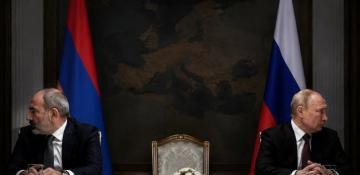
On August 19, the Russian oil company PJSC Gazprom announced that it had reached an agreement with the State Oil Company of Azerbaijan (SOCAR) to expand their multifaceted strategic partnership. Gazprom’s Chairman of the Management Board, Alexey Miller, who participated in the events during Russian President Vladimir Putin’s state visit to Azerbaijan, noted that the mutually beneficial and collaborative relationship between Gazprom and SOCAR is developing dynamically. "This particularly pertains to the North-South project and the signing of a comprehensive scientific and technical cooperation program this September. An agreement has been reached to expand the multifaceted strategic partnership," he highlighted.News.Az reached out to leading experts in the oil and gas industry to gain insights into the potential outcomes of this agreement.
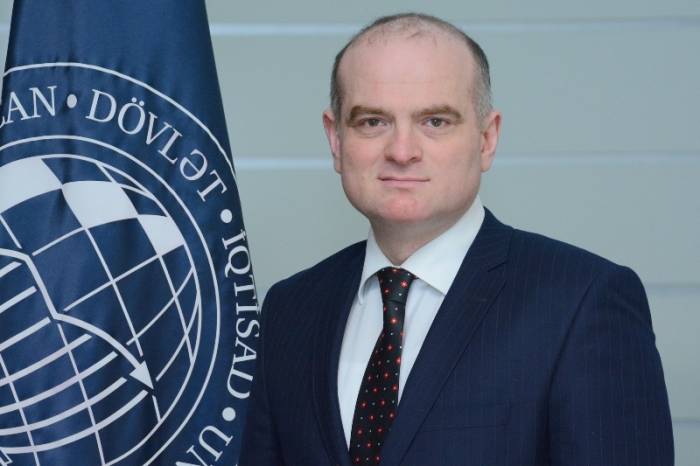
In an interview with News.Az, Doctor of Economic Sciences, Professor Elshad Mammadov , stated that deepening cooperation between Gazprom and SOCAR could offer significant economic benefits for both parties: "These organizations are system-forming entities in their respective countries and have substantial potential for collaboration. It is important to consider that Azerbaijan and Russia have been transporting their natural resources to the European market over the past decades, particularly in the oil and gas sector. Currently, geopolitical and economic realities are changing rapidly, making deepening regional cooperation highly relevant. Therefore, we need to focus on developing high value-added sectors in the region. In this context, the direction of gas processing and the deepening of cooperation with Gazprom in this area hold significant potential. For this, there is a need to enhance scientific and technical collaboration."
Mr. Mammadov emphasized that cooperation in gas transit to other regions is also possible: "Due to the sanctions imposed on Russia, large volumes of gas exports have been curtailed, and if there is a favorable price situation in the gas market, it is possible to transport these resources through Azerbaijan via the North-South Corridor to premium and promising Asian markets. This would require long-term and substantial investments. It is important to note that this is feasible only if there is an appropriate price situation in the gas market. As a priority, we should focus on the development and production of high value-added products in the region. This requires deepening scientific and technical collaboration and rapidly advancing the gas processing sector. In this context, deepening cooperation between Gazprom and SOCAR can be seen as one of the key steps towards achieving these goals."
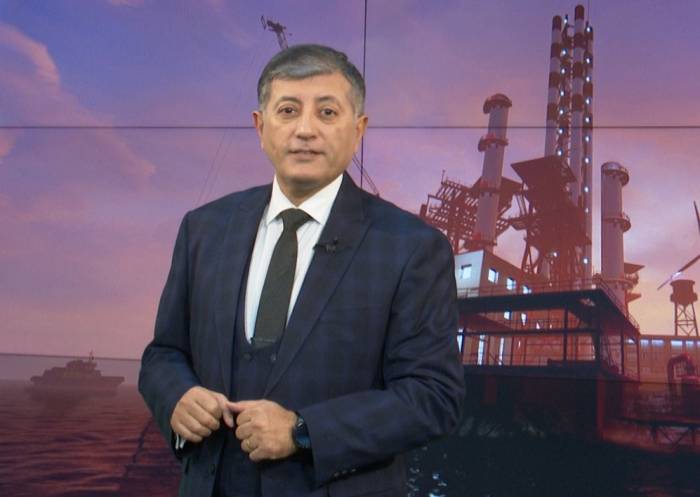
Energy expert Ilham Shaban added that there have been previous announcements about agreements with SOCAR, whether with Gazprom or Rosneft, even 10 or 15 years ago, but none of them materialized: "Therefore, I think this cooperation between SOCAR and Gazprom, which began in 2004, is purely based on marketing—that is, the purchase and sale of gas when necessary. Azerbaijan sold gas to Russia for four years. Even last year, Azerbaijan supplied nearly 360 million cubic meters of gas to Dagestan. In return, 800 million cubic meters of gas were delivered to Azerbaijan from Russia. However, this year, not a single cubic meter of gas has been purchased from Russia. In other words, there are no official statistics. Just as we regularly exchange electricity with neighboring countries, this is also a form of energy exchange."
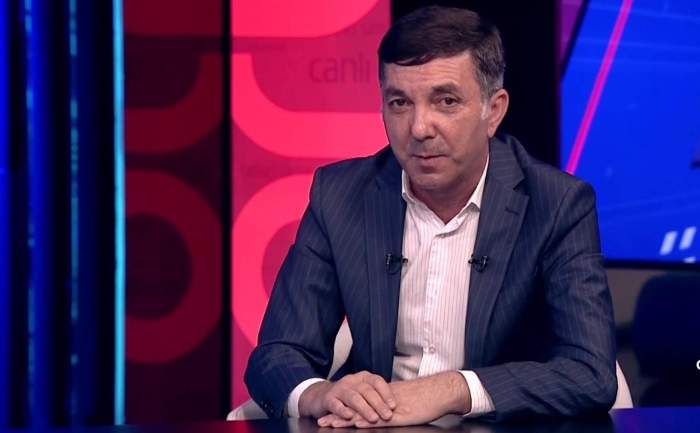
Energy expert Zafar Valiyev told News.Az that so far, SOCAR and Gazprom have not had any joint projects or major gas supply agreements involving strategic partnership: "According to the statement released by Gazprom, during Russian President Vladimir Putin’s state visit to Azerbaijan, an agreement was reached to expand the multifaceted strategic partnership between the State Oil Company of Azerbaijan (SOCAR) and Russia’s gas monopoly, Gazprom. However, this information has not been confirmed by any official Azerbaijani sources. It is solely a statement published by Gazprom. The reality is that to date, there have been no joint projects or major gas supply agreements involving a strategic partnership between SOCAR and Gazprom. It is true that there have been short-term gas supply agreements between SOCAR and Gazprom. These contracts involved relatively small volumes of gas and were of very short duration, typically lasting just a few months. They were seasonal agreements. However, I want to emphasize once again that, to date, there have been no joint projects or large-scale gas purchase agreements involving a strategic partnership between SOCAR and Gazprom."
Addressing the sanctions on Russia, Mr. Valiyev acknowledged that Gazprom is currently experiencing one of the most challenging periods in terms of its international export capabilities:
"Following Russia's military intervention in Ukraine in February 2022, Gazprom’s international export capacity faced severe difficulties. In a very short time, its export capacity was significantly restricted, and its export geography was drastically narrowed. Several of its export streams directed toward European markets have nearly ceased operations. In a short period, the Yamal-Europe gas pipeline (with an annual throughput capacity of over 32 billion cubic meters) passing through Belarus, and the Nord Stream pipeline (which runs under the Baltic Sea to Germany, with an operational annual throughput capacity of 60 billion cubic meters), ceased operations following the well-known sabotage incident in the Baltic Sea.
Now, a fourth export route faces the risk of halting operations. This concerns the five-year gas transit agreement signed in 2019 between Gazprom Export and Ukraine’s Naftogaz. With the ongoing military conflict between Ukraine and Russia, it will likely be impossible to continue exporting Russian gas to Europe via this pipeline, that is, through the Ukrainian gas transit system. This would mean that the daily supply of 42 million cubic meters of gas would cease. Currently, the daily export volumes through the Sudzha station on the Ukrainian gas transit system amount to 41-42 million cubic meters. Naturally, if gas supplies to Europe via the Ukrainian gas transit system are halted, Europe will face serious challenges with its energy security and will need to make significant adjustments to its energy policy. Several European countries, including Austria, Slovakia, Moldova, and Hungary, will encounter severe issues with their gas supply."
Mr. Valiyev also noted that Gazprom is continuing its efforts to find alternative markets to replace the lost gas volumes from the European market: "Simultaneously, Gazprom is engaged in ongoing negotiations with Central Asian countries, including Kazakhstan, Uzbekistan, Tajikistan, and Kyrgyzstan, and has signed certain agreements with Iran. After losing the European market, finding a new foothold in the Asian markets for gas cooperation will take considerable time. This involves the construction of new export pipelines, which requires substantial investments and a long period to complete.
Today, I do not see any clear outlines of a strategic partnership in the gas sector between SOCAR and Gazprom. This is because Azerbaijan has its own export capabilities. Azerbaijan’s export capacities are directed towards markets based on well-established long-term contracts, and there are no significant issues with gas supply and export. Certainly, there are several memorandums of understanding between the European Union and Azerbaijan regarding strategic partnership in the energy sector. These memorandums call for the expansion of Azerbaijan’s existing export capacities. If additional gas volumes are needed, Azerbaijan would need to expand SOCAR’s export capacities and deliver the gas volumes extracted from Azerbaijani fields to European markets through these expanded capacities. The issue is that Gazprom, facing severe financial constraints and international pressures, has limited partnership opportunities. In our region, there are several countries rich in natural gas, each with its own interests.
Therefore, if Russia turns to the Asian markets as an alternative to the lost European market, it will encounter significant challenges. For these reasons, I believe that the outlines of any strategic partnership agreement between SOCAR and Gazprom are not clear today. I would like to emphasize once again that there has been no extensive strategic partnership in the gas sector between SOCAR and Gazprom to date. On the contrary, there are extensive cooperation agreements with BP, Total, and other European and Turkish companies in the gas sector. These ongoing agreements continue to serve the interests of the Azerbaijani state."


Similar news