Why India is carefully loosening its reliance on Russia


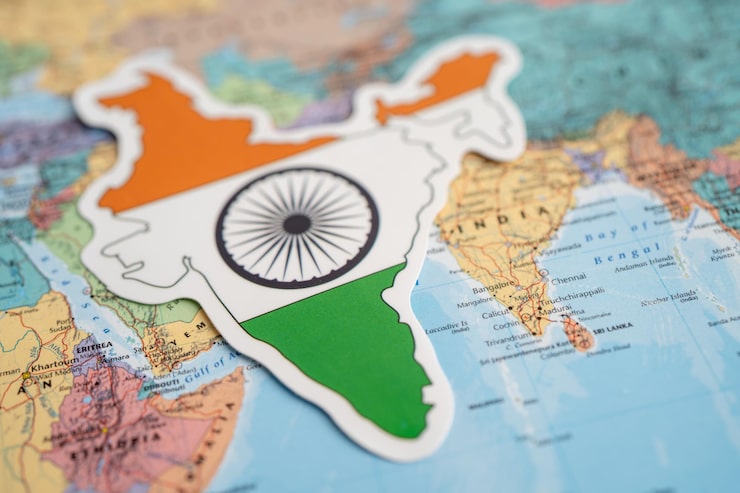
The German newspaper Die Welt reported that Chancellor Friedrich Merz plans his first official visit to India in 2026, reflecting broader structural shifts in India’s economic and strategic orientation. Rather than signaling a sudden geopolitical pivot, the visit is part of a longer-term process in which India has steadily expanded and diversified its international partnerships, particularly with Europe, while recalibrating the role traditionally played by Russia.
Economic data underscore this shift. Trade between India and the European Union has held steady above €120 billion annually, cementing the EU as one of India’s key trading partners. Germany occupies a central role, representing roughly a third of India’s total trade with the bloc. More than 1,800 German companies are active in India, and total German foreign direct investment has surpassed €20 billion.
Crucially, German investments are focused on sectors central to India’s long-term development strategy, including advanced manufacturing, automotive production, pharmaceuticals, digital technologies, and renewable energy. These areas promote sustained technological collaboration and enduring industrial partnerships, moving beyond short-term, transactional trade.
By contrast, India’s economic engagement with Russia, while experiencing growth in recent years, remains narrowly focused. Energy imports, primarily crude oil, along with fertilizers and selected raw materials dominate the bilateral relationship. While commercially significant, this model does not generate deep technological integration or diversified industrial linkages, leaving it vulnerable to price fluctuations, logistics disruptions, and geopolitical risks.
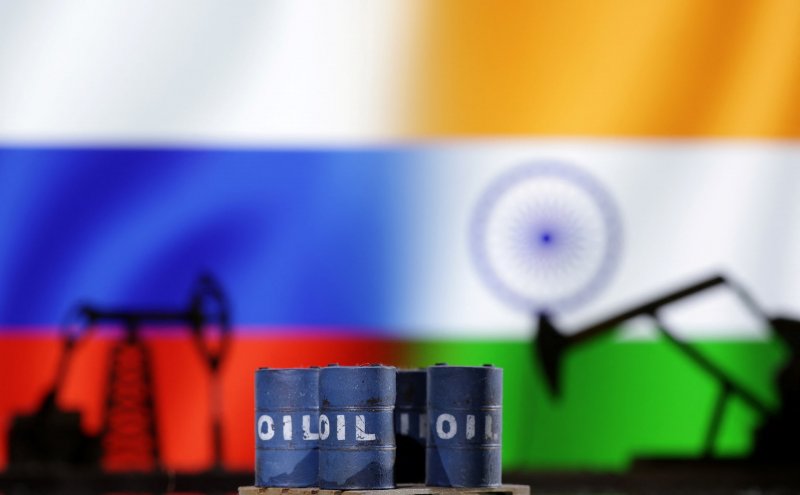 Photo: Shutterstock
Diplomatic activity reinforces this economic picture. Prime Minister Narendra Modi has intensified engagement with European capitals, including Berlin, Paris, and Brussels. High-level dialogues with the EU have gained renewed momentum, notably through the revival of negotiations on an EU–India Free Trade Agreement (FTA), dormant for over a decade.
For India, the FTA represents a gateway to greater access to European markets, advanced regulatory standards, and high-quality investment. For the EU, it provides a strategic framework for embedding India more deeply into Europe’s economic ecosystem. That these negotiations have regained priority reflects a shared recognition that the partnership has moved beyond symbolism toward institutionalized cooperation
By contrast, India’s interactions with Russia increasingly emphasize continuity rather than expansion. The tone remains pragmatic and cautious, with New Delhi carefully avoiding commitments that could restrict its flexibility in an increasingly fragmented global order.
Defense procurement offers one of the clearest indicators of India’s evolving posture. Russia was long the dominant supplier of arms to India, accounting for 60–70% of imports. That share has fallen to roughly 40% and continues to decline. India has diversified its defense partnerships, purchasing from France, the United States, Israel, and South Korea while emphasizing domestic production under the Make in India initiative. The focus has shifted from simple imports to joint production, technology transfer, and long-term maintenance ecosystems.
Germany’s growing interest in defense cooperation fits this approach. Berlin is not seeking to replace Russia as a supplier but aims to serve as a technological partner contributing to India’s industrial base. Potential collaboration in submarines, air defense systems, cyber capabilities, and military electronics reflects India’s preference for partners willing to invest in co-development rather than one-sided exports.
This evolution does not imply a rupture with Russia, but it signals a gradual reduction in dependence. As competition intensifies in technologically advanced segments of India’s defense market, Russia’s relative position becomes less secure.
Energy is another area of diversification. Germany and India have expanded cooperation in renewable energy, hydrogen technologies, and green ammonia. These initiatives align with India’s climate commitments and its goal of modernizing the energy sector while sustaining economic growth. Unlike India’s energy relationship with Russia, which remains focused on conventional fossil fuels, these partnerships provide access to capital, innovation, and industrial know-how.
India consistently frames its foreign policy around strategic autonomy, prioritizing flexibility and optionality rather than strict equidistance. By broadening cooperation with Europe, the U.S., Japan, and other Asian partners, India reduces the risks of overreliance on any single country. This approach is evident in voting behavior, diplomatic rhetoric, and economic planning. The recalibration of relations with Russia should be understood as normalization within a diversified portfolio of partnerships, not disengagement.
From a European perspective, India’s growing importance also stems from concerns about overdependence on China. Germany, in particular, is cautious about exposure to Chinese supply chains and markets. India, with its large domestic market, demographic advantages, and expanding industrial capacity, is increasingly seen as an attractive alternative for investment and production. Reconfigured supply chains, educational and research exchanges, and cooperation on digital and technological standards all reinforce India’s role in Europe’s long-term diversification strategy.
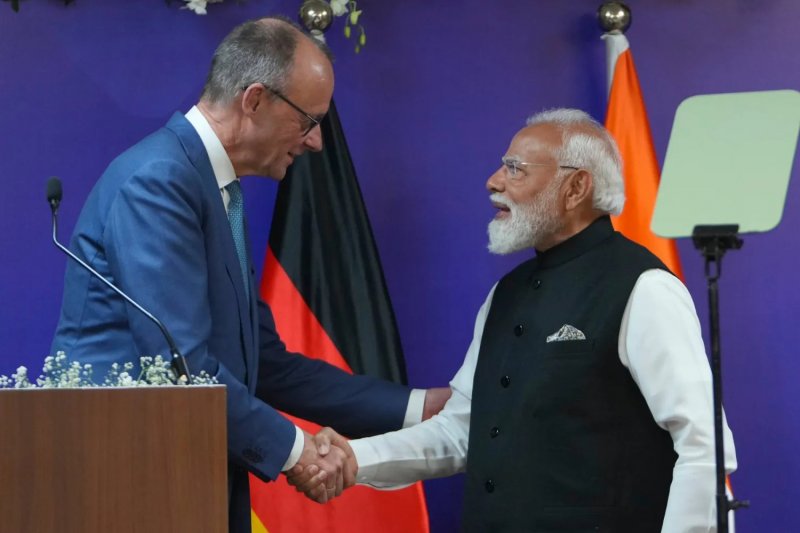 Photo: AP
Chancellor Merz’s planned visit should therefore be seen as a milestone within an already unfolding process rather than a catalyst for abrupt change. India is steadily expanding the scope and depth of its international cooperation, especially with Europe, while reshaping, but not abandoning its traditional ties with Russia.
Trade flows, investment patterns, defense procurement trends, and institutional agreements confirm this evolution. India’s foreign policy is becoming more diversified, technologically oriented, and less dependent on legacy partnerships. This reflects New Delhi’s ambition to strengthen strategic autonomy and resilience in a world defined by competition rather than alignment.
For Europe and Germany, deeper engagement with India offers economic opportunity and strategic balance. For Russia, it signals that historical ties alone are no longer sufficient to maintain privileged status with one of the world’s most important emerging powers.
By Tural Heybatov


Similar news