Why Putin сhose Budapest and how Trump fell for the game


Editor’s note: Vladimir Bekish is a Russian military and political analyst and strategic security expert specializing in the Middle East and Africa. The article reflects the author’s personal views and may not represent those of News.Az.
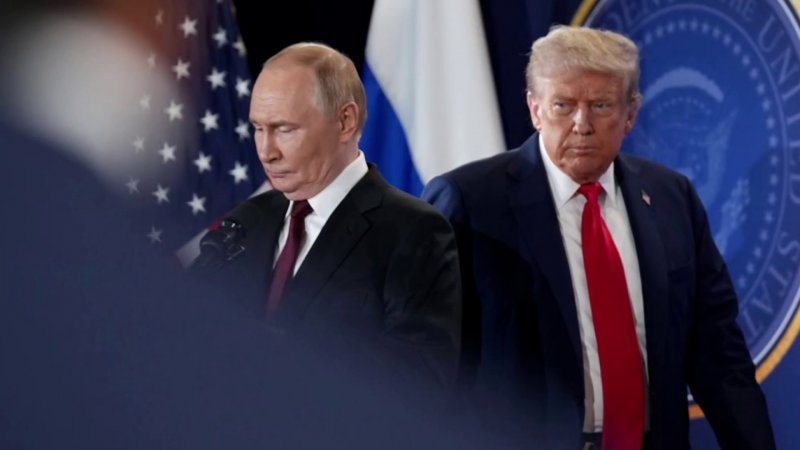
As Washington and Moscow prepare for a meeting in Budapest, the choreography behind it reveals far more than mere diplomacy. From Putin’s mastery of psychological leverage to Trump’s hunger for recognition, the encounter embodies a confrontation shaped not by open negotiation but by the invisible hand of espionage and ego.
So, we are waiting for Budapest, the venue for the upcoming meeting between the presidents of the United States and Russia, which, it should be said, was certainly not chosen by Trump himself. And here’s why. One must not forget that the current Russian president is a former communist and a former officer of Soviet intelligence. Those who remember the USSR and the history of post-Soviet Russia know that one of the principal tools of the Soviet secret services was the use of underground, illegal operations: recruitment, blackmail, provocation, and the deliberate spread of disinformation.
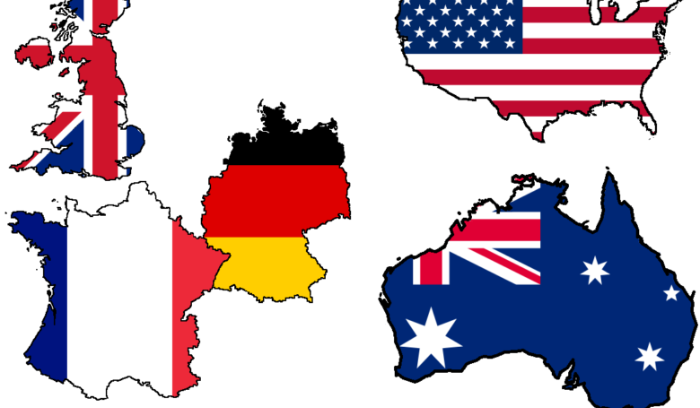
Of course, one might immediately object that such practices were hardly unique to the USSR or Russia. The intelligence services of the United States, Britain, Germany, and other countries have also sent spies abroad under diplomatic or journalistic cover and have recruited agents inside hostile states.
And yet, Russia, both then and now, stands apart. It distinguishes itself by dedicating vastly greater resources and personnel to intelligence work and by relying far more heavily on methods rooted in espionage. Take one simple example: which other countries in the world, apart from Russia, still train and deploy illegal intelligence officers? Have you ever heard of a case in which a man named, say, Ivan Petrov, was arrested in Russia, only for it to emerge that he was in fact an American called John Smith, a man born and raised in the United States, trained in the Russian language, customs, and way of life, then sent to Russia to spy under deep cover, even with his American wife posing as a Russian woman? I have not. But Russian “illegals” - agents living abroad for decades under false identities, often with spouses and children - are almost routine. And Russia nurtures them, even celebrates them. President Putin himself publicly expresses admiration and pride for them.
Why do I bring this up? Because modern Russian policy is carried out entirely by the methods of the Soviet and Russian intelligence services.
Suppose that the Kremlin has formulated a set of objectives to achieve on the international stage, for instance, to compel other states to follow Moscow’s line and to make them obey. Yet it lacks the means to reach those goals through open diplomacy or economic influence. The only option left is to pursue them covertly, through psychological and clandestine means - in short, to deploy every technique ever taught to Russian spies in order to influence a target and steer him toward actions that serve Moscow’s interests. Today, that psychological component, the “mental game,” if you will, has taken on special importance. And it is clear that, here and now, the primary subject of that understanding is Donald Trump’s mentality, and how President Putin might exploit it.
Let us turn, then, to recent events: the announced meeting between Trump and Putin in Budapest, and consider the hidden, perhaps only presumed, subtleties surrounding its preparation, agenda, and possible outcomes.

Source: Reuters
It is known that the agreement to hold this meeting was reached during a phone call between Putin and Trump. Crucially, it was Putin who placed the call. And that call came precisely at the moment when Zelensky was flying to meet Trump to discuss a number of issues concerning the situation in Ukraine, including some particularly delicate ones.
So, a phone call from Putin to Trump, and one can easily imagine how flattering that must have felt. Consider it from Trump’s point of view: Putin, who has ruled his country five times longer than Trump has ever held office, wants to speak to him! He asks for a conversation! For a man who sees himself as one of the greatest presidents in world history - powerful, fateful, larger than life - such a call is pure validation. Putin is reaching out; Putin needs something. And Putin, let us not forget, is hardly a weakling himself.
Of course, one might assume that Trump and his advisers understood the psychology and manipulation at play. Yet it seems far more likely that Putin and his own advisers calculated exactly how Trump would react to that call. They knew that the gesture alone would stroke his ego and set the stage for what came next.
During that conversation, Putin proposed another face-to-face meeting. Fair enough, one might say - logical after their encounter in Alaska. But what followed was far more interesting. One might naturally expect that, since their previous meeting had taken place on American soil, the next should occur in Russia. And yet, it will not. Nor will it happen in Türkiye, which would have been a sensible or even strategic choice, given recent developments. Nor in Baku, which could have served as a neutral and constructive venue in light of improved relations between Azerbaijan and both the U.S. and Russia.
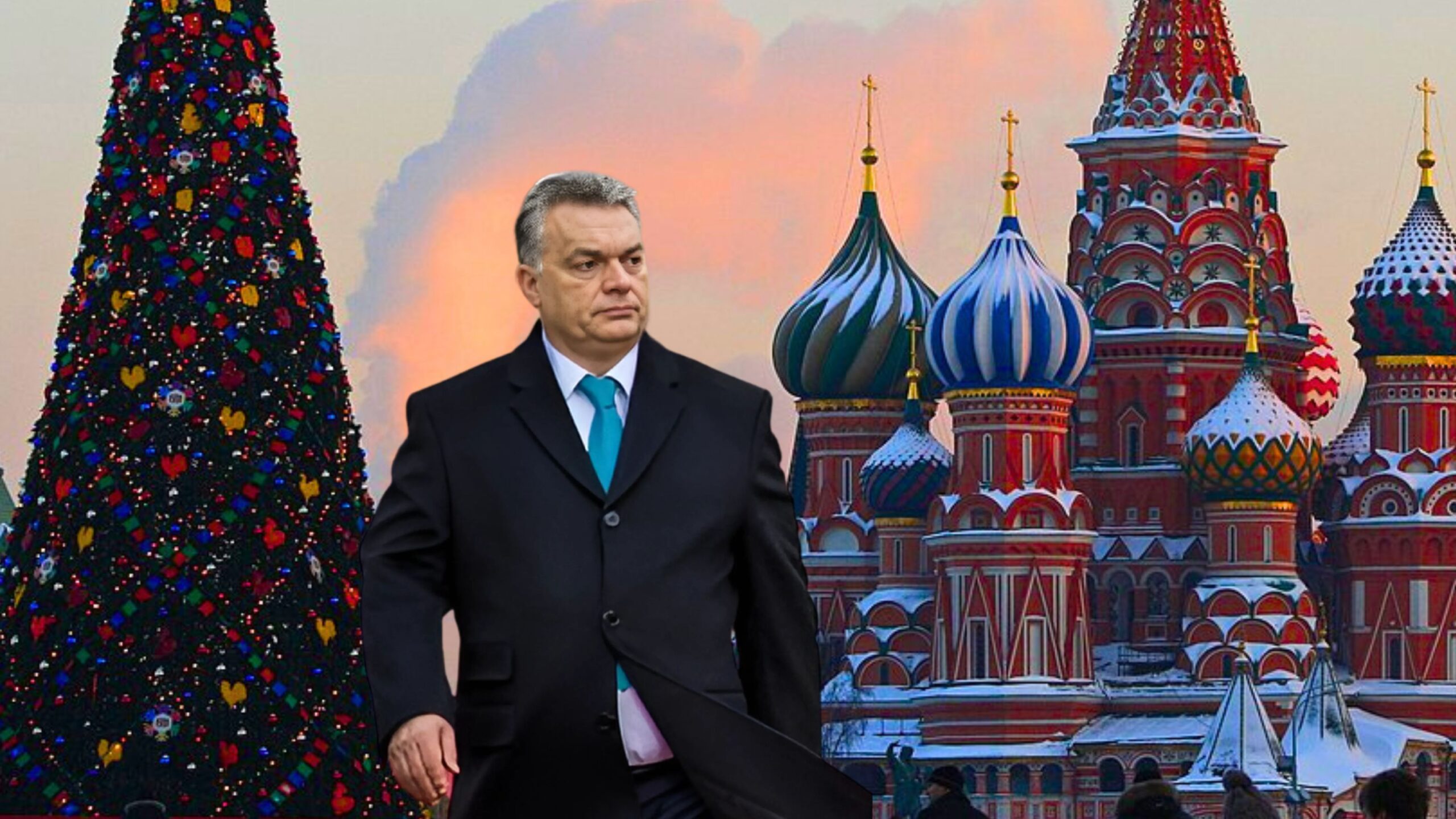
I have little doubt that during the call, once Trump accepted the idea of meeting again, the question of venue arose. And it was then that Putin suggested Europe, deliberately leaving the choice of a specific country to Trump. Putin, of course, understood two things perfectly well: first, that he must avoid any location where he might face a risk of arrest under the International Criminal Court’s warrant; and second, that Trump would relish holding a summit in Europe precisely because it would allow him once again to belittle the continent and sideline it from major geopolitical decisions. For these twin purposes, the host country had to fit both men’s needs. And in Europe, only Slovakia and Hungary truly fit the bill. Putin knew, with near certainty, that Trump would choose Hungary, safe for Putin and comfortably distant from the likes of Macron, Scholz, or Starmer.
Source: visegradinsight
Indeed, I suspect that before calling Trump, the Kremlin quietly reached out to Viktor Orbán to secure his consent in advance. And it is equally plausible that, after Putin’s call, someone in the White House phoned Orbán as well, confirming that Hungary was willing to play host, thus allowing Trump later to present it as his own suggestion.
Let us digress briefly to Trump’s meeting with Zelensky. One of the main issues on that agenda was the supply of Tomahawk missiles to Ukraine. Trump had issued numerous, often contradictory, statements on the matter. Yet on the eve of his talks with Zelensky, he signaled that a decision had been made: the missiles would be delivered. Then came Putin’s phone call, and suddenly Trump’s stance flipped once more. Seeking to sound rational and credible, he explained his reversal by arguing that the Tomahawks were needed by America itself.
Trump, of course, must realize how weak that argument sounds. For the truth is that the U.S. currently has few plausible targets. Relations with Russia are calm enough. Striking China is out of the question. North Korea smiles politely. Syria is cornered by Israel and Türkiye. That leaves Iran, Afghanistan, and Venezuela.
Which leads me to a prediction: in the near future, the U.S. may fire a couple of Tomahawks either at Afghanistan, where the Taliban refuse to hand over the Bagram airbase, or at Venezuela in order to finally bring Maduro to heel. In doing so, Trump would, first, demonstrate that the missiles are indeed essential for America; and second, remind the world who calls the shots, who must be obeyed, lest defiance be punished.

Source: BBC
Now, back to Budapest. What will actually be discussed there? Clearly, Ukraine tops the agenda. Trump is likely to urge Putin to stop - to pause the fighting for now. In return, he will promise to make Zelensky do the same. Both sides would freeze the conflict where it stands, perhaps for 10 or 15 years. Territorial issues, obviously, will not be broached; neither side is ready to concede an inch.
Gaza and Syria, too, will almost certainly come up. Russia cannot remain a passive observer of the crisis between Israel and Hamas, especially when Israel itself would prefer to see Russian troops, rather than Turkish forces, in certain parts of Syria.
And then there is Venezuela, which is another likely topic—and a serious one. Trump has gone beyond rhetoric: not only condemning Maduro and blocking boats off Venezuela’s coast, but also authorizing strikes against drug lords and their laboratories on Venezuelan soil. Yet this presents a complication: Venezuela and Russia are allies, bound by a mutual defense agreement. Should the U.S. strike, Maduro would immediately appeal to Moscow for assistance, and Russia would be obliged to respond - with weapons, resources, even troops. In effect, it would be drawn into conflict with the United States itself. That would be no mere shouting match between Trump and Putin but a genuine confrontation between their countries, with unpredictable consequences. Putin will surely do everything possible to dissuade Trump from attacking Venezuela. How Trump will react, however, remains an open question, perhaps even to himself. And what he might demand in exchange for restraint is anyone’s guess.
Finally, China will feature not as a geopolitical rival but as the monopolist in rare earths. And Trump is not the sort of president who tolerates monopolies, whoever holds them, or in whatever sphere they may lie.
(If you possess specialized knowledge and wish to contribute, please reach out to us at opinions@news.az).


Similar news